Hezbollah
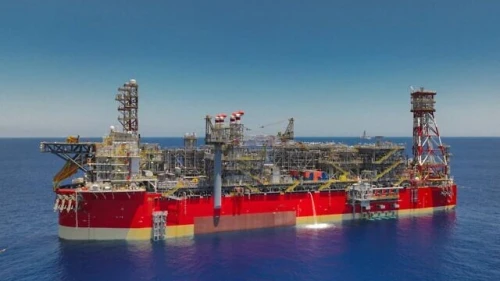
“All our demands were met; the changes that we asked for were corrected,” says Israeli National Security Council chief Eyal Hulata.
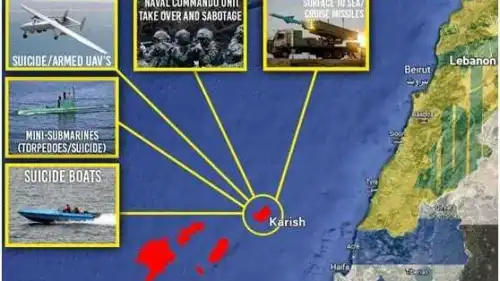
IDF Chief Aviv Kochavi shared photos of Hezbollah targets with his French counterpart in September as a warning to the terror group.

The Israeli defense minister ups military readiness amid the stalled maritime border talks with Hezbollah-controlled Lebanon.

David Schenker says the proposed deal is good for Lebanon, but “does nothing to alleviate tensions along the Blue Line.”

The Iranian axis’s “civilian entrenchment” program forms the basis of its military build-up, Maj. (res.) Tal Beeri of the Alma Center says.
Brig. Gen. (res.) Erez David Maisel says both nations win economically, but Hezbollah also wins by tightening its control over the Land of the Cedars.

The former U.S. envoy to Jerusalem said an agreement had been close wherein Israel would get around half of the disputed maritime territory.
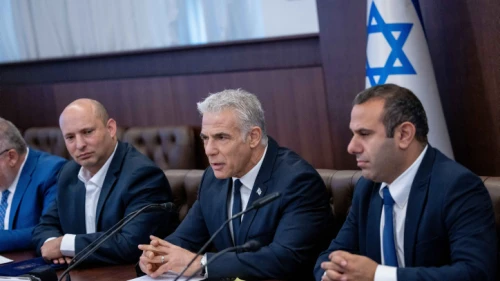
Ehud Adiri reportedly resigned just days before the U.S. submitted to Jerusalem and Beirut what is widely being portrayed as a final proposal to end a longstanding dispute over gas-rich waters in the Eastern Mediterranean.
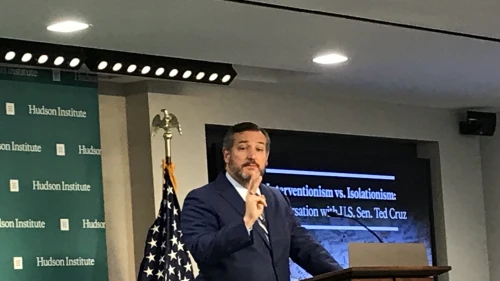
The American lawmaker calls for a congressional investigation into the Biden administration for having “pressured our Israeli allies to hand over their territory to the Iran-controlled terrorist group Hezbollah.”
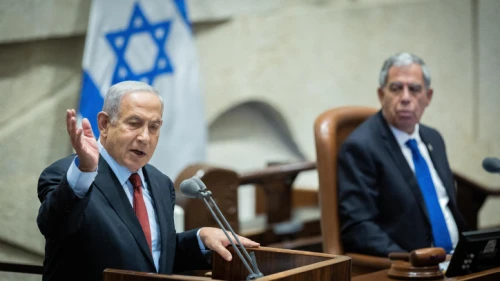
Lapid is trying to “pull a fast one” on the Israeli public by forging ahead with the accord without a public referendum, as is required by Israeli law before the government can cede sovereign territory, says opposition leader Benjamin Netanyahu.
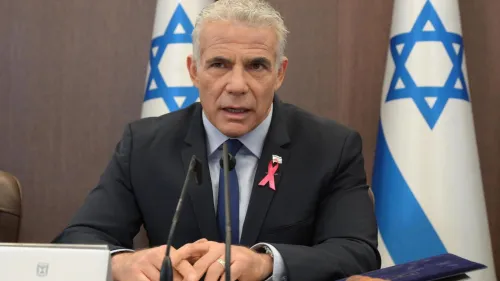
Under the terms of the emerging accord, Israel will be able to exploit the Karish natural gas field, according to the Israeli premier.
Hezbollah chief, who has threatened war over the border dispute, calls the proposal a “very important step.”