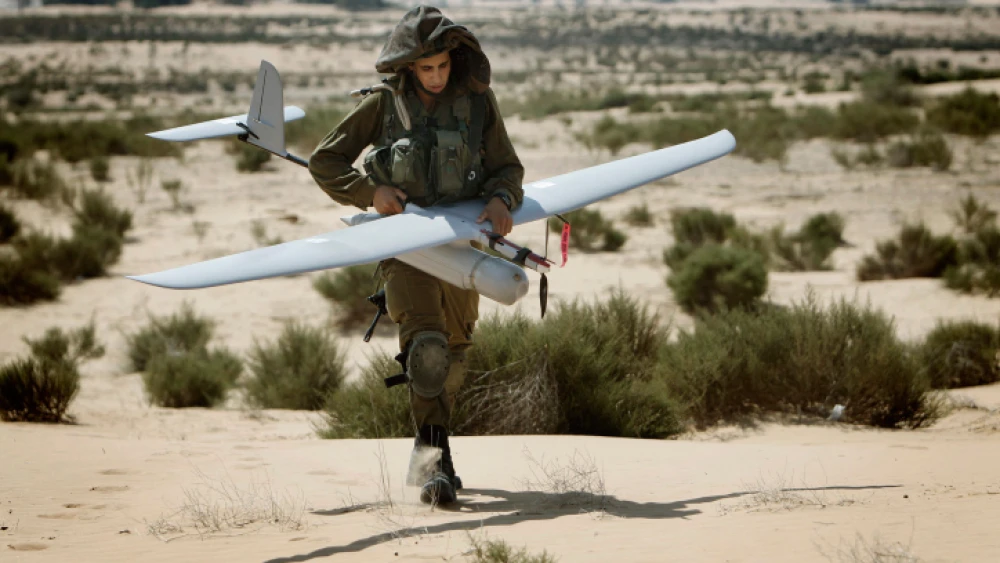
An Israeli military surveillance drone crashed in southern Lebanon on Sunday during what the Israeli army said was “a military operation at the border.”
There was no sensitive technology aboard the aircraft, according to the Israel Defense Forces in a statement.
The crash occurred at a time of increased tensions between Israel and Hezbollah after alleged Israeli airstrikes in Syria Monday, which resulted in the death of a Hezbollah operative. The terror organization has vowed revenge.
Israel’s military has taken steps to deter attacks by Hezbollah, in addition to having beefed up forces on the northern border with Lebanon and Syria.
Israeli Defense Minister Benny Gantz warned during a trip to a military base near the border with Lebanon on Sunday that “Lebanon and Syria are responsible for what happens on and from their territory,” according to an IDF statement.
Gantz said that Israel “has no interests in Syria or Lebanon aside from security interests, and we will continue to protect them.”
He added that Israel does not seek “unnecessary escalation, but if we are tested, we have high operative capacity, which I hope we will not need to put to use.”
In an interview on Hezbollah’s al-Mayadeen TV, Hezbollah Deputy Secretary General Naim Qassem dismissed Israeli warnings as saber-rattling. According to al-Mayadeen, Israel warned Hezbollah over the weekend through U.N. mediators against taking military action against the Jewish state.
“Israel’s threats do not change our position; these are ineffective threats,” said Qassem.
Asked how Hezbollah intends to respond, Qassem said, “We have decided not to announce what will be done. In Israel, they will think what they want. We have no answer, and we have to wait for the days ahead.”