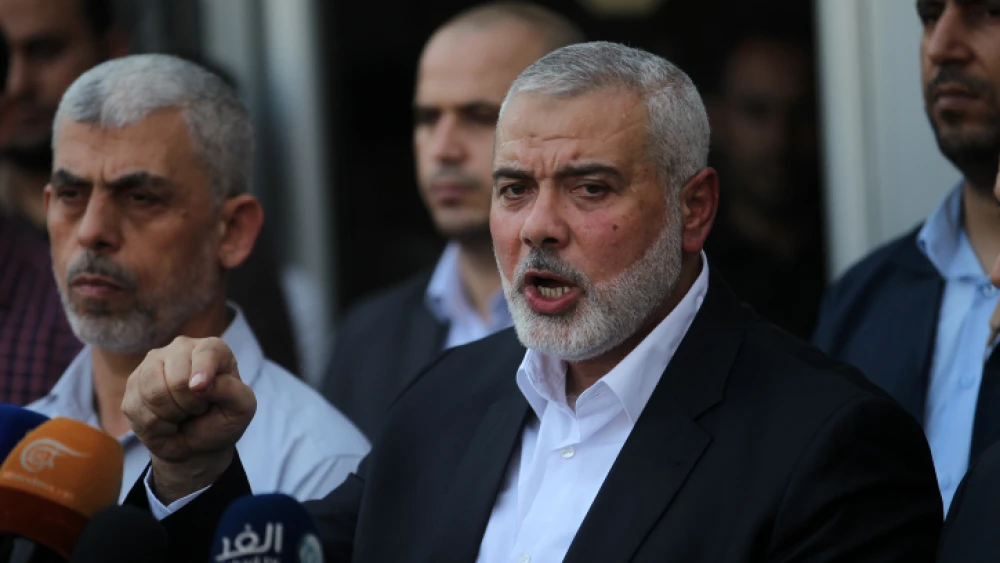
Hamas leader Ismail Haniyeh said on Monday that the terror organization had turned down a large U.S. aid package because it would have been required to disarm to receive the funds.
Speaking with a Qatari news outlet, Haniyeh claimed that as part of U.S. President Donald Trump’s Middle East peace plan, Washington offered to give Hamas $15 billion in aid if it would agree to lay down its weapons.
Hamas “categorically declined” the offer, insisted Haniyeh.
Hamas, which is designated as a terrorist group by the European Union, the United States, Israel and several other countries, has consistently asserted that it will never give up its arsenal of weapons, rockets and missiles.
The terror group ousted Palestinian Authority leader Mahmoud Abbas’s Fatah-led government from the Gaza Strip in a military coup in 2007, effectively splitting the Palestinians into two political entities.
All efforts made over the past decade to promote a reconciliation between the rival Palestinian factions—the latest brokered by Egypt in late 2017—have failed.
Haniyeh further claimed that plans to build airports and seaports in Gaza were foiled by the Palestinian Authority and several Arab countries.
This article first appeared in Israel Hayom.