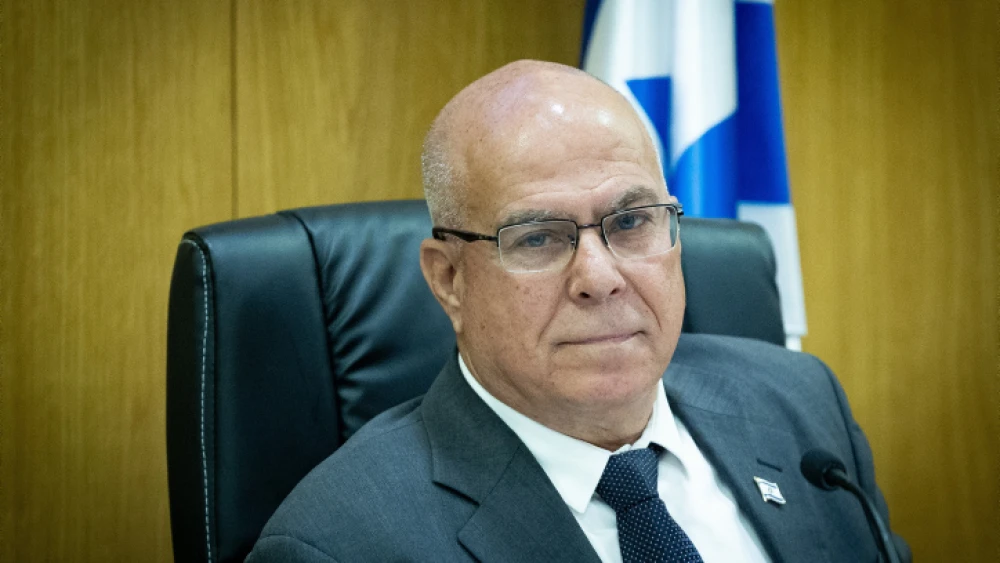
Israeli National Security Committee chairman Knesset member Zvika Fogel and Israeli National Security Minister Itamar Ben-Gvir, both of the Otzma Yehudit Party, are advancing a Knesset bill aimed at tightening enforcement against noise from public address systems used in mosques.
Under the proposed legislation, the construction or operation of a public address system for calls to prayer would require a permit. Permit applications would be reviewed based on noise intensity, efforts at noise-reduction, the mosque’s location and the impact on nearby residents, Israel Hayom reported.
If permit conditions are violated, police would be authorized to order the immediate suspension of the call to prayer and, if noncompliance continues, to confiscate the sound system.
The bill also introduces significant fines: Operating or installing a public address system without a permit would carry a 50,000 shekel (~$15,600) fine, while operating in violation of permit conditions would result in a 10,000 shekel (~$3,120) fine. Funds collected would be transferred to a designated forfeiture fund for public use.
Following the outbreak of the Gaza war in 2023, Israeli police have noted that most mosques’ calls to prayer have increased in volume “in a significant manner, which caused serious harm to residents.”
The Muslim call to prayer, the adhan, dates back to the time of Islam’s founder, Mohammed. A muezzin would proclaim the adhan five times daily. In modern times, the muezzin’s reach has been amplified by loudspeakers.
Of the five prayer times, the most problematic is the dawn prayer, which in winter takes place around 5:00 a.m. and in summer around 4:00 a.m.
Several European countries have imposed limits on the volume of mosque loudspeakers. Ironically, so has Saudi Arabia, the seat of Islam.
On May 31, 2021, Saudi Arabia’s Islamic affairs minister ordered mosque loudspeaker volume cut to one-third of the maximum, saying the decision was prompted by citizens’ complaints about excessive noise.
According to the bill’s explanatory notes, excessive noise constitutes a health hazard, and existing enforcement efforts lack adequate legal tools.
Unlike earlier proposals that focused solely on restricting broadcast hours, the current bill establishes a comprehensive licensing and oversight framework, assigns personal responsibility to operators, and expands enforcement and penalty authorities.
Fogel told JNS: “Listening to the muezzin at abnormally loud volumes is not a religious matter, it is a violation of public health and quality of life. It is impossible for residents to continue to suffer from systematic violations of the law. For this reason, I submitted the bill, to enable a sharp, clear and determined approach to the phenomenon.”