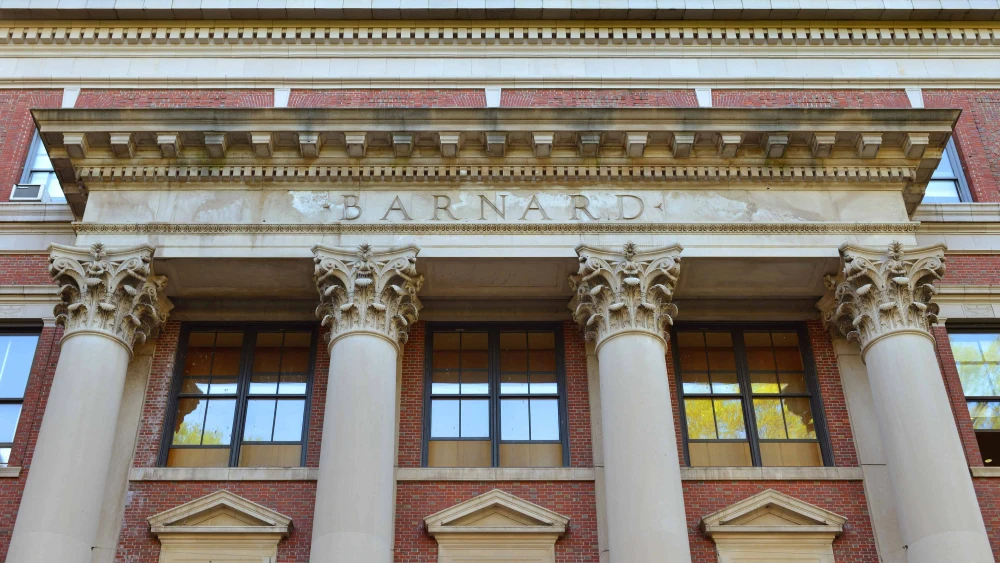
Students attending New York City’s Barnard College will need to find ways to express themselves other than affixing photos or messages on the doors of their dormitories.
Leslie Grinage, the school’s dean, sent out a letter on Feb. 23 informing students that by Wednesday, Feb. 28, they would need to remove any decorations on their doors. It comes in the backdrop of heightened sensibilities related to the war between Israel and Hamas in the Gaza Strip following—and many have noted even before—the Oct. 7 terrorist attacks in southern Israel.
Grinage justified the move, writing that “while many decorations and fixtures on doors serve as a means of helpful communication amongst peers, we are also aware that some may have the unintended effect of isolating those who have different views and beliefs.”
Columbia University’s chapter of Students for Justice in Palestine responded that it “sets a dangerous precedent.” Members of the group known for its anti-Israel activity on campus said “it is beyond absurd to send out a notice to Barnard students demanding we take down ‘decor’ from our own dorm doors that we are paying to live in.”
Talking to the New York Post, an unnamed Barnard junior complained that she couldn’t hang a photo of her car because it “might offend someone? Why does it have to be all or nothing?”
“I can’t believe they’re being so draconian about this,” she said.