


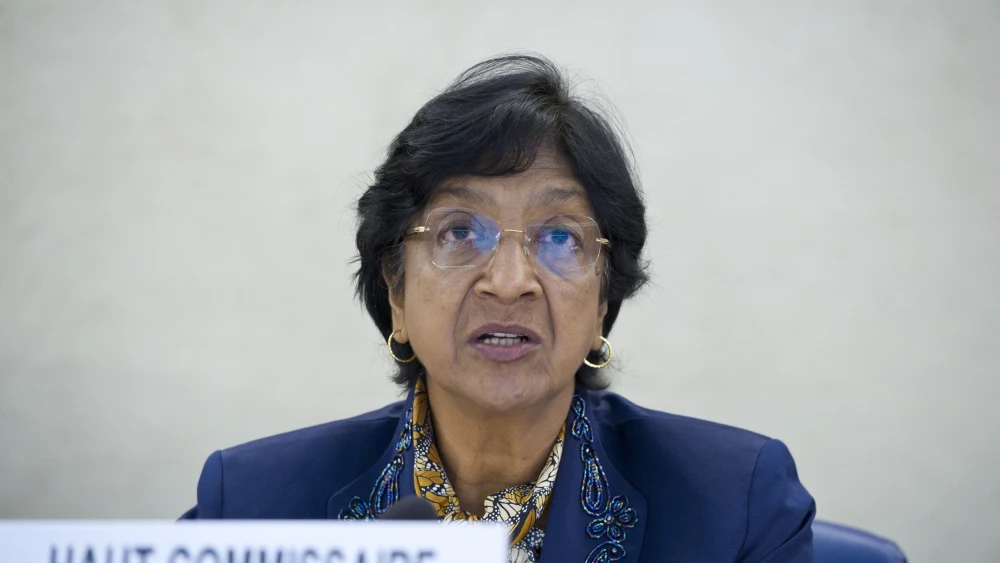
Navi Pillay, a former United Nations high commissioner for human rights who “epitomized systemic, singular U.N. bias against and mistreatment of Israel,” has no business receiving a Nobel Peace Prize, according to Robert Spitzer and Evan R. Bernstein, president and CEO, respectively, of B’nai B’rith International.
The nonprofit said that it is “appalled and dismayed” by Pillay’s selection.
“This choice is not only unwarranted but offensive and damaging. It cheapens the world’s leading prize for peacemaking and further reinforces a sense of isolation by Jews facing a surge in global antisemitism,” the duo said. “She had an open record of longstanding animus to the Jewish state—maligning it with the ‘apartheid’ label and endorsing punitive economic measures against it.”
Pillay, who chaired the “current, open-ended ‘commission of inquiry’ on the Israeli-Palestinian conflict” at the global body, “shamelessly defended the outright antisemitism of colleagues and mimicked the outrageous lie of Israeli ‘genocide’ in Gaza,” the B’nai B’rith leaders said.
“She was a defender of the U.N.’s notorious 2001 racism conference in her native Durban, South Africa, and of especially radical U.N. special rapporteur Francesca Albanese, who has repeatedly earned denunciation by major democracies for her bigotry against Israel and the Jewish community,” they stated. “With its senseless and shameful choice, the Norwegian Nobel Committee has done more harm to the peace prize than any similar step in recent history.”


