The Islamic Republic of Iran has an extensive and complex intelligence apparatus. Its two most important intelligence institutions are the Intelligence Ministry and the intelligence arm of the Islamic Revolutionary Guard Corps. A third key intelligence organization is the IRGC’s Intelligence Protection Organization, which operates independently of the Corps’s intelligence arm and deals in counterintelligence.
While Iran’s intelligence organizations are well equipped and have achieved important successes (particularly in the area of signals intelligence), the country’s intelligence apparatus is deficient with respect to counterintelligence, or “intelligence protection” as the regime has renamed it. The three most recent counterintelligence failures—all of them devastating—concerned the assassination of Quds Force chief Qassem Soleimani in Baghdad, the slaying of Al-Qaeda’s No. 2 on Iranian soil and the assassination in Tehran of the architect of the Iranian nuclear program, Mohsen Fakhrizadeh.
After Al-Qaeda’s second in command Abu Muhammad al-Masri was assassinated allegedly by Israel’s Mossad in Tehran, I argued that the weakness of Iran’s counterintelligence was going to compel the regime to reform, and that to do so it was likely to turn to Russia and China.
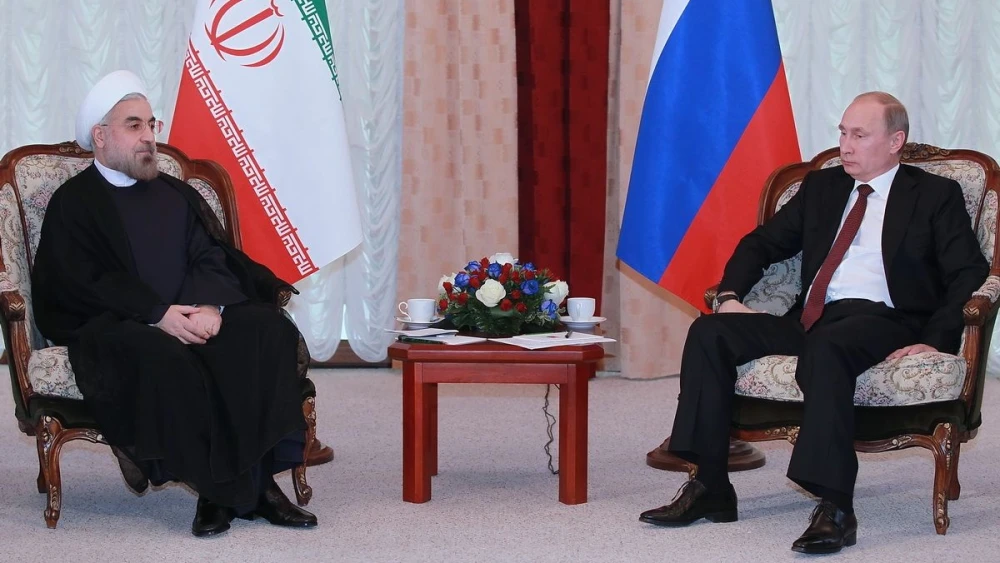
In January, Iranian Foreign Minister Mohammad Javad Zarif made yet another visit to Moscow to meet with his Russian counterpart, Sergey Lavrov. Zarif has traveled to Russia more than 30 times, illuminating the Islamic Republic’s great dependence on that country. What made his most recent visit especially significant was the signing by the countries of a security treaty.
Lavrov told Russian news agency TASS: “We [Russia and Iran] have signed an intergovernmental agreement on cooperation in ensuring information security.” He did not provide further details. Iran, however, said via the Islamic Republic News Agency that the agreement involved collaboration with respect to “information, crimes committed by the use of information and communications technology, aids in technology, international cooperation, including reconnaissance, coordination, and necessary cooperation for regional and international communities to guarantee national and international security.”
While the agreement ostensibly aims to increase collaboration between the countries in the field of cyber security, the Tasnim News Agency, which has strong links to the IRGC, said, “The head of Iran’s Civil Defense Organization ... unveiled plans for joint cooperation focusing on the exchange of intelligence, interaction against threats, and joint defense.”
The Iranian Foreign Ministry stated in a press release that Iran and Russia had signed an “Information Security Cooperation Pact” and that one of its objectives was “strengthening information security.”
While information security and cyber security are the agreement’s main objectives, scholars of intelligence studies are well aware of the close connection between information security and counterintelligence. Many would argue that information security is indeed the main objective of counterintelligence (or “intelligence protection,” to use the Islamic regime’s term). Cyber intelligence is considered by many intelligence organizations to be a counterintelligence issue.
The Iran-Russia pact is not a surprise. More than a year has passed since the killing of Soleimani and six months have gone by since al-Masri’s assassination. The Iranian intelligence organizations have had plenty of time to analyze their counterintelligence apparatus, confront its massive weaknesses and present their findings to policymakers. There is no doubt that the recent killing of Fakhrizadeh, which was a massive embarrassment for the regime, intensified this process. This is especially true in view of the fact that the Iranian spy chief recently claimed in an interview that the Fakhrizadeh assassination was organized by a member of the Iranian armed forces—which, if true, indicates that Iranian intelligence and counterintelligence are not only poor but compromised. The regime needs help in these areas, and the Iran-Russia information security pact may be its best means of effecting needed reforms.
Ardavan Khoshnood, a non-resident Associate at the BESA Center, is a criminologist and political scientist with a degree in intelligence analysis. He is also an Associate Professor of Emergency Medicine at Lund University in Sweden.
This article was first published by the Begin-Sadat Center for Strategic Studies.