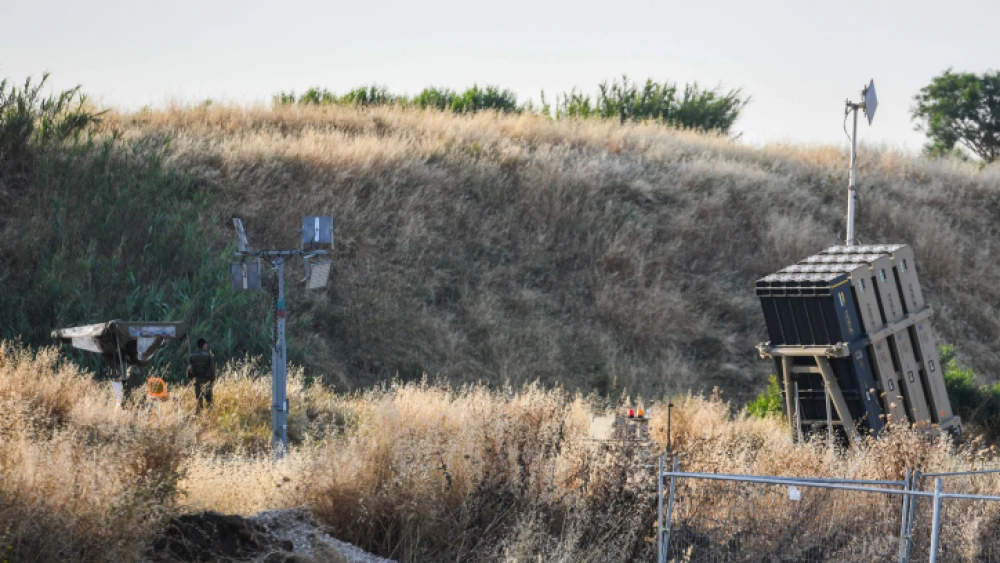
Is Israel’s Iron Dome air-defense system suppressing the country’s will to take definitive action against terrorist groups in the Gaza Strip? With Israel facing the prospect of a two-front war on its northern and southern borders, the influential role the Iron Dome has on Israel’s military strategic planning bears examination.
Developed by Rafael Advanced Defense Systems and Israel Aerospace Industries, the Iron Dome is a mobile, all-weather defense system capable of intercepting enemy rockets before they land. Following the barrage of 690 rockets that were launched at Israel from Gaza in May 2019, the system’s success rate was calculated at 86 percent.
Looking past the cold numbers, however, the remaining 14 percent, which resulted in four deaths in Israel this spring, translates into lives and property destroyed. These numbers, of course, also do not take into account the devastating trauma inflicted on Israel’s southern population, who have been living under fire for more than a decade.
This is a high price to have to pay each time Israel’s undeterred enemies decide to launch missiles at its population.
But even if is willing to accept that price, there is also the fact that the Iron Dome provides Israel with an excuse to delay a military offensive that would finally end the threat on Israel’s southern border. Rather than just raising a defensive shield, Israel should be wiping its enemies out.
The Iron Dome is in effect a high-tech Band-Aid, and Israel’s disproportionate reliance on it is allowing Iran’s proxy armies to gain strength, in addition to enabling them to paralyze significant portions of the country at will.
For all its impressive ability to protect Israel’s population, an over-reliance on this type of defense system, which offers no measure of deterrence, seems to carry with it the consequence of perpetuating the threat rather than eliminating it.
The Iron Dome most certainly has a well-deserved place in Israel’s defensive arsenal, but it is not a strategy. To survive, Israel needs an iron will far more than an Iron Dome.
Zahava Englard Shapiro is an Israeli-based author and writes articles on Israel for several online publications.