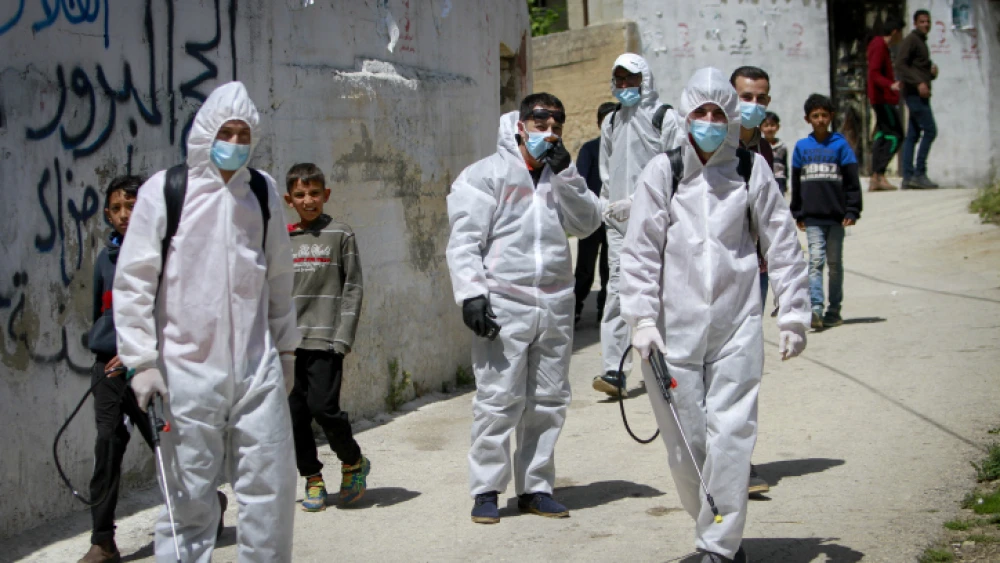
Palestinian Authority Prime Minister Mohammad Shtayyeh said on Saturday that lockdowns will be put in place in Hebron and Nablus following a surge in COVID-19 infections in the P.A.-controlled cities.
In an emergency meeting on Saturday night in Ramallah, Shtayyeh called to halt the movement of workers between P.A.- and Israel-controlled areas for the next two weeks, though it is unclear whether the recommendation became official policy.
With 108 new cases reported in P.A. territory on Saturday—the highest since the pandemic began—Shtayyeh called for a two-day lockdown in Shechem/Nablus and a five-day lockdown in Hebron, with Halhoul and Tafouh outside of Hebron issued shelter-in-place orders. Mosques and churches have been closed.
While restaurants and coffee shops are still open for business in P.A. territory, social gatherings have been banned.
According to Shtayyeh, infections rose due to P.A. residents bringing the illness from Israel, either from their jobs or from visiting Arab Israeli relatives.
“I call on our people in the 1948 borders to avoid visiting any city, refugee camp, or village in the West Bank,” said Shtayyeh. “Additionally, I call on workers who are employed inside the 1948 areas to avoid daily movement between the West Bank and inside [Israel] for 14 days. They can temporarily reside at their place of work.”
The number of active COVID-19 cases in P.A.-controlled areas has doubled over the past three days, with the majority of new cases surrounding Hebron.