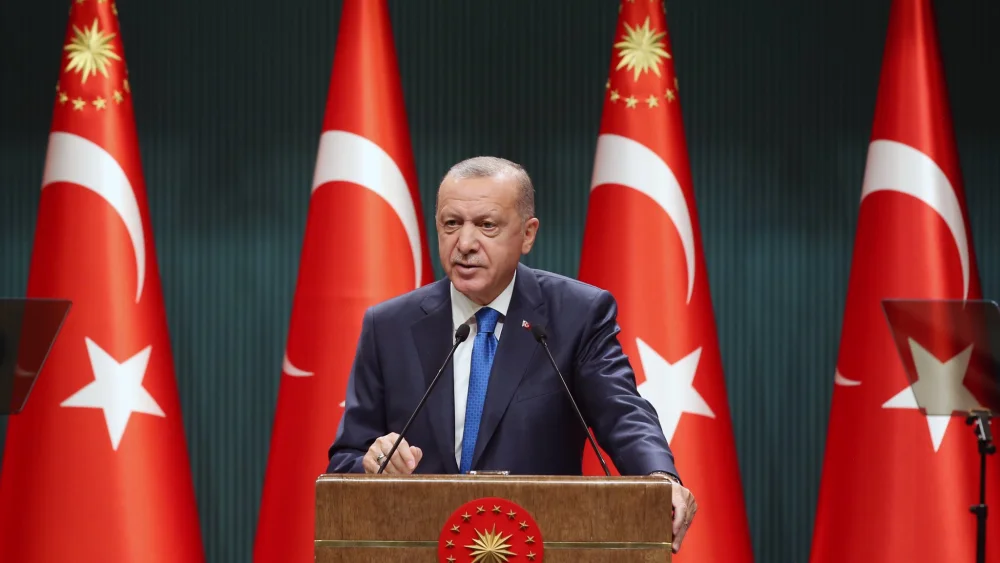
The latest round of fighting in the Nagorno-Karabakh region continues to send ricochets across the Middle East. Turkish President Recep Tayyip Erdoğan on Monday submitted a motion to parliament—a week after Russian President Vladimir Putin declared a ceasefire between Armenia and Azerbaijan—seeking its approval to deploy peacekeepers to monitor the ceasefire agreement.
CNN Türk reported that the Turkish Parliament is expected to give the troop deployment a one-year mandate. The bill also states that Erdoğan would determine the number of troops to be sent and the scope of their peacekeeping mission, and that civilian personnel could also be deployed.
The move is Turkey’s response to the latest round of hostilities in Nagorno-Karabakh, which ended in a major victory for Azerbaijan, and to Russia’s refusal to include Turkey as a full partner in the monitoring force slated to preserve the five-year ceasefire deal. The Turks have presented the ceasefire as a joint initiative between Erdoğan and Putin, saying that Turkey will decide the location of the joint operations center for the Russian and Turkish troops. To lower the tensions between the sides, the troops deployed by Ankara likely won’t be positioned on the border between the Azeris and Armenians.
The pace of developments in recent days, amid the backdrop of the Nagorno-Karabakh conflict, is extraordinary. Abu Dhabi Crown Prince Sheikh Mohammed bin Zayed, one of Erdoğan’s fiercest adversaries, hosted Armenian President Armen Sarkissian at his palace on Sunday.
“We discussed strengthening the relationship between our two countries. We also expressed our support for a ceasefire between Armenia and Azerbaijan, and peace and stability in the region,” Bin Zayed said in a tweet after the meeting.
In the meantime, Azeri Foreign Minister Jeyhun Bayramov spoke on the phone with his Russian counterpart, Sergey Lavrov. Russia, it is known, is Azerbaijan’s patron. Bayramov and Lavrov discussed plans to rehabilitate the region in the aftermath of the fighting, the matter of humanitarian assistance and the need for the international community to help preserve cultural and religious institutions in Nagorno-Karabakh.
The Armenians were supposed to have withdrawn from the Kalbajar region of Nagorno-Karabakh as early as Sunday, but in a gesture of goodwill, Azerbaijan granted the people there a 10-day extension due to weather conditions.
‘A direct message to the Armenians’
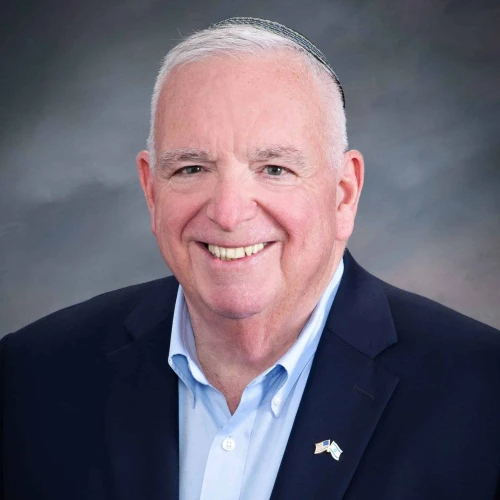
“When the Turks say ‘Azerbaijan,’ from their point of view this includes Nagorno-Karabakh, because according to international law it is considered Azeri territory,” Dr. Hay Eytan Cohen Yanarocak, an expert on contemporary Turkish politics and foreign policy, told Israel Hayom. “Even if the Turks aren’t deployed in Nagorno-Karabakh to the area that represents the border with Armenia, from Ankara’s perspective, this is still a direct message to the Armenians ahead of the next round of fighting.”
According to Yanarocak, “Turkey is already preparing for the evacuation of the Armenian territories. This wouldn’t be the first time in the past decade that the Turkish Parliament has approved the deployment of a significant military force. It’s already happened in Iraq, Syria and Libya. The moment such a decision is ratified, its implementation is immediate. Therefore, the critical question is where they will be stationed in Nagorno-Karabakh. If the definition is ‘Azarbaijan,’ then the areas recently seized from the Armenians also apply.”
In the current situation, Yanarocak noted, “The Azeris are between a rock and a hard place. Although they aspire to sovereignty, they also need the whole world to know that ‘Turkey is their big sister,’” and therefore calls the shots.
As for Sarkissian’s meeting with Abu Dhabi’s crown prince, Yanarocak said, “The Armenians are batting their eyelashes at Erdoğan’s biggest enemies because their economy isn’t prospering and there’s now an acute refugee problem of homeless Armenians. The country is now reliant on grants from Armenians living abroad; hence they’re trying to create a mechanism for a consistent money flow.”
Yanarocak agrees that if Azerbaijan opens the door to Turkey’s military, then it all depends on Russia. With that, he said, “The Armenians seem determined to play the United Arab Emirates card, which from its own perspective wants to station forces near Turkey. This, however, depends on Russia, particularly after the lesson Putin taught [Armenian Prime Minister Nikol] Pashinyan during the last round of fighting not to flirt with the West. It’s possible the Russians won’t consent to the deployment of Emirati forces in Russia’s backyard—and all the Armenian plans will fall apart.”
This article first appeared in Israel Hayom.