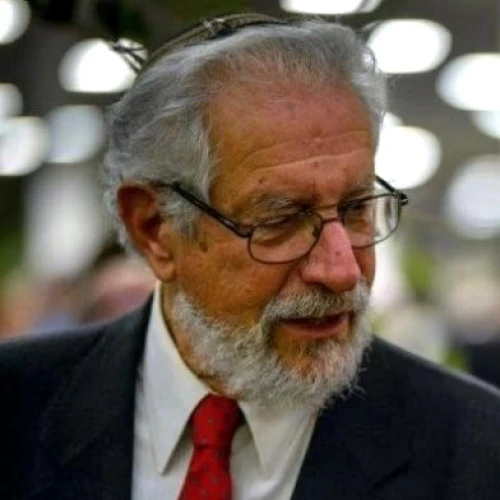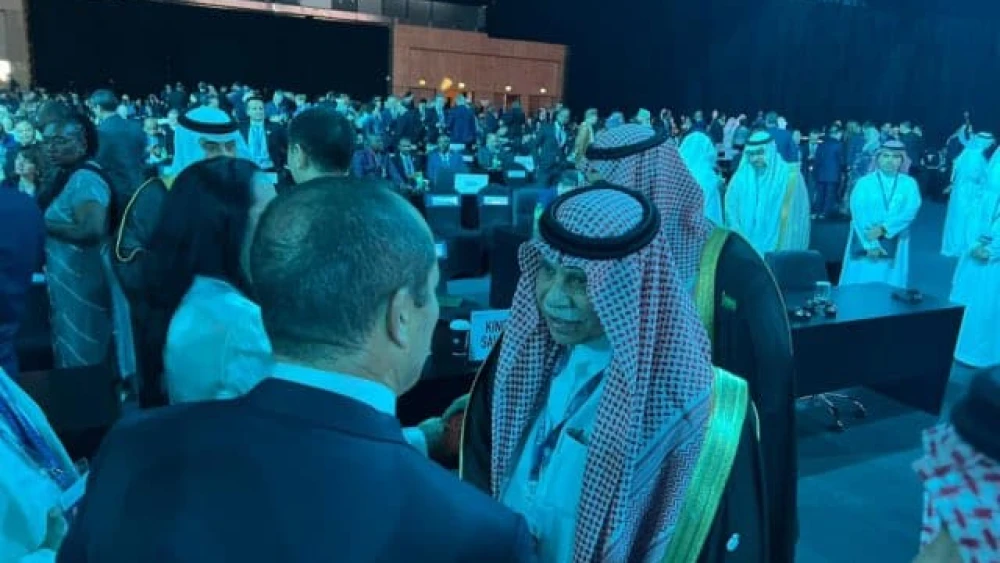
Israeli Economy Minister Nir Barkat met with Saudi Commerce Minister Majid bin Abdullah Al Qasabi on the sidelines of the biennial World Trade Organization conference in Abu Dhabi on Monday.
According to an Economy Ministry statement, Barkat told his Saudi counterpart that “Israel is interested in peace with countries that seek peace, and we can make history together.”
The Minister of Economy in the Israeli, Nir Barkat, met with the Saudi Minister of Commerce, Majid Al-Abdullah Al-Qasabi, in #AbuDhabi. pic.twitter.com/66y1vwLr6M
— Ali (@Alilytics) February 26, 2024
The two shook hands and discussed the desire to strengthen economic cooperation, exchanging business cards.
A video published by Arab channels shows the cordial encounter at the ministerial for global trade and economic growth.
בשיא המתיחות במזרח התיכון, מפגש חריג של שר הכלכלה ניר ברקת עם שר הסחר הסעודי
— ישראלי News (@Israeli1News) February 26, 2024
לעוד עדכונים מהנעשה בליכוד:
https://t.co/bE4CYJLk4d pic.twitter.com/32TERbzKHl
Jerusalem and Riyadh were working with the United States on the framework of a normalization agreement when Hamas launched its bloody invasion of the northwestern Negev on Oct. 7.
Israel established diplomatic ties with the United Arab Emirates and three other majority Arab Muslim countries as part of the Abraham Accords brokered by the Trump administration in 2020. Prior to Oct. 7, hopes were high for a breakthrough with the Saudis.
Reuters reported earlier this month that Saudi Arabia would suffice with a declared Israeli commitment to the two-state solution to normalize ties with Jerusalem as part of a broad agreement including a defense pact with the United States.
However, a few days later Riyadh said that it would not establish diplomatic relations with Israel until there is a Palestinian state, an end to the war against Hamas and a complete military withdrawal from the Gaza Strip.
“The Kingdom has communicated its firm position to the U.S. administration that there will be no diplomatic relations with Israel unless an independent Palestinian state is recognized on the 1967 borders with East Jerusalem as its capital, and that the Israeli aggression on the Gaza Strip stops and all Israeli occupation forces withdraw from the Gaza Strip,” the foreign ministry statement read.
More than half of the Israeli public opposes the creation of a Palestinian state as part of a deal that would end the war against Hamas and normalize relations between Jerusalem and Riyadh, according to a poll published in early February.
“Do you support or oppose the notion that as part of a deal to end the war—which will include long-term military quiet, guarantees from the United States, and an agreement with Arab states such as Saudi Arabia—Israel should agree to the establishment of a Palestinian state?” asked the January 2024 Israeli Voice Index, conducted by the Israel Democracy Institute’s Viterbi Family Center for Public Opinion and Policy Research.
Fifty-one percent of Israelis opposed this proposal, compared to 36% expressing support.
A breakdown by nationality reveals that a majority of Jewish Israelis are opposed to the idea (59%, versus 29% who are in favor), while among Arab Israelis the picture is reversed (69% support and only 10% opposed).