Newsletter
Newsletter Support JNS
David Isaac

David Isaac

Explore Senior Israel Correspondent David Isaac’s expert analysis on Jewish history, politics, and current events at JNS.
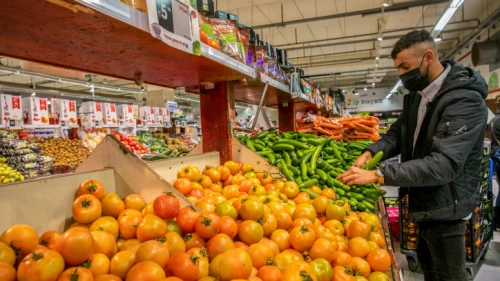
“Reduce all the tariffs, all the quotas and all the NTBs—they are adding 40% to 80% to the cost of most products,” said Elise Brezis, professor of economics at Bar-Ilan University and director of the Azrieli Center for Economic Policy. “That’s the first thing the government has to do. When they do that, then there will be a big change. The rest is commentary.”
“Substantively, it’s not that big an issue. We’re not talking about a big defensive settlement, but in politics, symbols often are more important than substance,” said Yechiel Leiter, senior fellow at the Kohelet Policy Forum.
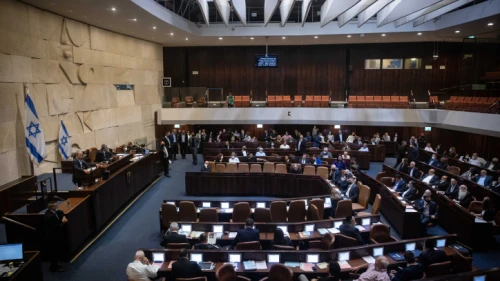
Avi Bell, a law professor at Bar-Ilan University in Ramat Gan and the University of San Diego, said “it is well-established in international law and international practice that states have near-plenary discretion in establishing their immigration.”
Irit Back, head of the Inter-University Program of African Studies at Tel Aviv University, described the status as symbolic though noted that it comes with practical economic and diplomatic benefits. For instance, Israel will now have a greater ability to influence the bloc to change its generally anti-Israel voting record at the United Nations.
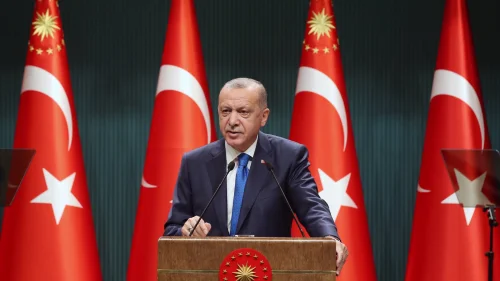
“The overtures to Israel and towards Armenia are an indirect way in Ankara’s perception to approach Washington,” said Gallia Lindenstrauss, a senior research fellow at the Institute for National Security Studies. They’re also related to a struggling economy.
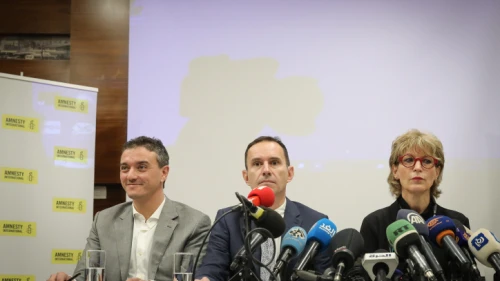
“The best thing is expose the facts—to show that that they’re making things up,” says Anne Herzberg, legal adviser for NGO Monitor. “Transparency is another big issue. I don’t think anyone has revealed yet who wrote the report.”
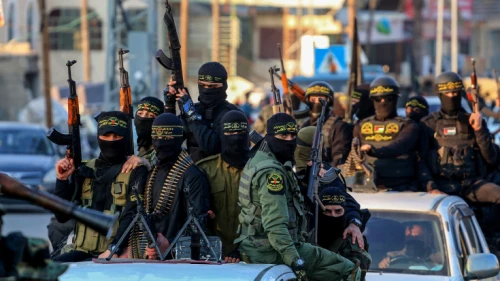
“For two days, there was anti-Gazan, anti-Hamas anger on social media in Kuwait, the UAE and Saudi Arabia, even though the march was organized by Palestinian Islamic Jihad,” said Orit Perlov, a researcher at the Institute for National Security Studies.
“[Dr. J. Herbert] Nelson’s remarks were so offensive and inflammatory that people who would normally just sit on the sidelines and throw up their hands, even they have been moved to say, ‘We can’t allow this,’ ” said Rev. Todd Stavrakos, a co-convener of Presbyterians for Middle East Peace.
The Houthis were a terror group for less than a month, having been designated an FTO in the waning days of the Trump administration, part of its “maximum pressure” campaign against Iran.
Rabbi Abraham Cooper of the Simon Wiesenthal Center points to social media as a distributor of anti-Jewish propaganda, saying “racists have succeeded in attaching their goals and infiltrating their anti-Semitic, neo-Nazi, Holocaust-denigrating imagery onto a legitimate, ongoing debate, which is very emotional. It’s a massive victory for them.”
Aviva Rosenschein, CAMERA’s International Campus Director, told JNS: “It’s gotten much worse since I started in 2008 with CAMERA—much worse. It’s much more intimidating on the campuses.”
“Israel has a lot of experience, knowledge and technology on missile defense. Israel can learn from what happens, and they can learn from Israel,” said Yoel Guzansky, a senior research fellow at the Institute for National Security Studies