Newsletter
Newsletter Support JNS
David Isaac

David Isaac

Explore Senior Israel Correspondent David Isaac’s expert analysis on Jewish history, politics, and current events at JNS.
“The bottom line is that Kazakhstan is a very problematic country. Why? Because basically, it’s a target of many important global players, including Russia, Turkey, the U.S. and China, not to mention Islamist groups. They all have interests there,” said Zvi Magen, a researcher at the Tel Aviv-based Institute for National Security Studies.
“A big impetus for this friction is the fact that there’s been a disparity between the Bedouin’s perception of their property rights and Israel’s view of Bedouin property rights,” said David May, a senior research analyst at the Foundation for the Defense of Democracies. “Bedouin simply don’t have deeds to the land that they claim to be theirs.”
“A nuclear Iran is a real threat to the Middle East. Once you have a nuclear weapon, you have full deterrence; you are able to do more things,” said Eyal Pinko, an expert in national security and intelligence, and a researcher and lecturer at Bar-Ilan University.
“What we’re seeing is that you can survive off the fumes of past trips for a year or so, but by the time you get to two years without a trip, the network you were able to build through the trip really begins to fall apart,” said David Brog, executive director of the Maccabee Task Force.
“The concern is that you have three or four different legal proceedings in which allegations of apartheid have been made and that at least one of them may end up endorsing these allegations,” Yuval Shany, professor of international law at Hebrew University and research fellow at the Israel Democracy Institute, told JNS.
“Think how many things you are doing now virtually that you didn’t do two years ago. In a way, COVID-19 accelerated the growth of Israeli companies in the software sector,” Ohad Cohen, director of the Foreign Trade Administration at the Ministry of Economy and Industry.
MESA’s institutional members must “adhere to federal and state non-discrimination laws and their own institutional non-discrimination and academic freedom protections,” said Cornell Law School professor William Jacobson.
“The Turkish president’s attitude toward Israel has shown wild mood swings over the years, similar to the way in which he has swung between expressions of hate and benevolence toward the Jewish people,” says Aykan Erdemir, a former member of the Turkish parliament.
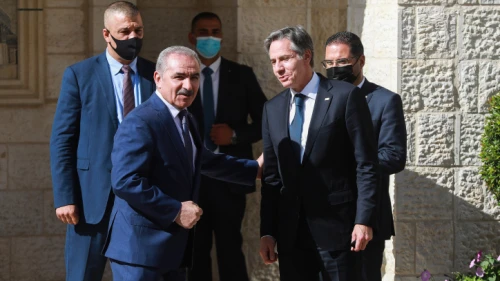
While averting a P.A. collapse would prevent the more violent Palestinian faction, Hamas, from seizing control, Foundation for Defense of Democracies analyst Jonathan Schanzer says trying to bolster the P.A. through economic development is nothing more than “a band-aid on the problem.”
Elai Rettig, assistant professor at the Department of Political Studies at Bar-Ilan University, says Energy Minister Karine Elharrar’s refusal to award new offshore licenses for gas exploration is “odd” because “she positions it as against gas. One doesn’t have to come at the expense of the other.”
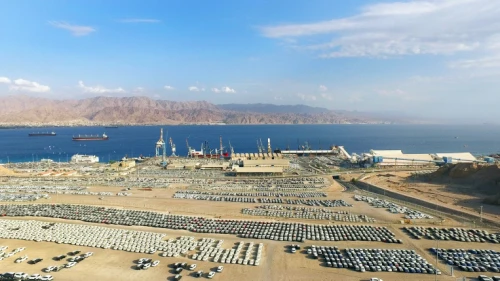
Hailed as the first major partnership to come out of the Abraham Accords, the deal has come under fire from environmental groups for allegedly posing a risk to the Gulf of Eilat’s coral reefs.
Experts say the resolution ignores the reality of academic freedom in Israel. According to the Israeli Council for Higher Education, approximately 54,000 Arab students attend Israeli universities, comprising 17 percent of all students in Israel.