Newsletter
Newsletter Support JNS
David Isaac

David Isaac

Explore Senior Israel Correspondent David Isaac’s expert analysis on Jewish history, politics, and current events at JNS.

“The economy is doing great. Other issues need to be addressed, and I think Iran is the No. 1 issue,” said Yoel Guzansky, a senior research fellow at the Institute for National Security Studies.
“The Egyptians are mediators, the conveyor of messages. No one’s paying attention to what’s not happening. There has not been one incendiary balloon for a month. Sometimes, what doesn’t happen is a very important thing,” said Eran Lerman, vice president of the Jerusalem Institute for Strategy and Security.
“The relationship between Greece, Cyprus and Israel now is so strong and so coordinated, it’s easy to forget that it hasn’t always been that way. And for a long time, the relationship was pretty contentious,” said Julie Fishman Rayman of the American Jewish Committee.
Israel Ganon, chairman of the Association of Public Transport Drivers in Israel, says drivers carry the trauma of violent incidents long after they’re over, and that “the Ministry of Transportation must give drivers moral backing and regulatory support as much as possible.”
“When the foreign minister goes and visits countries and publicizes it, that’s good. It’s very important to explain the Israeli point of view, to explain the Iranian threat to the world—above all, the nuclear threat,” said David Menashri, founding director of the Alliance Center for Iranian Studies at Tel Aviv University.
“Stable and durable peaceful relations with neighboring countries are best served by connecting grids, whether water, electricity or telecommunication. This creates an association of mutual interests,” said former Israeli Ambassador to Jordan Oded Eran.
Praising the moves, Israel’s Minister of Foreign Affairs Yair Lapid also noted that any distinction between separate arms of these terror organizations is “artificial.”
“Even though this one conviction doesn’t prove guilt in the other cases, it does prove that there is a process going on behind the scenes, that the PFLP is using NGOs to hide their fundraising,” said Itamar Marcus, founder and director of Palestinian Media Watch.
“At the end of the day, Israel does have the upper hand. It’s created for itself alternatives to its relationship with Turkey. So today, compared to 10 years ago, Israel is much less in need of Ankara than it was previously,” said Gallia Lindenstrauss, a senior research fellow at the Institute for National Security Studies.
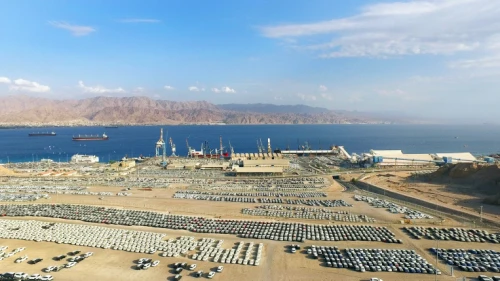
The main argument against the deal is that it would lead to a sharp rise in the number of oil tankers visiting the Gulf of Eilat, creating a threat to Israel’s coral reefs in the event of a spill.
“For a long time, the Saudis haven’t liked the current Lebanese government. They are refusing to help Lebanon because they feel Hezbollah controls the political system and influences everything,” said Orna Mizrahi at Israel’s Institute for National Security Studies.
“The Gulf is a trade hub for a lot of European and Asian companies,” said Dan Catarivas, director general of foreign trade and international relations at the Manufacturing Association of Israel.