Three years after the Oct. 7, 2023, Hamas massacre devastated communities along the Gaza border, southern Israel is showing signs not merely of recovery but of rapid growth, with new housing, technology companies and innovation centers taking root in some of the places hardest hit by the attack.
In Ofakim, where dozens of residents and police officers were killed fighting Hamas terrorists, the population has surged and apartment prices have climbed sharply. Across the Western Negev, meanwhile, startups are cooling artificial intelligence chips, developing technology to remove stroke-causing blood clots and using virtual reality to treat trauma.
“Where most see crisis, we see the world’s most advanced living lab for resilience,” Eran Segel, co-founder of the Sderot Health and Resilience Innovation Hub, known as RISE, told The Press Service of Israel.
The transformation is particularly striking in Ofakim, about 22 kilometers (14 miles) from the Gaza Strip.
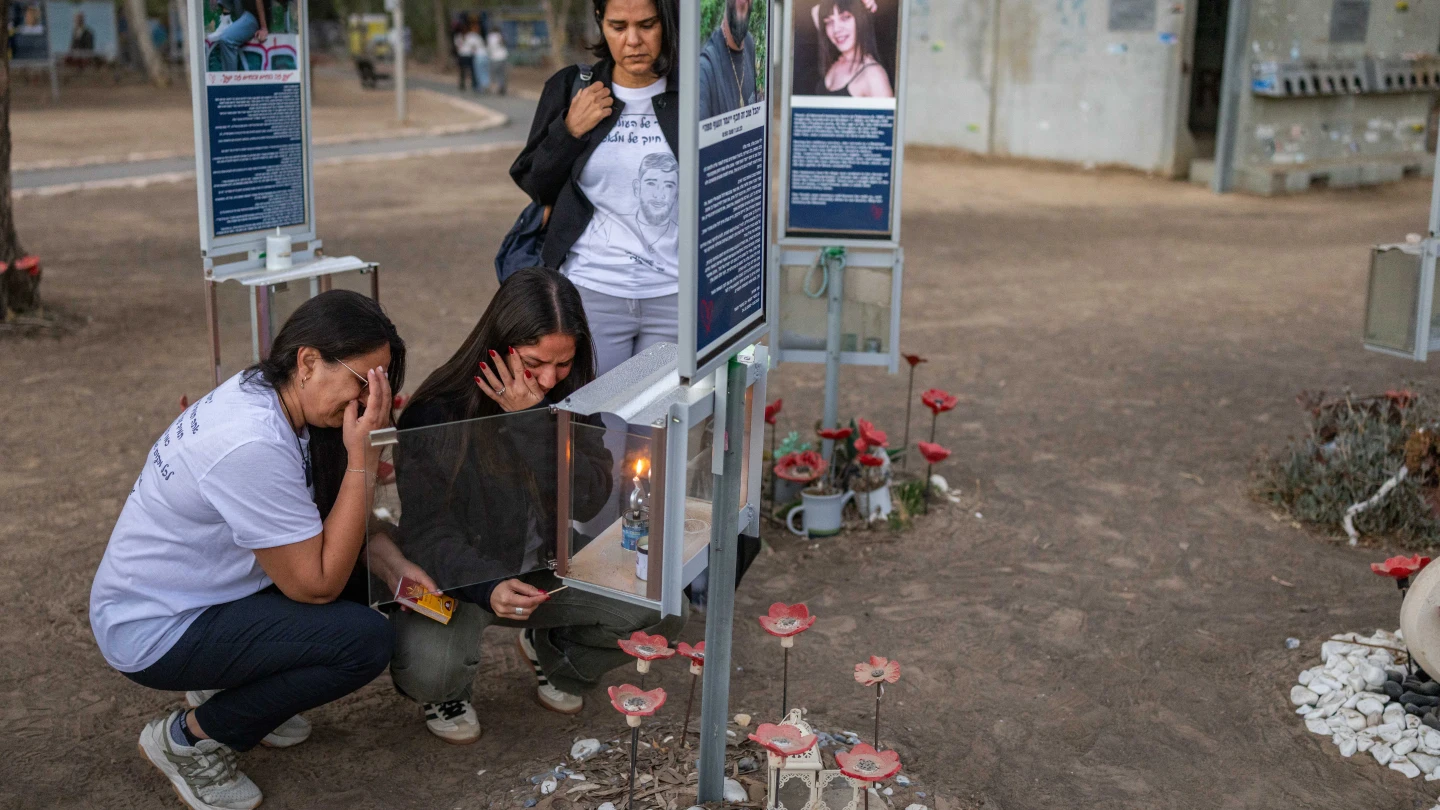
On Oct. 7, Hamas terrorists entered the city within minutes of the first rocket alerts and fought fierce street battles in residential neighborhoods. According to Mayor Itzik Danino, 48 residents and police officers were killed.
An IDF investigation found that troops arrived too late to prevent the massacre and failed to coordinate adequately with local police. Dozens of armed residents, police officers and retirees joined the battle against the terrorists before a coordinated security response could be mounted.
Three years later, Danino says Ofakim refuses to be defined by that day.
“But Ofakim is not defined by Oct. 7,” he told TPS-IL. “It is defined by what happened afterward.”
From battleground to boomtown
Ofakim’s population has grown dramatically in recent years. Danino said it now stands at roughly 55,000, compared with about 24,000 seven years ago, and the municipality expects it to reach 80,000 within three years.
The growth has been accompanied by a housing boom. By 2025, apartment prices in Ofakim had risen 18.9%, among the sharpest increases recorded in an Israeli city, according to TPS-IL.
Central Bureau of Statistics figures cited by the news agency showed Ofakim leading the country in new apartment sales during one recent reporting period, with 706 units sold, a 72.6% increase.
The city plans to add some 13,000 housing units in already approved neighborhoods as it pushes toward an eventual population of 100,000.
Demand began rising before Oct. 7 but accelerated after the massacre as evacuees from Gaza-border communities sought housing, particularly apartments with reinforced safe rooms and elevators. Tax benefits for residents of Ofakim, Netivot and Sderot have also helped attract buyers.
The growth comes alongside efforts to turn Ofakim into a technology center. Under a plan launched in 2018 to establish the city as a hub for agricultural technology, the SEED Innovation Center now houses more than 20 startups and agricultural research laboratories.
At the same time, the city has bolstered security, doubling its police force, guarding entrances after 11 p.m. and deploying more than 2,000 smart cameras.
Yet the scars remain. Danino said more than 5,000 residents are dealing with trauma-related disorders and are being treated by some 90 psychologists and psychiatrists.
“These measures cannot erase what happened,” he said. “But they demonstrate something important: Ofakim was attacked because its enemies believed they could break it. Instead, Ofakim is growing.”

Innovation along the Gaza border
That determination is echoed across the Western Negev, where an innovation ecosystem that was still relatively young before Oct. 7 managed to survive evacuations, reserve duty, disrupted investment and the displacement of employees.
The Western Negev Innovation Authority, known in Hebrew as Hamitbah and headed by CEO David Gabay, now works with about 150 startups.
At its center is SouthUp, a nonprofit technology incubator established at Kibbutz Nir Am in 2017. According to the organization, the region had no high-tech companies in 2014.
Unlike most Israeli incubators, which take an equity stake in the companies they support, SouthUp takes none. Instead, it connects entrepreneurs with government grants, laboratories, mentors and investors.
Its venture arm is named for Ofir Libstein, head of the Sha’ar HaNegev Regional Council and an early champion of the initiative, who was murdered by Hamas terrorists on Oct. 7.
SouthUp had 24 startups when the attack occurred, according to CEO Gil Shwarzman, a resident of Kibbutz Gevim near Sderot. With the region evacuated, the organization scrambled to find alternative workplaces for its companies. Employees were called up for reserve duty and some investors withdrew.
Most of the companies survived.
Ami Appelbaum, chairman of Ofir SouthUp Ventures and a former chairman of the Israel Innovation Authority, put the portfolio’s survival rate at 85%. SouthUp is aiming for 60 active startups employing 600 Western Negev residents by 2029.
Among its success stories is ZutaCore, which produces a waterless cooling system placed directly on AI processors. The company employs about 140 people, roughly 100 of them in Israel at its research and development center in Sha’ar HaNegev.
ZutaCore had only about 40 employees on Oct. 7. Within a week of the massacre, its staff were working from evacuation housing. Ten days later, the company appeared at a conference in San Jose, Calif., to demonstrate to partners that it remained operational.
In June, it raised $100 million in a Series C financing round from Mitsubishi Electric, Samsung Ventures and Carrier Ventures. Appelbaum valued the company at $500 million.
From medical technology to autonomous drones
Other companies are developing technologies with potential medical and security applications.
Inretio Medical Device is developing PREVA, a net inserted through an artery to the brain that encloses and removes a stroke-causing blood clot while preventing fragments from breaking away downstream.
Founder and CEO Raviv Vine left the semiconductor industry to establish the company after his best friend’s father died of a stroke. The company says its device achieved first-pass clot removal in five of six procedures during an early human study at Sheba and Hadassah medical centers.
After Oct. 7, SouthUp found the evacuated company temporary space in central Israel, allowing it to continue manufacturing for six months before returning south.
For Omer Maroodi, the connection between the technology sector and the events of Oct. 7 is intensely personal.
Maroodi grew up on Kibbutz Re’im, five kilometers (3 miles) from Gaza. On the morning of the massacre, he fled with his wife and baby daughter minutes before terrorists entered the kibbutz. He later heard them over the family’s baby monitor searching their home.
In May, Maroodi and high school friend Adam Goldbraikh, a former Elbit Systems sensor-fusion team leader, founded Nova Dimension near the Gaza border. The company develops onboard artificial intelligence systems designed to enable drones and robots to operate autonomously.
‘We want to move forward and build’
Some of the region’s innovation is aimed directly at the psychological consequences of years of war and the Oct. 7 massacre.
RISE opened its Sderot facility in 2024, while the war was still underway. Segel said 310 ventures have joined its community and 68 have completed its programs. Twenty-four startups now work with the city’s clinics, schools and welfare services, while nearly all of its 18 core portfolio companies are conducting pilots there.
“We don’t want to bounce back to Oct. 6, 2023,” Segel said. “We want to move forward and build.”
Among the ventures is WalkImpact, an AI platform for soldiers’ families founded by reserve Maj. Eliav Ser, who has served more than 450 days of combat duty since Oct. 7.
“Coming home does not always mean the war is over,” Ser told TPS-IL.
Neao Reality, run by Eti Neaman, provides remote group therapy using virtual reality and has treated more than 150 patients while working with hospitals and the Defense Ministry.
The push to rebuild is also reaching a younger generation. Tsela Ben Zaken, 16, of Be’eri High School, is developing an emergency-preparedness platform for municipalities with two other participants in the MEITAL youth innovation program.
In the agricultural sector, AgroNegev connects technology companies with Western Negev farms and recently partnered with Oracle after the U.S. technology company approached the organization.
Its CEO, Shahaf Maroodi, grew up on a kibbutz four kilometers (2.5 miles) from Gaza.
“We won’t be the victims of our story,” he said. “If we don’t rebuild better, we lose twice.”