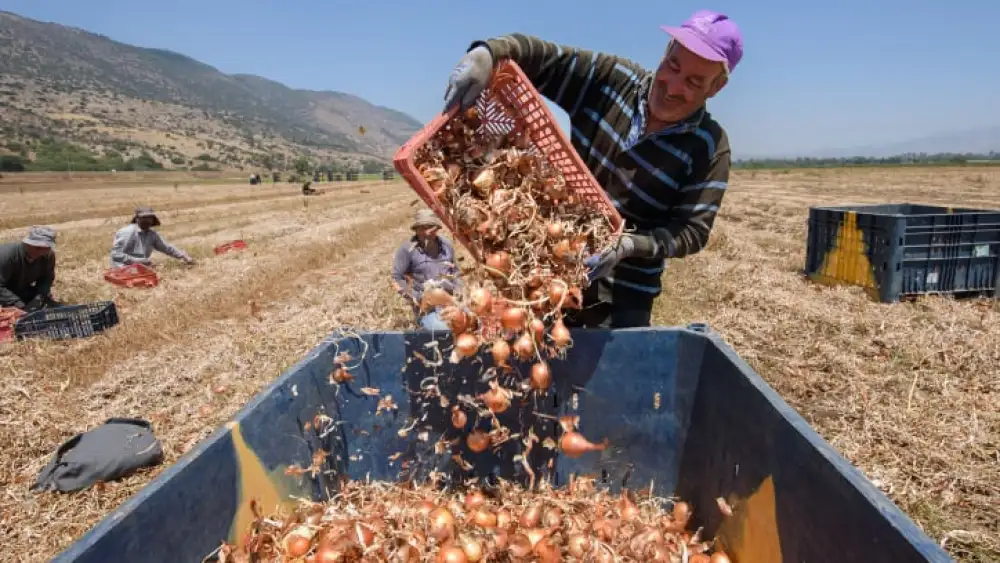
Israel’s Ministry of Agriculture will increase imports of onions and tomatoes to offset a projected shortage through the end of March.
No shortages of peppers, carrots, potatoes or sweet potatoes are expected.
A gap in the supply of cabbage has been narrowed, and it is expected to return to normal in about two weeks.
The ministry added that this season’s yield of strawberries will be lower than usual, but the scope depends on the availability of professional workers for picking.
Israeli agriculture is facing staggering losses in production and manpower. Before Oct. 7, Israel had 29,900 foreigners, mostly Thais, working in farms, orchards, greenhouses and packing plants. Nearly all have returned to Thailand.
Farmers also employed 10,000 to 20,000 Palestinians, depending on the season, but they are currently denied entry into Green Line Israel.
Israeli workers who might have filled the gaps have been called up for military reserve duty.
And because of security concerns, farmers near the Gaza and Lebanese borders cannot access many of their fields and orchards.
A survey of 389 farmers conducted by the MIGAL Galilee Research Institute in November found that 89% of Israeli farmers had experienced some form of damage, and 96% expected more during the next three months. While farmers in the Gaza and northern regions have had the greatest disruption, all areas have been severely affected, and the impact is expected to continue for months to come.
Nearly three-quarters of the farmers, 72%, said they have experienced disruptions to their workforce, even in areas not near Gaza or Lebanon such as central Israel and the Jordan Valley.
Access was another problem cited by farmers, with 23% saying they couldn’t reach their fields to plant, pick crops or perform routine fertilizing or irrigation work, or damage control. Those farmers were primarily near the Gaza and Lebanese borders.
When asked to estimate their expected losses, farmers on average predicted a 35% drop in both production and revenue. But farmers in the area near the Gaza border—regarded as Israel’s breadbasket—projected on average a 70% loss of produce and 69% loss of income.