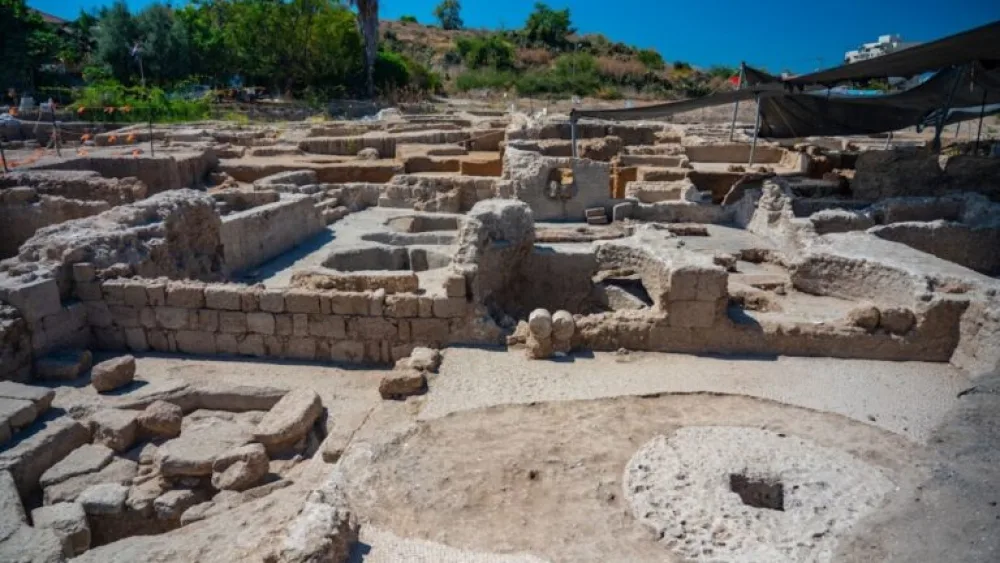
When an initiative to expand the Israeli coastal city of Yavne first took off, few could have imagined the endeavor would include a fabulous archeological find: the largest and most impressive Byzantine winepress ever unearthed.
As part of preliminary work to build a new neighborhood, archeologists found the 1,500-year-old industrial complex, which includes five winepresses, warehouses to age and market the wine, kilns for firing the clay jars storing the wines and tens of thousands of earthenware jars, both intact and fragmented
The wine produced at the site was a light white “Gaza wine” famous at the time. It was exported via the Gaza and Ashkelon ports to markets in Egypt, Greece and Turkey.
The large size of the site led archeologists to estimate that some two million liters were produced there annually, all by hand—or rather by foot, as the grapes were crushed by treading on them.
Drinking wine was common in the Byzantine period, both for adults and children. This was because water was often either unsanitary or unpalatable, and wine was used as a “concentrate” to improve its flavor, or as a replacement drink.
“Gaza and Ashkelon wine was considered a quality wine brand of the ancient world, whose reputation has spread far and wide, a bit like Jaffa oranges denote their origin and quality today from Israel,” explained archeologists Elie Hadad, Liat Nadav-Ziv and Jon Seligman.
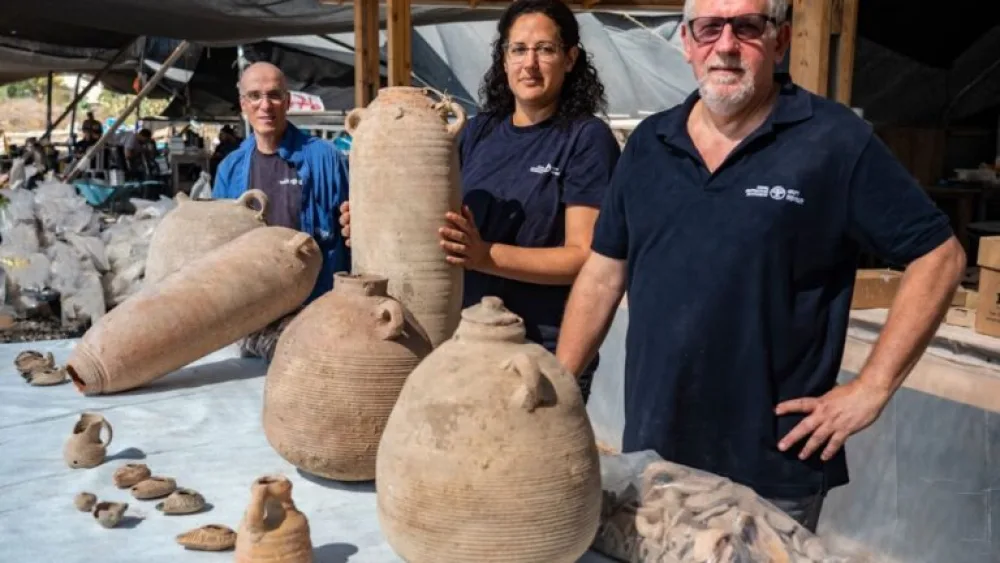
“Everyone knew that this was a product from the Holy Land, and everyone wanted more and more of this wine.”
The Israel Antiquities Authority and the Israel Land Authority, which carried out the digs, together with Yavne Municipality, invited the public to tour the winemaking complex before it is covered to protect it from impending rains.
The complex will be open to visitors once the findings are preserved and made accessible.
This article was first published by Israel21c.