Middle East
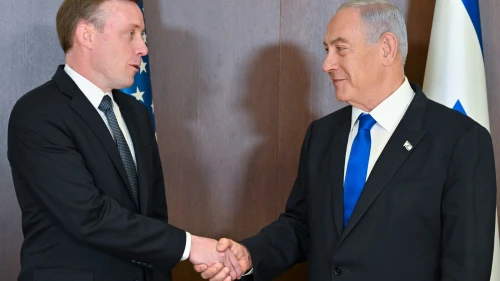
The Israeli PM met with U.S. National Security Advisor Jake Sullivan to discuss the Iranian threat and expanding the Abraham Accords, with a focus on Saudi Arabia.
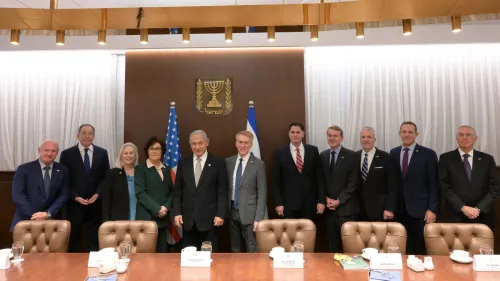
The U.S. lawmakers also met with Israeli Defense Minister Yoav Gallant, who stressed the need to maintain the Jewish state’s military superiority to combat the Iranian threat.

Rosen (D-Nev.) reportedly told Israeli officials that she would not meet with Ministers Bezalel Smotrich and Itamar Ben-Gvir.
The delegation, led by Sens. Jacky Rosen (D-Nev.) and James Lankford (R-Okla.), has visited Morocco and Bahrain and will also travel to the United Arab Emirates and Israel.
At the Negev Forum, senior officials from Bahrain, Egypt, Israel, Morocco, the United Arab Emirates and the U.S. discussed opportunities to advance initiatives aimed at regional cooperation.

Jonathan Schanzer: The kingdom is unwilling to downplay the Palestinian issue because its population is majority Palestinian.

While Doha supports radical elements in the region, it also seeks to promote its image in the West.
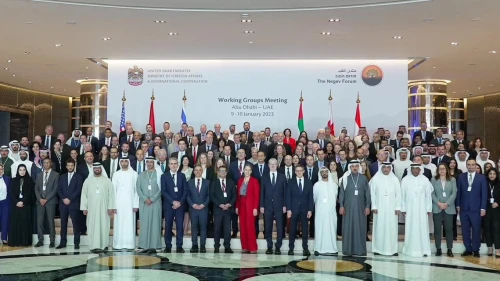
The forum held its first summit last March in Israel’s Negev, attended by the UAE, Morocco, Bahrain, Egypt and the United States.

“We will do everything to prevent the return to this bad agreement, which is leading to a nuclear Iran under international auspices,” says the Israeli prime minister.

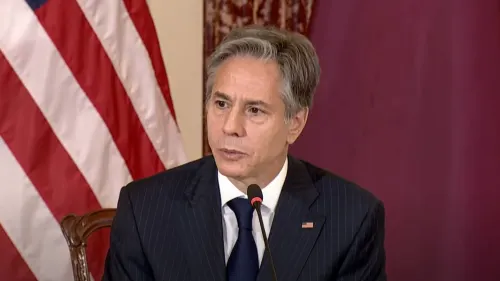
The secretary of state also “emphasized the continued U.S. commitment to a two-state solution and opposition to policies that endanger its viability,” said the State Department.
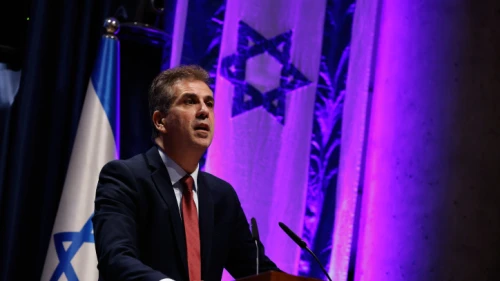
“As in the past, so it will be the same in the future. Our priority will be the strategic relations with our closest ally, the United States,” says Eli Cohen.
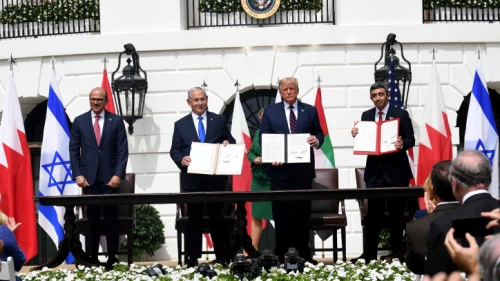
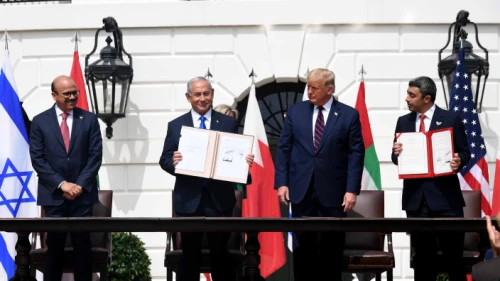
Netanyahu was prime minister in Sept. 2020 when Israel normalized relations with Abu Dhabi as part of the Abraham Accords.