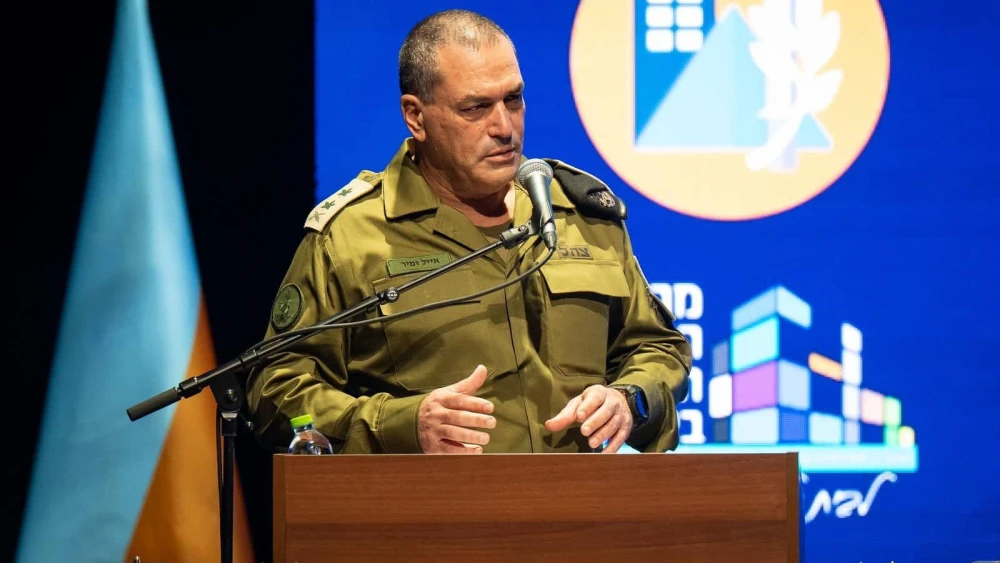

The Israel Defense Forces has held a series of high-level situational assessments over recent days led by Chief of Staff Lt. Gen. Eyal Zamir, following the escalating unrest in Iran.
The move comes as the regime in Tehran faces a renewed and volatile wave of internal protests, clashes and murderous repression by the Islamic Republic against its citizens.
According to a military official, the IDF is monitoring developments in Iran, but stressed that “the protests are an internal Iranian matter.”
Nevertheless, he said, “the IDF is prepared defensively and is continuously improving its capabilities and operational readiness. We will be equipped to respond with power, if need be. The IDF will continue to operate to protect the citizens of the State of Israel.”
On Sunday evening, U.S. President Donald Trump told reporters on board Air Force One, “They are not leaders [in Iran]. They rule through violence. We are looking at this very seriously. The military is looking at it, and we have very strong options on the table.”
He added, “I’m getting hourly briefings and we will make a determination. I’m not going to say when, where or how we would act.”
Meanwhile, according to a BBC report, Iranian Parliament Speaker Mohammad Bagher Ghalibaf warned that an American attack would result in Iran striking Israeli and American military and shipping targets in the Middle East.
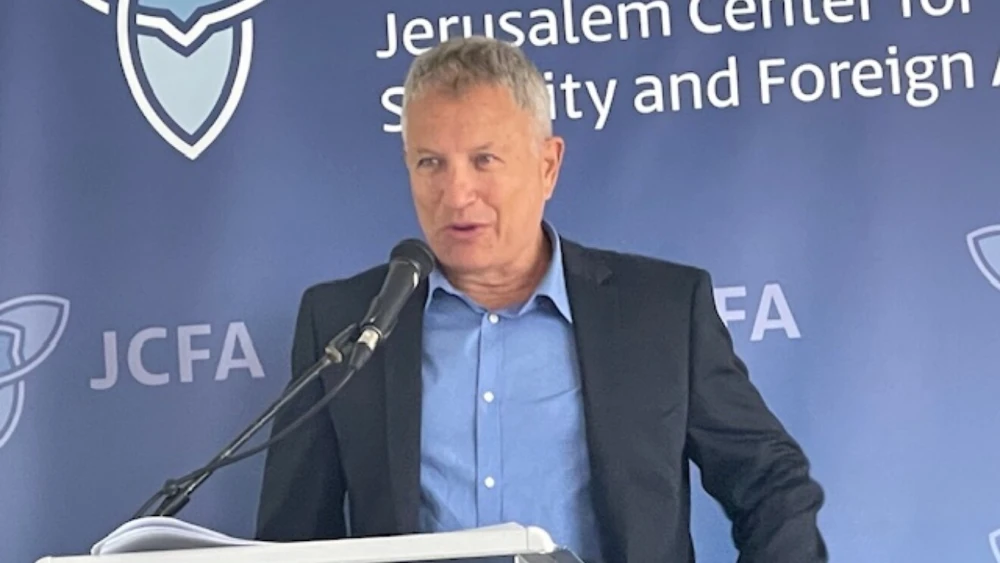
Oded Ailam, a former head of the Counterterrorism Division in the Mossad and currently a researcher at the Jerusalem Center for Security and Foreign Affairs (JCSFA), wrote in Israel Hayom on Sunday that the regime’s leadership is facing unprecedented pressure, facing “existential bankruptcy.”
This is fueled by some 60% inflation, a chronic lack of energy in the oil-rich country, and a loss of tools by the regime to deal with the crisis. Meanwhile, he stated, Iran’s economy is being choked by the UN Snapback sanctions, while “even allies China and Russia are standing on the side.”
“In the world of intelligence, a prominent presence is often damaging. Israel must internalize that it is still perceived as an enemy among many layers in public. A public act would enable the regime to color the protest in the colors of a ‘Zionist conspiracy’ and unify the ranks again. Instead, Israel should operate in the shadows,” said Ailam.
This includes cyber cognitive campaigns, encouraging defections (including promises of immunity for the day after the regime falls), secretly arming separatists in Iran like the Kurds in the west and the Baluchi separatists in the northeast, and using satellites and cybers to provide protesters with continuous internet services, despite attempts by the regime to disconnect the internet.
“Israel must be the ‘wind’ feeding the flames, not the oxygen that allows the regime to define the protest as a foreign invasion,” said Ailam.
The collapse of Iran’s regional proxies—the Assad regime, Hezbollah, Hamas and Venezuela—plus the blows it absorbed from Israel and the U.S. in June 2025 have fractured the regime’s domestic image, Ailam argued.
Still, he cautioned, while the protests spread to 31 districts, the silence of the majority of Iranians is still deafening, and the lack of mass defections by officers or key members of the religious institutions, or the lack of a shutdown of key sectors like petrochemicals, bus drivers or others is missing. “The key to stability remains in the hands of those holding weapons and money,” said Ailam.
The Islamic Republican Guard Corps elite military organization doubles up as a conglomerate controlling 35 to 40$ of the Iranian economy, while running an arms industry worth tens of billions of dollars, as well as infrastructure, construction, oil and media.
The military official’s explicit mention that the IDF is “continuously improving its capabilities” likely refers to the ongoing evolution of Israel’s multi-layered air defense array. This includes the Arrow-3 system, designed to intercept ballistic missiles outside the atmosphere, and the David’s Sling system, which handles medium-to-long-range threats.
However, the more pointed message in the official’s statement was the threat of offensive action: “We will be equipped to respond with power if need be.”
This could signal that the IDF has potentially updated its bank of targets within Iran. Unlike previous years, in which the focus was primarily on the Iranian nuclear program, the current readiness likely includes contingency plans for striking additional targets, should Tehran attempt to export its chaos to Israel.
For now, Israel remains in a defensive crouch, watching the streets of Tehran burn.