Newsletter
Newsletter Support JNS

Netanyahu allows cabinet ministers to again visit the Temple Mount

Lawmakers were banned from the holy site after the outbreak of the 2015 wave of terrorism • Last year, the Israeli prime minister acted on police recommendation to allow MK visits, with restrictions • Arab MK Hanin Zoabi: Non-Muslims have no reason to be on the mount.

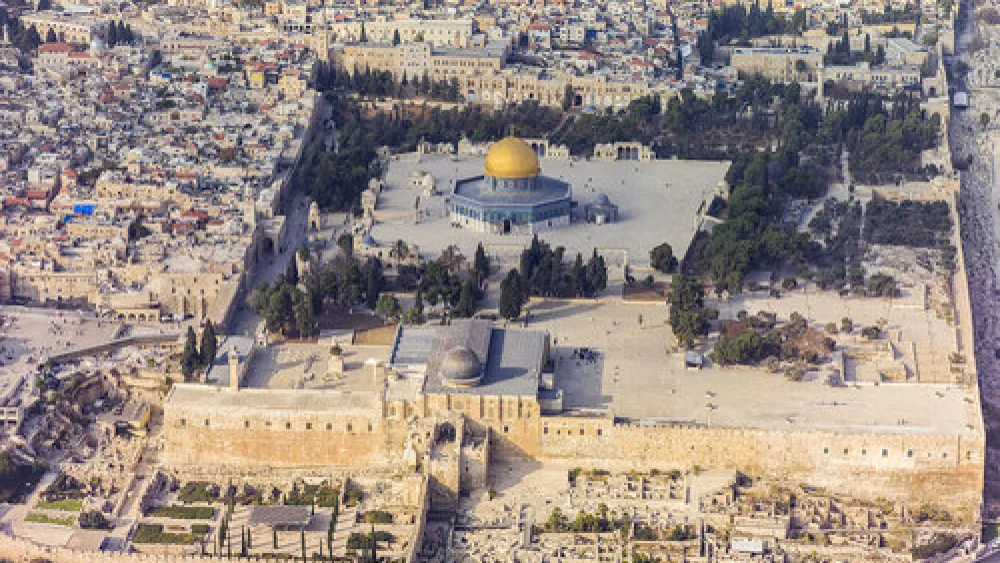
An aerial view of the Temple Mount in the Old City of Jerusalem. Credit: Wikimedia Commons.

Two years after ordering lawmakers to keep away from the Temple Mount because of the volatile nature of the political situation at the holy site, Israeli Prime Minister Benjamin Netanyahu has retracted the order and allowed Knesset members and cabinet ministers to visit the site if they wish, Hadashot evening news reported on Tuesday.

Netanyahu reportedly sent a letter to Knesset Speaker Yuli Edelstein announcing that lawmakers who wish to visit the site would be allowed to do so once every three months.

The prime minister issued the initial directive in October 2015 after the country was engulfed by a wave of lone-wolf terrorism, which caused tensions at the always-fraught holy site to flare up. In October 2016, the Israel Police issued a recommendation that MKs be allowed on the mount, and in January 2017, the Knesset Ethics Committee removed the ban on such visits to the site, but kept certain restrictions about the frequency and timing of the visits in place.

The Joint Arab List objected to the decision.

“Netanyahu will not tell Muslims, MKs or anyone else when to enter [the Temple Mount compound] and when to pray. Anyone who is not a Muslim has no reason to be there,” MK Hanin Zoabi said on Tuesday.

“Netanyahu wants to fan the flames so he can avoid the criminal investigations [against him] and the threat to the coalition,” said Zoabi. “Leave the mosques alone.”

The suspect was arrested in Qalqilya in May after being released from Palestinian Authority custody.
Meitav officer gives JNS a behind-the-scenes look at how Israeli recruits are screened, evaluated and assigned roles in the military.
The Pickaxe facility, located near the Natanz enrichment complex, is believed to be buried deeper than Fordow and was not attacked during the 12-day war or the current round of fighting.
If Israel is forced to prepare for a military confrontation with Ankara, it would require a fundamental rebuilding of the Israel Defense Forces, especially on the naval front, a process that could take years.
The complaint urges the Justice Department to determine “who funds, directs, coordinates, services and benefits” from the group’s work, and to sanction it for its alleged terror ties.
Yosef Dagan championed the penalty shootout after Israel’s elimination from the 1968 Olympics by the drawing of lots.