



The events of the past week in the West Bank could have easily led one to believe that, a decade after its onset, the Arab Spring has finally reached Ramallah.
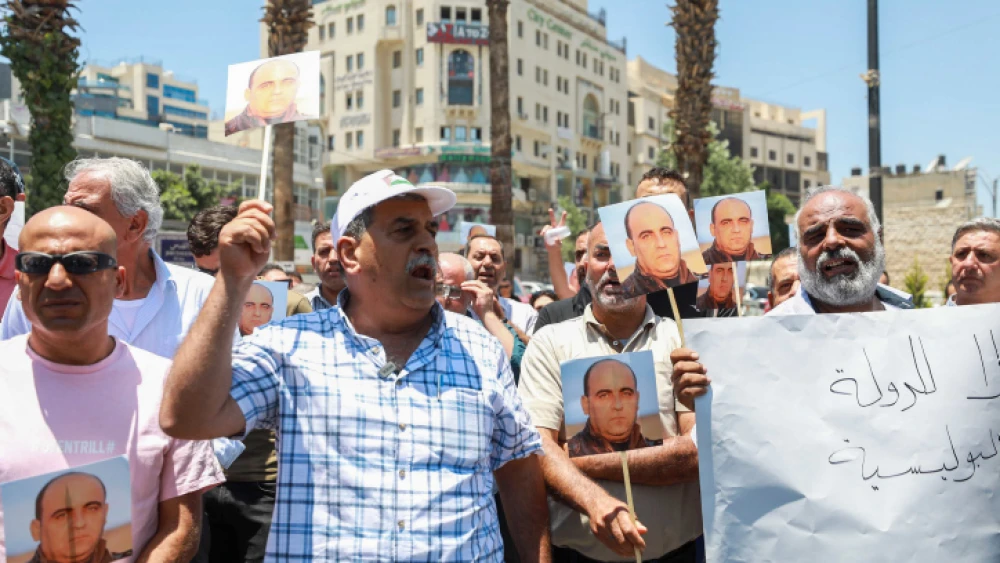
Thousands of Palestinian youth took to the streets last week, clashing with the Palestinian Authority’s security forces and demanding that P.A. leader Mahmoud Abbas step down—just like their counterparts in Cairo and Tunis did 10 years ago.
What made the Palestinians turn on their leader was the death in custody of Nizar Banat, an activist who was one of the Abbas regime’s most vocal critics. News of his death made the simmering unrest among Palestinians—fed up with the corruption, failures and impotence plaguing the P.A.—boil over. One should not, however, be overly impressed by these protests. As elsewhere in the Arab world, the older generation is the one to benefit from the struggle of the younger one, as it remains in power not only within the family, but also in the society and the state. What is more curious here is the lack of interest on the part of Israel and the international community in the circumstances of Banat’s death—the apparent murder of a staunch critic of the P.A., by its security forces.
Having lost all hope for a better future under Fatah or Hamas rule, many Palestinians were also indifferent to Banat’s death. They focus their struggle on Israel, although many would prefer to become citizens, as many Palestinians in eastern Jerusalem have.
The Palestinians’ allies have also remained silent. That various Western NGOs that rush to condemn Israel for every perceived affront against the Palestinians have had nothing to say on this issue.
These groups welcome—encourage even—criticism of Israel, but when it comes to Arab rulers, they find it best to remain silent. No one, Arab Israeli Knesset members included, has anything to say against the atrocities of Arab rulers the likes of Syrian President Bashar Assad or Libyan dictator Muammar Gaddafi.
The position is that this is how things are done in the Arab world, and so this is a reality we must learn to accept.
A few days after Banat’s death, Haifa resident Maysar Othman was murdered in front of her children, for committing the sin of divorcing her husband. Here, too, not one Arab lawmaker or local Arab leader saw fit to issue a condemnation.
These leaders hold on to conspiracy theories that pin the violence in the Arab sector on criminal gangs that collaborate with the Israeli government, thus exempting themselves from the need to fight this phenomenon. Not for nothing, but not one local Arab Israel leader condemned the May riots that saw Arab mobs attack their Jewish neighbors in mixed cities.
We live in a region that lags behind economically and socially, and where traditional society sanctifies violence as a way of life. Many in Arab society are aware of the challenge, but they are also aware of the opportunity that life in Israel can provide them in terms of escaping this cycle of violence, and they need to be nurtured.
Eyal Zisser is a lecturer in the Middle East History Department at Tel Aviv University.
This article first appeared in Israel Hayom.



