


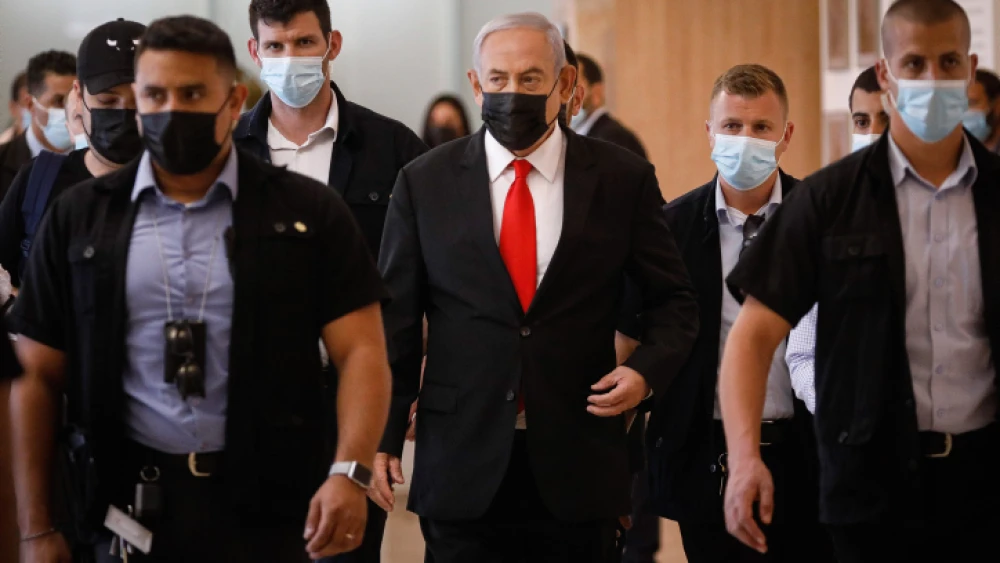
Israeli Prime Minister Benjamin Netanyahu failed to form a government before his mandate expired on Tuesday night, leaving his political future uncertain as the country tries to avoid another round of elections.
The Likud Party blamed Yamina Party leader Naftali Bennett for the impasse, saying his refusal to commit to a right-wing government, which would have prompted additional Knesset members to join in, was responsible for the situation.
Even if Bennett joined Netanyahu’s coalition, it would still fall shy of a 61-seat majority needed in the 120-member Knesset. Netanyahu had the support of 52 MKs.
Israeli President Reuven Rivlin could give the mandate to form a government to another candidate, such as Yesh Atid leader Yair Lapid, who also serves as opposition leader. Rivlin could also send the mandate back to the Knesset, which would have 21 days to find a candidate backed by 61 or more members of the Knesset. If the Knesset fails to do so, it would automatically dissolve and trigger a new round of elections.
Reports indicate that Lapid is the likely choice, as he was endorsed by 45 MKs in April and is the head of the second-largest party in the Knesset with 17 seats. Bennett, who heads a part of only seven MKs, has also been floated as a possibility.
In recent weeks, Lapid and Bennett have been negotiating over the formation of a “change coalition,” which would see the two-party leaders form a rotational unity government based on parties opposed to Netanyahu on the right and the left.
However, such a coalition would also likely fall a few seats shy of a majority, unless an Arab party, such as Ra’am, which has never supported an Israeli government, would join or support the government from the outside. Also, given the wide range of political views in a so-called “change coalition,” it remains unclear how stable the government would be or if they could even put aside their differences to form a government in the first place.
Israel could face the possibility of a fifth return to the voting booth late this summer in less than three years. While this would extend Netanyahu’s term as prime minister as the head of a caretaker government, he is also currently on trial facing corruption and bribery charges.


