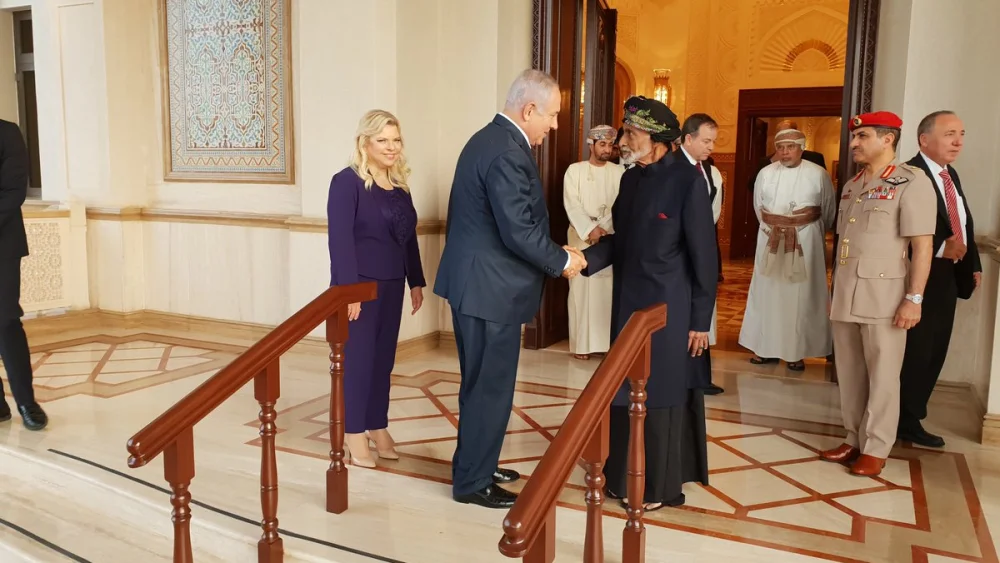
A senior Israeli official recently met with Sayyid Badr bin Hamad bin Hamood al-Busaidi, the foreign minister of Oman, to strengthen ties and promote regional cooperation.
Oman seeks to distinguish itself from the United Arab Emirates and Bahrain, so any advancement in relations would require a separate and direct link between Muscat and Jerusalem, according to an official Israeli Foreign Ministry document obtained by i24NEWS.
The meeting took place on the sidelines of the MEDRC forum in Oman. The Israeli Foreign Ministry’s deputy director general for the Middle East and Peace Process Affairs attended.
MEDRC is an international organization mandated to find solutions to freshwater scarcity.
The future opening of Oman’s skies to Israeli flights would enable airlines to take full advantage of Saudi Arabia’s opening of its own airspace to Israeli flights. The issue was brought up during the meeting with Sayyid Badr, but no progress has been made thus far.
The Omani minister emphasized that his country prefers an active but quiet role in the region, allowing it to maintain a direct dialogue with both Israel and the Palestinians.
Israel invited Oman to join the Negev Forum and collaborate on several regional projects, focusing on those that benefit Palestinians.