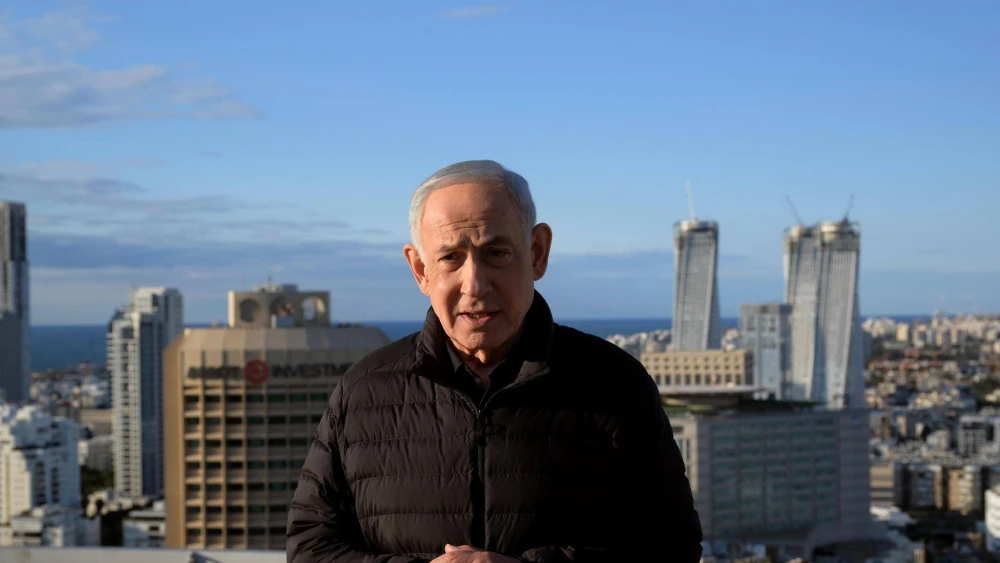

In early May, Israeli Prime Minister Benjamin Netanyahu announced that Israel is preparing to begin reducing its dependence on U.S. military aid.
Speaking on CBS‘s flagship news program, “60 Minutes,” Netanyahu told correspondent Major Garrett that he wanted to “draw down to zero the American financial support, the financial component of the military cooperation that we have,” over the next decade.
“I said, ‘Let’s start now and do it over the next decade, over the next 10 years, but I want to start now. I don’t want to wait for the next Congress,’” he said.
The statement consolidated a position Netanyahu had been advancing since at least February 2026, when he told the Conference of Presidents of Major American Jewish Organizations that Israel sought to “move with the United States from aid to partnership.”
For decades, Washington’s roughly $3.8 billion in annual military assistance symbolized the strength of the bilateral relationship. But the multi-front war triggered by Hamas’s Oct. 7, 2023, massacre exposed what many Israelis view as vulnerabilities created by dependence on U.S. political approval, foreign supply chains and American production timelines.
Supporters of Netanyahu’s proposal argue that it does not represent a rejection of the alliance, but rather an effort to transform it from an aid-based relationship into a partnership between sovereign allies.
Critics counter that the move could weaken Israel’s military preparedness while doing little to reduce its reliance on American weapons systems.
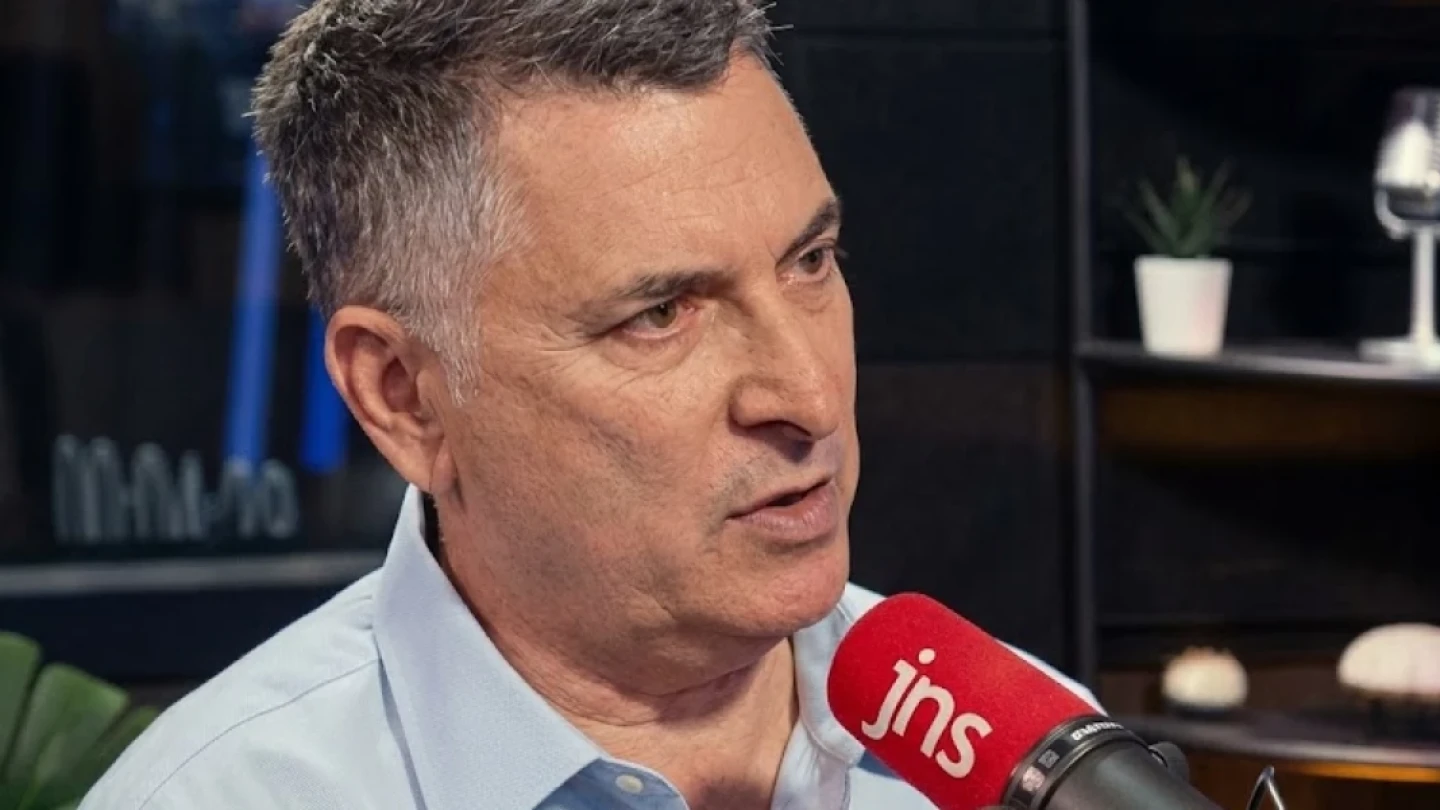
“Do I think that Israel can manage without the financial aid? Certainly, it’s realistic in the long run, not right now and not immediately,” Dr. Tomer Fadlon, a research fellow in economics and national security at the Institute for National Security Studies, told JNS.
“Do I believe that Israel can manage without buying American military equipment and without getting any military assistance from military industries in the United States? No, I don’t think that Israel can survive that.”
The current framework
The existing relationship is governed by a Memorandum of Understanding signed in 2016, covering fiscal years 2019 through 2028.
Under the agreement, the United States committed $38 billion in military assistance, including $33 billion in Foreign Military Financing grants and $5 billion for joint missile-defense programs, such as Iron Dome and Arrow.
The aid is not unrestricted.
As Netanyahu noted in February, the funding is “largely spent in the United States on equipment,” tying much of Israel’s procurement to American defense contractors and production schedules.
Historically, Israel enjoyed a unique exemption known as Off-Shore Procurement (OSP), allowing it to spend about 26.3% of annual U.S. military assistance on Israeli-made equipment. No other recipient enjoyed that privilege.
However, the 2016 agreement began phasing out OSP in 2024, with the program scheduled to end entirely in 2028.
“We are already gradually reducing the amount of money that we can convert from U.S. dollars to Israeli shekels to buy domestically, so some industries already feel the effect,” Fadlon said.
The effort to reduce dependence on U.S. aid has historical precedent. The first 10-year agreement between the two countries, covering 1999-2008, phased out U.S. economic assistance while preserving military aid.
In a 1996 address to a joint session of Congress, Netanyahu himself first proposed ending economic aid as part of a transition toward what he described as a more mature partnership.
According to Fadlon, Israel’s economic position today is vastly different from what it was when large-scale U.S. assistance began.
“The current aid is around $3.8 billion per year, which is approximately half a percent of Israel’s GDP,” he said. “It’s still a lot of money, but it’s not irreplaceable.”
By comparison, U.S. aid accounted for roughly 2.5% of Israel’s GDP in 1999.
The costs of dependence
The debate intensified during the current war.
In May 2024, amid concerns over Israel’s planned offensive in Rafah, the Biden administration paused a shipment of heavy munitions, including 2,000-pound bombs.
Then-U.S. Defense Secretary Lloyd Austin confirmed the move before a Senate Appropriations subcommittee.
“We paused one shipment of high payload munitions,” Austin said.
Although Washington remained broadly supportive throughout the war, the incident highlighted the degree to which critical wartime supplies could become subject to political considerations.
Even when no formal restrictions are imposed, Israeli military operations—from ceasefire negotiations to strikes in Beirut and operations against Iran—have often required close consultation with Washington.
The dependence extends beyond politics.
When the United States approved a $20 billion arms package for Israel in August 2024, deliveries of some systems were not scheduled to begin until 2026, while new F-15 aircraft were not expected until 2029.
Meanwhile, State Comptroller Matanyahu Englman reported in May 2026 that Israel entered the war with weakened domestic production capabilities, shortages in key stockpiles and no comprehensive strategy for sustaining wartime manufacturing.
According to Englman, years of prioritizing cheaper foreign procurement had damaged domestic production capacity.
“The lack of attention to the issue harmed Israel’s independence in producing weapons during the war,” the report concluded.
A changing political landscape
The debate over aid is unfolding as American public opinion toward Israel shifts.
According to a Gallup survey conducted in February 2026, Americans expressed greater sympathy for Palestinians than Israelis for the first time since the poll began tracking the issue in 2001.
Forty-one percent of respondents said they sympathized more with Palestinians, compared to 36% who favored Israelis.
The shift has been reflected in Congress.
While Senator Bernie Sanders’s 2025 resolutions seeking to block arms sales to Israel failed overwhelmingly, growing numbers of Democratic lawmakers have supported such measures.
Jonathan Rynhold, a professor at the Begin-Sadat Center for Strategic Studies at Bar-Ilan University, believes Netanyahu’s recent statements may be partly intended to get ahead of what could become a difficult political battle when the current MOU expires in 2028.
“It’s much better to say that we voluntarily want to reduce aid than to lose it all at the negotiations,” he told JNS.
Still, Rynhold cautioned against overstating the risks.
“The biggest supporters of Israel in America are the American military,” he said. “They don’t have another ally like Israel. What Israel can do and what Israel does is more than any other American ally in the world.”
Independence—with limits
Regardless of what happens after 2028, Israel has already begun investing heavily in domestic defense production.
In December 2025, Netanyahu unveiled a decade-long plan to invest 350 billion shekels ($98 billion) in strengthening Israel’s defense-industrial base.
Since then, the Defense Ministry has signed a series of major contracts with Elbit Systems, covering air munitions, artillery shells and domestic manufacturing infrastructure.
According to the Foundation for Defense of Democracies, Israel has ordered more than $3 billion in domestic defense procurement since the start of 2026.
“If you take the U.S. money out of the equation, you don’t have to spend the $3 billion in the United States, but you still need the military equipment, so now you can buy in-house,” Fadlon said.
Still, both supporters and skeptics acknowledge there are limits to what Israel can produce independently.
“We cannot manufacture F-35s,” Fadlon noted. “We cannot manufacture some kind of missiles that are manufactured in the U.S. We will still have to buy them.”
According to the Stockholm International Peace Research Institute, the United States accounted for 68% of Israel’s arms imports between 2021 and 2025.
“The idea that Israel can, or that it makes sense to, fully decouple from America is just nonsense,” Rynhold said.
Instead, he argued, the goal should be to expand Israel’s ability to act independently for limited periods if circumstances require it.
“For now, the best case is if America says, ‘Stop now,’ we can go on for a little longer,” he said.