Following weeks of military strikes, U.S. President Donald Trump recently declared that the war against Iran has achieved a forced transition of power.
“We really have regime change. You know, this is a change in the regime because the leaders are all very different than the ones that we started with, that created all those problems,” Trump said.
While formal regime change was not the stated goal of either the Israeli or the U.S. operations at their inception, it has always lurked in the background as a distinct possibility. The convergence of a decapitated leadership structure, catastrophic wartime economic devastation and an emboldened populace has pushed the state to the brink of total collapse. President Trump clearly characterized the current vulnerability of the Islamic Republic, saying, “The regime is a rotting corpse; let’s bury it and build a future where Iran and America thrive together. The opportunity is here; let’s seize it.”
Fertile ground for revolution
Iran possesses a modern history defined by mass uprisings. The current war represents a direct continuation and escalation of the civil unrest that began in January 2026, whose brutal repression served as the initial casus belli for the current conflict. This quashed revolt is in its own right a historic extension of recent protest movements in 2009, 2019 and 2022, which also follow a long tradition of revolution in Iran, leading to five violent transfers of power in the 20th century alone. While the January revolts were unsuccessful, the causes of that unrest went completely unaddressed, and those grievances have only been exacerbated by the current conflict.
The catastrophic economic damage of the 2026 war is exponentially magnifying systemic pre-war failures. Dissatisfaction with Iran’s economic condition was the initial cause that sparked the January Revolution. Even before the current conflict, Iranians were being crushed under the combined pressure of hyper-inflation, international sanctions, a water crisis and a heavy tax burden dedicated toward the development of a regional proxy network and an expensive nuclear program, leading to significant failure across all economic markers.
The war has accelerated this baseline collapse into absolute insolvency. The regime’s March 4 closure of the Strait of Hormuz entirely isolated the Iranian economy from its remaining revenue streams. With only an estimated $33 billion in foreign reserves remaining, the state is no longer financially viable. Hyperinflation has driven the nation toward de facto dollarization, with multiple shops across the country not accepting Iranian rials for transactions. Current models forecast that Iran’s GDP will contract by at least 10% as a result of the ongoing conflict. The desperate economic condition of the regime was highlighted by President Masoud Pezeshkian, who allegedly said that “If there’s no ceasefire within three weeks or a month, Iran’s economy might completely collapse,” in a recent Cabinet meeting.
Beni Sabti, an Iran expert at the Institute for National Security Studies (INSS) at Tel Aviv University, explained that the current economic dissatisfaction is the most likely cause for a potential uprising. “According to polls, 92% of the Iranians oppose the regime because of the lack of water, electricity, inflation and all the other things that they have suffered for many years. Of course, they want regime change. They don’t have anything to eat,” he told JNS.
Raz Zimmt, director of the Iran and the Shi’ite Axis research program at INSS, confirmed that the economic impact of the war is compounding earlier regime instability. “I think that the two major crises facing the Islamic Republic, both the crisis of legitimacy and the economic crisis, have increased since the war started,” he told JNS.
Compounding the economic devastation is an unparalleled institutional crisis triggered by the abrupt removal of Supreme Leader Ali Khamenei. The state relied heavily on Khamenei’s absolute arbitration.
The subsequent installation of his son, Mojtaba Khamenei, has failed to project continuity, as the new leader remains absent from public view. While Iranian Foreign Minister Abbas Araghchi insists he is in excellent health, Trump disputed this claim, indicating that Western intelligence agencies have a more pessimistic prognosis of the new supreme leader’s condition. “The son is either dead or in extremely bad shape. We’ve not heard from him at all. He’s gone,” Trump said in a recent interview. This vacuum has precipitated severe institutional friction, notably an operational disagreement between Pezeshkian and newly installed IRGC commander Ahmad Vahidi over the strategic management of the war.
The increased infighting in the upper echelons is being mirrored throughout the fighting forces. Desertion rates have reportedly reached as high as 90% in certain units. In one documented instance, 350 police personnel abandoned their posts simultaneously. A March 10 mass mobilization attempt by the IRGC resulted in widespread failure, with summoned individuals refusing to show up in large numbers.
Furthermore, friction is reportedly compounding between the regular army (Artesh) and the IRGC. Frontline Artesh units are reported to be operating under extreme deprivation, issuing merely 10 bullets per soldier, while IRGC commanders prioritize their own units for reinforcement.
Maj. (res.) Alexander Grinberg, an expert on Iran at the Jerusalem Institute for Strategy and Security (JISS), explained that the destruction of Iranian leadership is a crucial factor in toppling the regime. “You cannot expect them to sign a capitulation like Nazi Germany. You have to cut off the heads of this hydra, to the point that they lose their functionality to control the country and to work as a regime,” he told JNS.
The simultaneous economic collapse, leadership crisis and deterioration of armed forces constitute fertile ground for uprising by a population that was already on the brink of revolution before the initiation of the conflict.
The opposition
The prospect of regime change is bolstered by a robust opposition operating both in Iran and abroad. The domestic opposition constitutes a highly diverse, decentralized network. This resistance spans organized underground labor and student unions, localized neighborhood youth committees known as Shurays, and well-armed ethnic separatist factions. Since the start of the war, acts of resistance by domestic opposition have been broadly reported. Extensive anti-regime graffiti and slogans have saturated Tehran, Isfahan and other urban centers. Nighttime chants against the regime and public celebrations after the announcement of the assassination of Ali Khamenei have also been broadly recorded. Additionally, vast swaths of the Iranian populace publicly engaged in the March 17 celebration of Chaharshanbe Suri, a pre-Islamic fire holiday, as a mechanism of cultural defiance, ignoring strict regime warnings regarding public gatherings.
Parallel to these acts of civil disobedience, unaffiliated youth committees have engaged in direct physical confrontation with the state’s security infrastructure. Since the start of the war, several cases of sabotage have been reported. Several IRGC and Basij bases in Tehran, Shahriar, Varamin and Kerman were set on fire in apparent cases of arson. The facades and directory signs of the Ministry of Intelligence and IRGC intelligence units were similarly set ablaze in Rasht, Qazvin and Kermanshah.
Zimmt explained that these acts of resistance are unlikely to grow into full-scale revolt so long as military operations are ongoing. “One should not expect the Iranians to go back to the streets as long as missiles and jets are above their heads,” he said.
The Iranian community in exile is playing a crucial role in the opposition ecosystem. Opposition leaders abroad have utilized the outbreak of war to formalize transition strategies and explicitly lobby Western policymakers to pursue regime change. Since the beginning of unrest in January, exiled Crown Prince Reza Pahlavi has emerged as a central leader enjoying broad support in Iran and abroad.
Pahlavi serves as the gravitational center for a monarchist coalition, relying heavily on a strategy of inducing mass defections within the state’s security apparatus. He has publicly stated that his “presence in Iran could encourage faster defections among the forces of the Islamic Republic and help them join the people,” expressing his readiness to “accept all necessary and calculated risks to return to my country.”
Sabik emphasized the significant support that Pahlavi has in Iran, observing that it makes him a likely candidate to lead a transitional government in the case of a successful revolution. “The Iranian people called his name in the streets during the last protest. They love him despite all the violence against them,” Sabti explained.
Military support for regime change
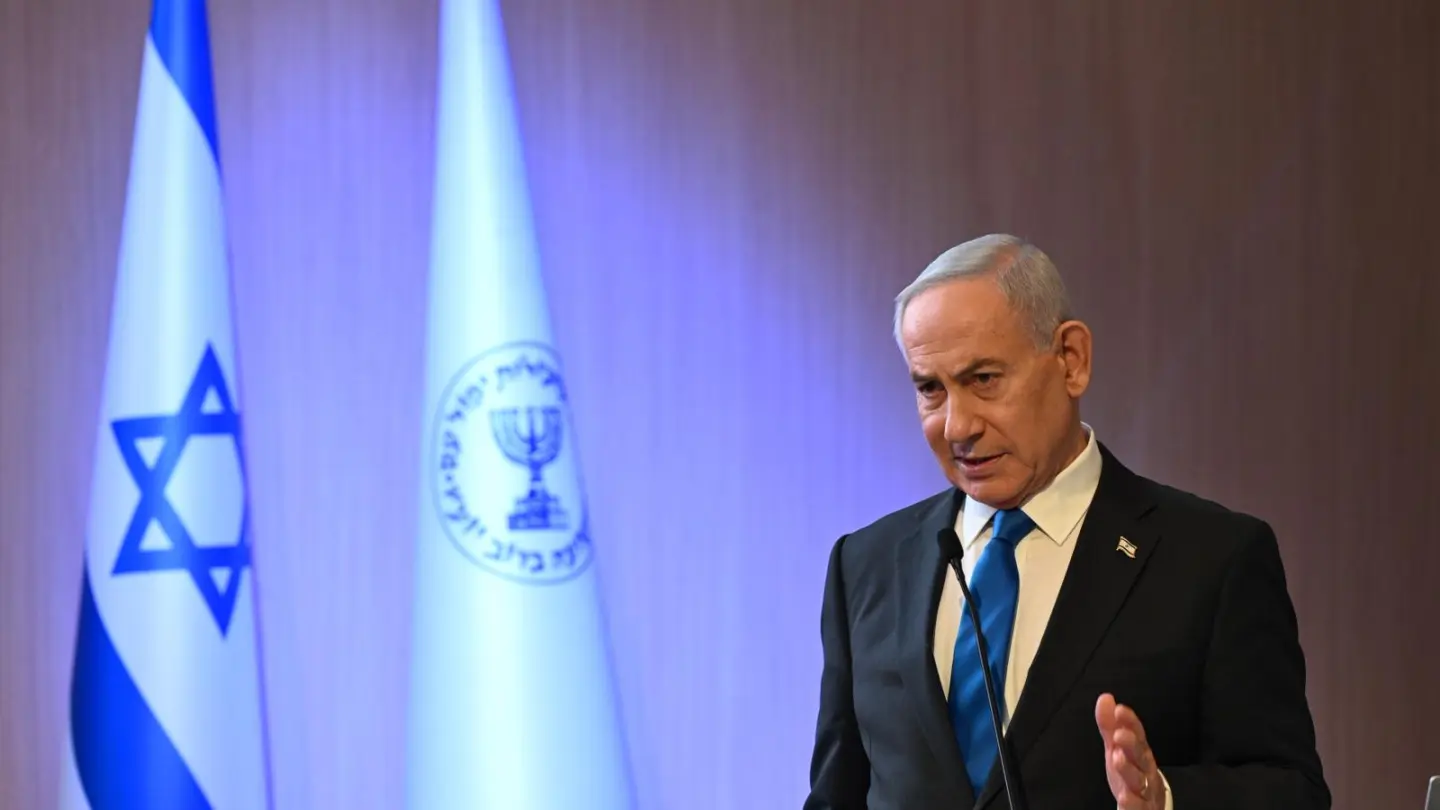
The Iranian opposition has been bolstered in its aspiration for regime change by active efforts of the Israeli and U.S. militaries to prepare the ground in Iran for revolution. While the official goals of the military operations don’t include regime change, top officials have made clear that the collapse of the regime is a deeply desired outcome of the campaign, and that resources are being exerted in this direction. Prime Minister Benjamin Netanyahu has openly embraced this objective, declaring in a March 2026 video statement that Israel is acting “to destabilize the regime, to enable change,” and explicitly telling the Iranian populace, “We are trying to free Iran.”
The aspiration for regime change has permeated several layers of allied decision-making. Principally, the selection of military targets indicates a strategy directly designed to help topple the regime. Since the initiation of hostilities, the Israeli Air Force has systematically hunted Basij operatives and assets, the Basij being the central organization responsible for internal repression and crackdowns.The IAF has launched targeted drone strikes against dozens of Basij checkpoints and command centers in Tehran, and has assassinated most of the Basij chain of command. Furthermore, in early March, the IAF struck a series of stadiums across Iran, which were used as mobilization points and detention facilities during the January revolution.
Grinberg explained that the purpose of these attacks is to give space for street protests rather than to fully destroy all the repressive forces. “You cannot kill them all, but the mere situation when they need to hide is valuable. Either you hide or you fight,” he observed.
Complementing the bombardment, the U.S. and Israel are executing extensive clandestine and cyber operations aimed at empowering domestic uprisings. Mossad agents have engaged in direct psychological warfare, individually phoning IRGC commanders to warn them to “side with the people or share Khamenei’s fate”. In addition, in early March, Israeli Intelligence hacked a popular Iranian prayer app broadcasting messages calling for revolution against the regime. Moreover, to facilitate safe opposition communication, the U.S. administration covertly facilitated the smuggling of thousands of Starlink satellite internet terminals into Iran.
Resistance to regime change
Confronted by the significant threat of revolution, the Iranian power structure has effectively abandoned all pretenses of civil governance. The state has resorted to draconian countermeasures to maintain control over urban centers. Anticipating massive domestic defections within the regular army and police forces, the regime has authorized the mass importation of foreign proxy fighters to violently suppress internal dissent. Over 800 operatives from various Iraqi militias, including Kata’ib Hezbollah (“Battalions of the Party of God”), Harakat Hezbollah al-Nujaba (“Movement of the Party of God’s Nobles”) and Kata’ib Sayyid ul-Shuhada (“the Master of Martyrs Battalion”), have already been deployed in western Iran.
Additionally, to obscure these severe wartime measures and blind domestic resistance, the state has enforced an absolute communications blackout for the second time in the past three months. The regime has utilized military-grade mobile jammers to forcefully disconnect 92 million citizens from the global internet. The regime has also criminalized the possession of Starlink satellite equipment with a mandatory two-year prison sentence and deployed fake, malicious Starlink applications designed to geolocate and arrest users.
Operating under this obscured visibility, the judiciary has drastically expedited the execution of political prisoners and detained protesters. On March 19, 2026, three youths were summarily executed in Qom based entirely on confessions extracted through severe torture following their involvement in earlier clashes. A day earlier, the state executed Swedish-Iranian citizen Kourosh Keyvani on charges of spying for Israel, following a broadcasted confession that activists noted appeared heavily scripted and coerced. Furthermore, the Ministry of Intelligence initiated aggressive urban sweeps, announcing the detention of 97 individuals, including 67 civilians explicitly accused of planning a rebellion to coincide with the Iranian New Year (Nowruz) on March 20.
Zimmt said that currently, it seems like allied efforts to cripple the forces of repression have not been sufficient. “Despite all the targeting of Basij forces, headquarters, bases and checkpoints, we still see that they can carry out arrests and continue executions,” he noted.