
Two months before the Oct. 7 massacre, two families and their assorted guests sat around a Shabbat table in Herzliya discussing Israel’s values and priorities. A heated discussion between a left-wing scholar and a young right-wing IDF commander, both strong Zionists, ensued.
The left-wing Zionist began the discussion by explaining the importance of values to Zionism and the State of Israel: Israel isn’t meant to be a nation like all other nations. It was designed to play a unique role, to be a light unto the nations. It is supposed to uphold the highest moral standards, to go even farther than the demands of international law. If any other nation holds Israel to a double standard, it is antisemitism; but the Jews should hold their leaders, soldiers and people to their own double standard.
The scholar admitted that this isn’t easy. Keeping to the highest standards requires sacrifice. When opportunities present themselves, the nation can’t act like all other nations and jump at the chance. It has to judge whether the opportunity is consistent with the nation’s values.
They then said that, if Israel is truly a nation of values, then those values and the sacrifices they entail must extend to the battlefield. There will be times when Israel has to sacrifice battlefield victory and even put its soldiers at greater risk to ensure its moral integrity.
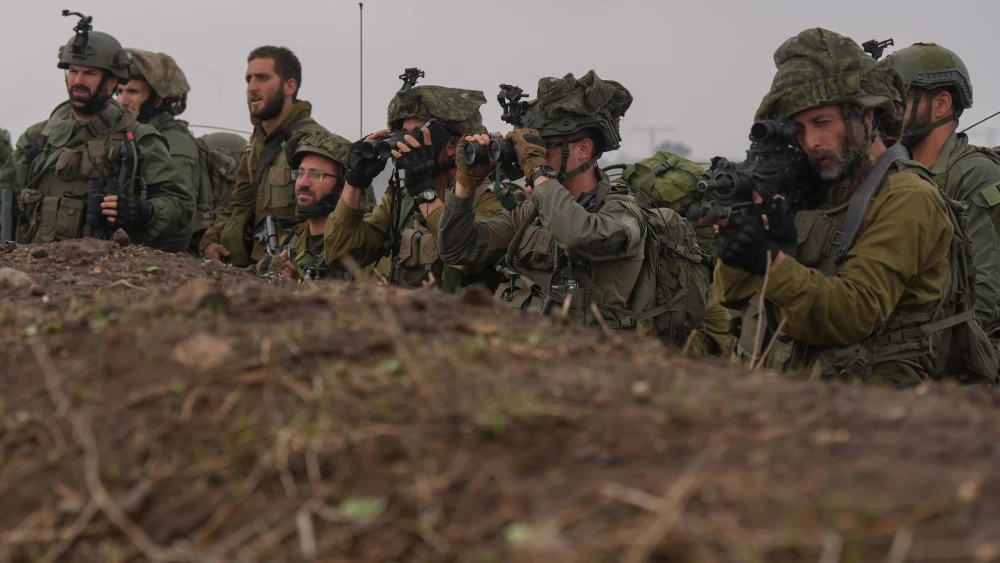
The young IDF commander waited patiently for the left-wing scholar to finish their statement on the importance of values, calmy and respectfully holding his tongue; but when it was his turn to speak, he spoke with fiery passion: He had been tested in battle against Israel’s enemies. His experience of the threats Israel faces wasn’t through headlines but in face-to-face combat with evil men who had tried to kill him and his soldiers.
To him, security isn’t an abstract concept to be discussed at the Shabbat table. Real discussions of Israel’s security are those in which missions to hunt terrorists are planned in armored vehicles waiting outside the theater of operations. He did not appreciate Israel’s security being relegated to second place on anyone’s list.
Israel, he said, faces actual enemies who are dead set on destroying it and wiping out her people. This isn’t some theoretical issue for the classroom or think tanks. Israel’s enemies are real and, given the chance, would kill as many Israelis as possible. Nothing, he argued, can take priority over Israel’s security, because the minute Israel takes its eyes off its security, its enemies will rise up and take advantage of the opportunity to ravage the Jewish people and their state.
He said that he understood the importance of keeping to the highest moral standards, especially on the battlefield. He explained that he was taught the rules of war as part of his training. He was well aware of what is permitted and what is forbidden. He knew the steps the IDF takes to ensure its morality. He didn’t disagree with any of the army’s policies on this issue; but he did disagree with imposing an impossible moral standard on Israel that could damage the security and safety of his soldiers and the Jewish people. Without a guarantee of Israel’s security, all discussions of morality are simply abstract thought experiments.
The dinner came to a close. In only a few hours, alarms would ring to wake everyone up for morning services. The participants wished each other “Shabbat shalom.” Everyone had been given a great deal to think about. Two months later, the war in Gaza broke out.