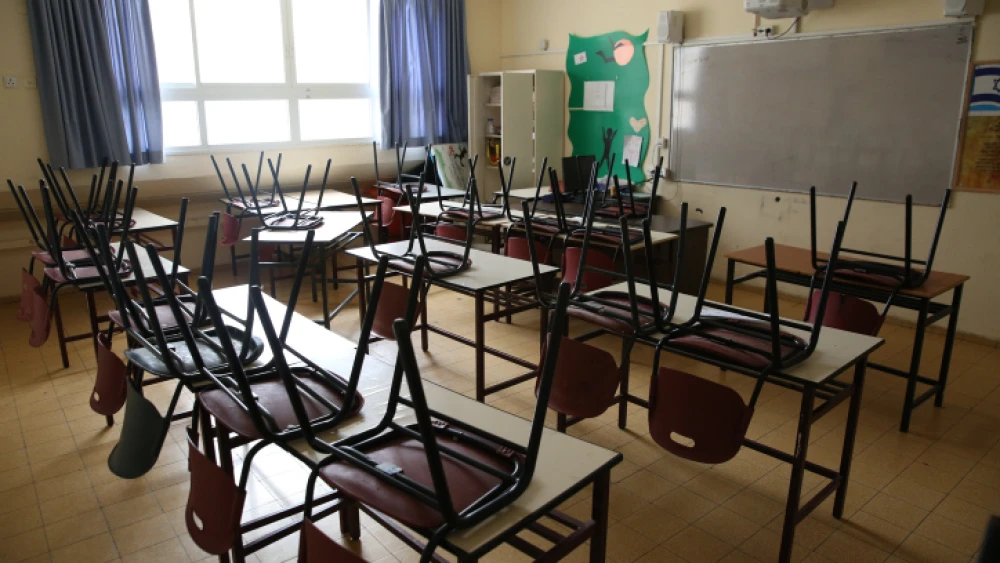
The Bank of Israel reported on Thursday that the shutdown of the country’s education system due to the coronavirus pandemic is costing Israel NIS 2.6 billion ($735 million) per week. According to the report, the figure is largely attributable to the shutdown’s impact on the 408,000 households in which at least one working parent has to remain home to take care of children, rather than going to work.
According to the report, 370,000 Israeli households have children up to the age of 4, and 110,000 have children aged 5 to 9, with no sibling over the age of 15 to pitch in and help with child care. The bank then assumed that approximately 15 percent of these households found solutions to the productivity obstacle, leading it to the tally of 408,000.
The bank also claimed that closures would cost another NIS 1 billion per week in future productivity due to skills it estimated workers would not learn during the national coronavirus social-distancing period, though it admitted the tally did not factor in remote learning.
Israeli media have reported that the country’s Education Ministry has ordered administrative staff to prepare for the reopening of schools, though no date has been announced.
The government was also scheduled to hold a meeting on Thursday to discuss additional easing of restrictions on businesses after some business owners expressed frustration that some shops have been allowed to reopen, while others posing a seemingly similar coronavirus risk remained shuttered.
The popular Swedish IKEA furniture company reopened three of its Israeli stores on Wednesday, with pictures showing long lines of customers eager to enter.
Israeli Education Minister Rafi Peretz reportedly expressed his disapproval to Health Ministry Director-General Moshe Bar Siman Tov over the stores’ reopening, arguing that they should not have been opened while schools remain shuttered.
While as of Sunday, the government eased restrictions on home-goods stores, bookstores, electronics, hardware and optical stores, as well as lottery booths, other places like clothing, shoe and toy stores remain closed, along with hair salons, food stands and market stalls.