Newsletter
Newsletter Support JNS

Health Ministry: Israel to keep borders closed until July

The “green countries” with low COVID-19 rates that will be the first from which travel to Israel will be allowed include Cyprus, Greece, Austria, Denmark, Australia and New Zealand.

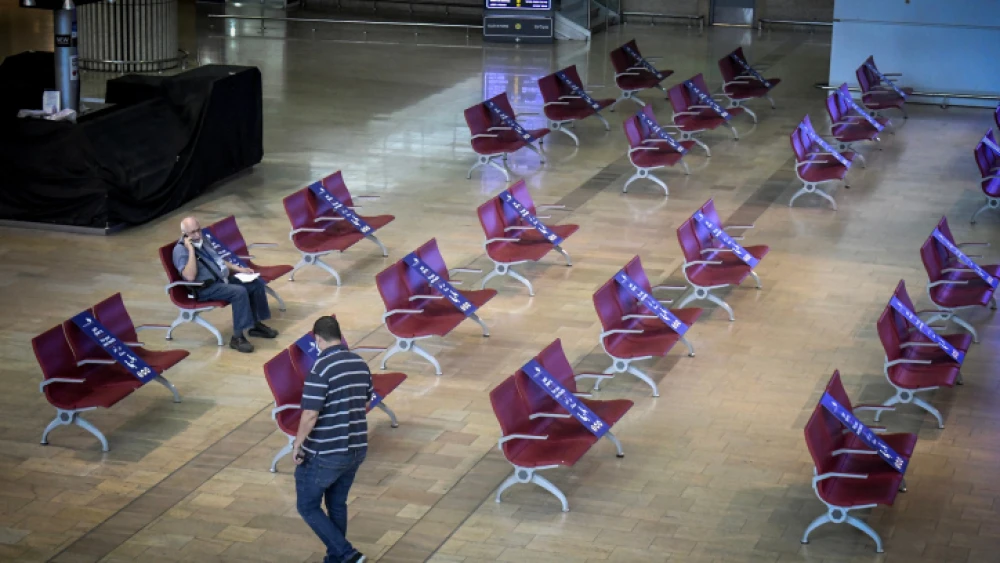
The empty incoming flights hall at the Ben-Gurion International Airport on May 14, 2020. Photo by Flash90.

Israel will keep its borders closed to non-citizens until at least July 1, according to Israeli Health Ministry deputy director-general Itamar Grotto.

“We are still in the stage of preparing to reopen Ben-Gurion airport. We didn’t plan to reopen at the beginning of June, and we have more preparations with ‘green countries’ and opening is not on the agenda for June,” Grotto was quoted as saying by the Israeli business daily Globes on Sunday.

The “green countries,” which would be the first from which travel to Israel will be allowed once suitable agreements are reached, are those with low coronavirus rates, including Cyprus, Greece, Austria, Denmark, Australia and New Zealand.

Grotto said that there will continue to be flights for returning Israelis, but that returnees must still enter quarantine for two weeks.

Citizens from “red countries”with high infection rates will continue to be banned, according to the report.

“Life-changing consequences—civil and criminal—will follow” if a cover-up is found, judge warns, as Jewish National Fund–Canada challenges loss of charitable status.
The charges come with a maximum sentence of 15 years and up to $500,000 in fines.
“I look forward to now reviewing the final version of both of these bills,” said the mayor, whose spokeswoman said that synagogues violate international law by hosting pro-Israel events.
“No one was hurt in the strike on Bazan, and the strike was not in production facilities,” Israeli Energy and Infrastructure Minister Eli Cohen stated.
The Jewish Electorate Institute poll largely conforms with surveys of the general U.S. public, which have found that most Americans oppose the war against Iran, with sharp partisan divisions between Republicans and Democrats.
The public school referred JNS to its law dean, who interpreted the lawsuit settlement differently than does the other party.