Newsletter
Newsletter Support JNS

Netanyahu: COVID-19 crisis isn’t over, economy will have to wait

“We are going to pause the reopening of the economy, at least until we can see the plateauing of the curve,” says the Israeli premier.

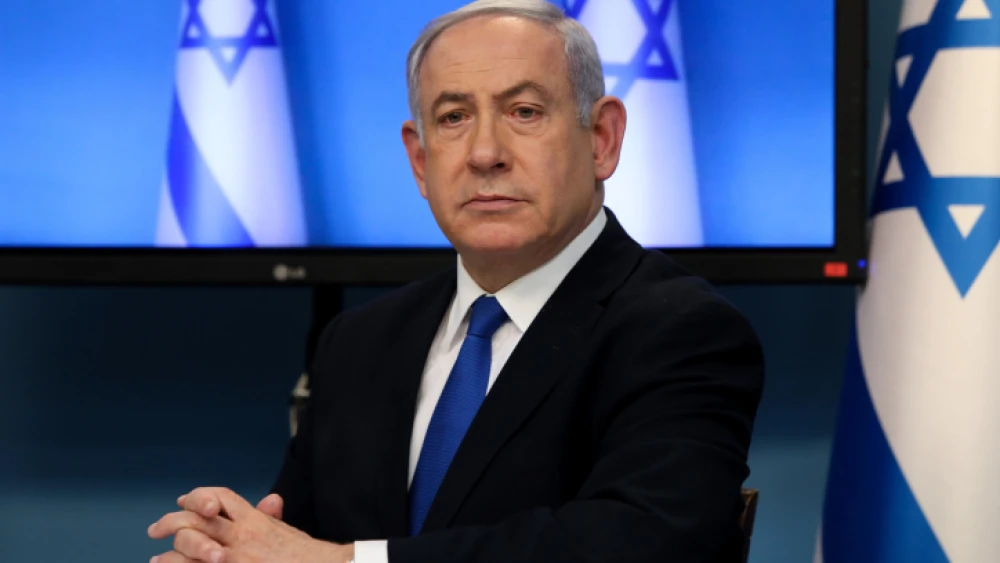
Israeli Prime Minister Benjamin Netanyahu speaks during a press conference on the COVID-19 virus, at the Prime Minister's Office in Jerusalem on March 11, 2020. Photo by Flash90.
Israeli Prime Minister Benjamin Netanyahu speaks during a press conference on the COVID-19 virus, at the Prime Minister’s Office in Jerusalem on March 11, 2020. Photo by Flash90.

Israeli Prime Minister Benjamin Netanyahu announced on Thursday that Israel was not going to lift more restrictions on the economy due to the uptick in the number of new coronavirus cases.

Speaking at the Health Ministry during a ceremony marking the appointment of a new director general, he noted that the rise in diagnosed carriers meant that a planned rollout of a new phase in the easing of restrictions, aimed at restoring the economy to full capacity, would be placed on hold.

“We are going to pause the reopening of the economy, at least until we can see the plateauing of the curve,” said Netanyahu said, referring to the graph of the COVID-19 infection rate, which has seen an upward trajectory for the past several days.

For the past week, the number of new daily cases has been rising steadily, with more than 250 cases being diagnosed on some days. More than 300 Israelis have died so far from COVID-19, although the ultimate goal of avoiding a massive influx of patients in hospitals has been achieved, in part because of strict lockdowns in April.

This article first appeared in Israel Hayom.

Heritage Minister Amichai Eliyahu said: “After years in which sites were neglected or looted, Israel is making historical corrections.”
Using this phrase against Israel is no less absurd than labeling sport-hooliganism and violence at mass demonstrations in the West as officially sponsored, government-sanctioned violence.
“Nearly eight years after the shooting, our gratitude and admiration for the heroic bravery and selfless dedication of the first responders that day endures,” said U.S. Attorney Troy Rivetti.
Yitzhak Ben-Hebron escaped Arab riots as a child and later returned to rebuild the Jewish community in the city.
Army Maj. Gen. Jasper Jeffers III said that future conflicts will require allied special operations forces to integrate quickly and operate with compatible systems.
“The strength and resilience you and your families demonstrate throughout the recovery and rehabilitation process inspire the entire nation of Israel,” the IDF chief said.