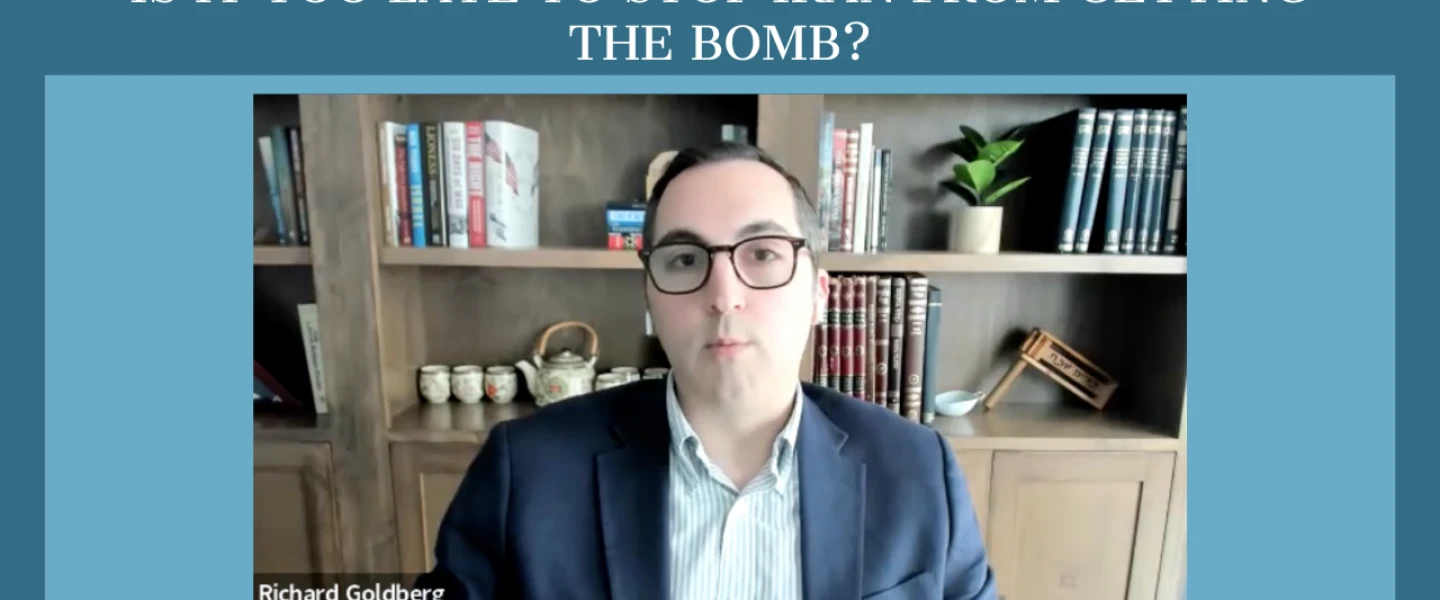
The world woke up last Friday to the surprise announcement that Beijing has brokered stronger ties between Riyadh and Tehran, radically upending the U.S.-led world order. This has reverberated in capitals all over the world. How does this change the calculus of Iran’s development of nuclear capability, of Israel’s ability to attack Iran through Saudi airspace? What does it say about America’s role in the world, China’s intentions and Saudi Arabia as a long-term ally of the United States? According to the International Atomic Energy Administration (IAEA), Iran will have very shortly, if it does not have already, enough highly enriched uranium for at least three nuclear bombs. The IAEA has detected traces of uranium at the Fordow Enrichment Facility enriched to 83.7 percent, just a few days’ glide to the 90 percent level necessary for a nuclear bomb. The IAEA also has said that it can no longer reestablish any certainty regarding Iran’s activities under a revived JCPOA, such as the production of advanced centrifuges and heavy water, due to Iran’s decision in February 2021 to deny the IAEA access to data from key JCPOA-related monitoring and surveillance equipment and because of Iran’s decision in June 2022 to remove all such equipment, including video cameras and online enrichment monitoring devices. Yet, on Saturday, March 4, IAEA Director General Rafael Grossi met with Iranian President Ebrahim Raisi and other top officials in Tehran and gave vague assurances that these concerns would be addressed. The questions remain: Can we trust the IAEA? And can Iran be stopped from developing a nuclear bomb before it is too late? Here to answer these questions and more is Rich Goldberg. Goldberg is a senior adviser at the Foundation for the Defense of Democracies. From 2019-2020, he served as the director for Countering Iranian Weapons of Mass Destruction for the White House National Security Council. He previously served as chief of staff for Illinois Governor Bruce Rauner and deputy chief of staff and senior foreign policy adviser to former U.S. Senator Mark Kirk of Illinois in both the U.S. House and Senate.
Is it too late to stop Iran from getting the bomb?
An EMET Webinar with Rich Goldberg