


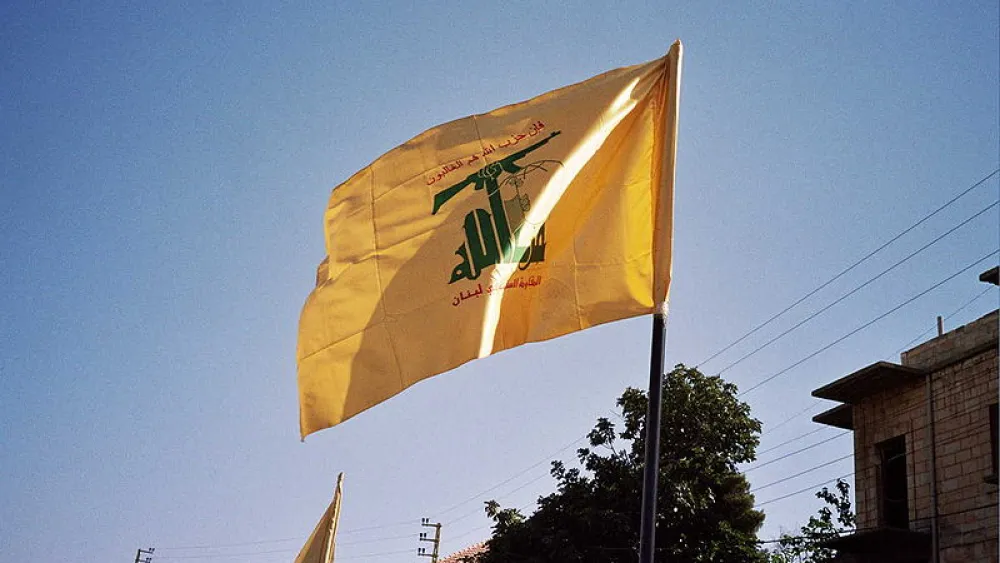
Recent weeks have seen an upsurge of discussion in the Arab and particularly in the Lebanese and Syrian media about the possibility of a war this summer between Israel and Hezbollah, and perhaps even of a wider regional war. This despite the fact that Hezbollah leader Hassan Nasrallah has reiterated that Hezbollah does not anticipate a war in the near future. Lebanese President Michel Aoun also stated, on April 29, 2019, that war is not imminent.
Numerous factors have contributed to the spike in talk of war, foremost among them being the U.S. sanctions on Iran, Syria and Hezbollah that have exacerbated the economic crises they are already experiencing. Other factors include the April 8, 2019, designation by the United States of Iran’s Islamic Revolutionary Guard Corps (IRGC) as a terrorist organization; U.S. Secretary of State Mike Pompeo’s April 22 announcement that from May 3, 2019, the United States would not renew sanctions waivers for nations importing Iranian oil; and Iran’s threats to close the Strait of Hormuz.‘’
Additionally, American officials visiting Lebanon, most importantly U.S. Secretary of State Mike Pompeo, have been making threats to tighten sanctions on Hezbollah and to expand them to include other Lebanese elements close to it. It should be noted that the American sanctions on Hezbollah have already seriously affected the organization, to the point where it recently requested the public’s help with fundraising.
Further contributing to tension in the region was U.S. President Donald Trump’s March 25 recognition of Israeli sovereignty over the Golan Heights, which enraged the Syrian regime and its allies in the region, Iran and Hezbollah, and Israel’s ongoing aerial attacks against Iranian and Hezbollah targets in Syria.
According to the Hezbollah-affiliated Al-Manar: “Over the past two months, Hezbollah Secretary-General [Hassan] Nasrallah has reiterated in his speeches that he does not anticipate war with Israel soon, and that what is preventing Israel from starting a war with Lebanon is Hezbollah’s deterrent power. In these speeches, Nasrallah spoke with restraint about the measures taken by Israel and the United States, among them recognizing Israeli sovereignty over the Golan Heights, Israel’s aerial bombing forays in Syria, the designation of the IRGC as a terrorist organization and the announcement that the sanctions waivers for nations importing Iranian oil will not be renewed. While he did condemn them, criticize the United States and say that the resistance axis retains the right to respond to them, he did not say what this response would be.”
Read full article at MEMRI.



