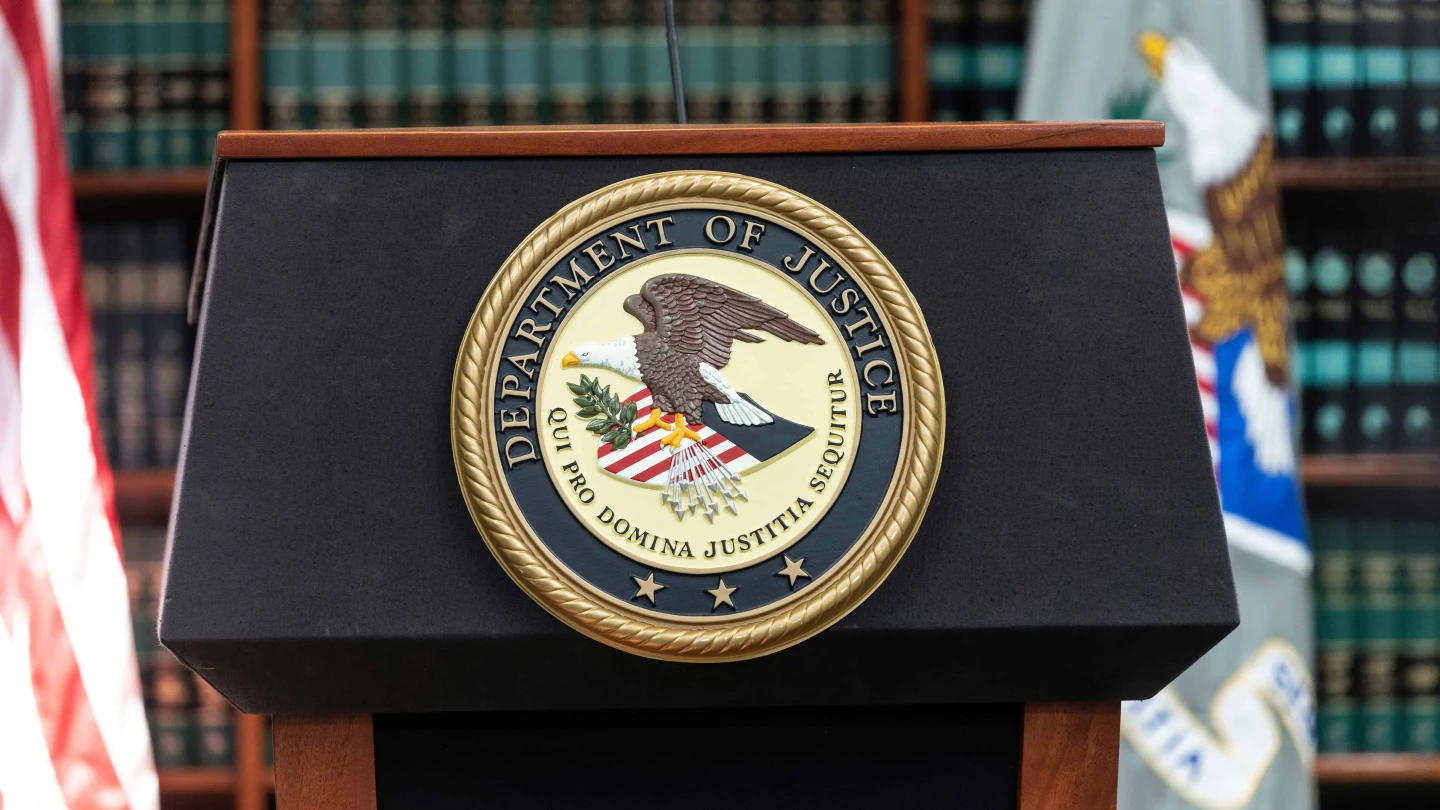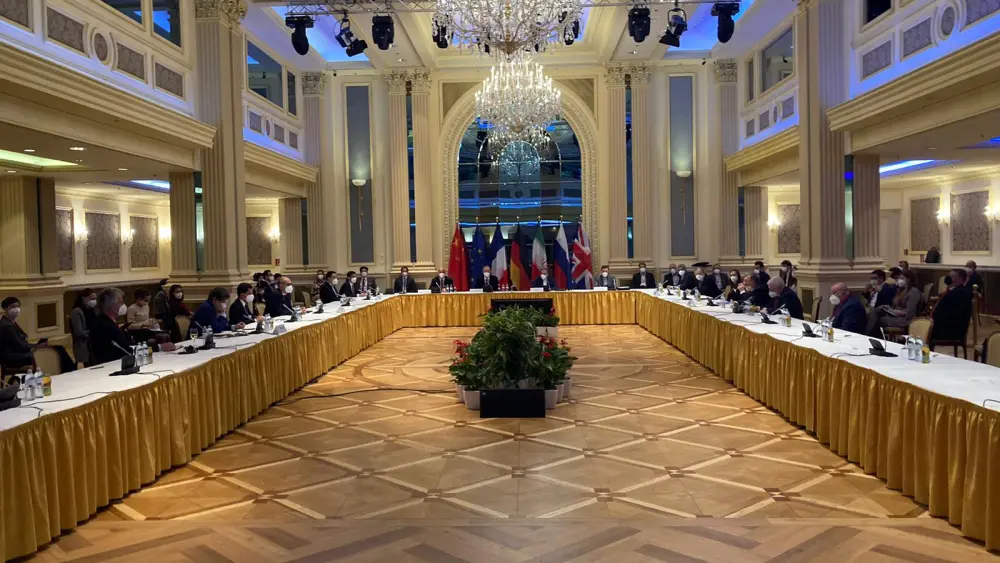
U.S. State Department spokesman Ned Price revealed on Tuesday that Iran had rejected a revised nuclear deal that was “essentially finished.”
“The point we’ve made is that the Iranians killed the opportunity for a swift return to mutual compliance with the [2015 Joint Comprehensive Plan of Action]. They most recently did so in September when they turned their backs on a deal that was by all accounts essentially finalized, ready to go,” said Price.
“Since then, the JCPOA just hasn’t been on the agenda. It hasn’t been on the agenda for months. It hasn’t been our focus,” he added.
Price did not elaborate on the contours of the proposal.
The statement came in response to a reporter’s question citing an assertion earlier in the day by Israeli Prime Benjamin Netanyahu that efforts to revive the moribund nuclear talks were still very much underway.
Netanyahu vowed during the weekly Cabinet meeting to thwart Iran’s nuclear ambitions, saying that his new government was united in achieving that aim.
“We will work openly, from a position of strength, in the international arena against a return to the [2015] nuclear agreement, not only in talks with leaders behind closed doors but strongly and openly in the sphere of global opinion, which is now aware of the true dangers posed by Iran—the Iranian regime that is killing innocent citizens in and beyond Iran,” said Netanyahu.
“Unfortunately, in contrast to the prevailing opinion that this dangerous nuclear option has disappeared from the agenda following the recent events in Iran, I think that this possibility has not yet finally disappeared from the agenda. Therefore, we will do everything to prevent the return to this bad agreement which is leading to a nuclear Iran under international auspices,” he added.
For his part, Price insisted that Washington remained “in intensive and constant” discussion with Israel on Iran, and that there was “no greater supporter of Israel’s security than President [Joe] Biden. Our commitment to Israel’s security is ironclad,” he said.
“What is very much alive is President Biden’s absolute commitment to never allowing Iran to acquire a nuclear weapon. Claims that we are presently engaged in talks to revive the JCPOA—that’s just false,” said Price.
In Dec., video surfaced of Biden saying that the nuclear deal with Iran is “dead” but that Washington would not announce as much.
The footage, which was apparently taken during Biden’s visit to California the previous month, shows a woman asking him to declare that the 2015 agreement, formally known as the Joint Comprehensive Plan of Action (JCPOA), is no longer in effect.
“President Biden, could you please announce that the JCPOA is dead?” the Iranian-American woman asks, as the American president approaches her.
“No,” Biden replies.
“Why not?” she shoots back.
“A lot of reasons. It is dead, but we’re not gonna announce it. Long story, but we’re gonna make sure...” answers Biden.
On Tuesday, Price nevertheless reiterated that the Biden administration had “always been clear we’re not going to remove options from the table, and we’re going to discuss all options with our partners, including, of course, Israel.”
In an interview on Dec. 26 with the Iranian news outlet Asr-e Iran, Iranian Majlis National Security and Foreign Policy Committee member Javad Karimi-Ghodousi revealed what he claimed were behind-the-scenes understandings reached at the Baghdad II summit earlier in the month in Amman, Jordan.
Among those attending the summit were French President Emmanuel Macron and top E.U. diplomat Josep Borrell, both of whom met with Iranian Foreign Minister Hossein Amir-Abdollahian and his deputy Ali Bagheri, who heads the Iranian negotiating team in the nuclear talks.
Amir-Abdollahian said at a press conference following the summit that “an opportunity was created to discuss additional issues connected to the nuclear talks, in a two-hour meeting” together with his deputy Ali Bagheri and E.U. deputy secretary general for political affairs Enrique Mora, who is also coordinator of the nuclear talks in Vienna, and Borrell. Amir-Abdollahian added: “We informed them that if they respect our red lines, we are willing to take the final steps in order to arrive at an agreement.”
According to Karimi-Ghodousi, the International Atomic Energy Agency (IAEA) and the United States have agreed in principle to close Iran’s Potential Military Dimensions dossier and to guarantee the foreign investments that will be made in Iran after the nuclear agreement is signed, such that if the agreement fails again, these investments will not be harmed. These, he said, are the two main issues that remain unresolved in the nuclear negotiations.
Regarding the United States and Europe, Karimi-Ghodousi said, “They also accept our conditions [in the negotiations].” He added that the Americans had “told us not to announce this officially,” and also assessed that “according to what was said in Jordan, the Europeans and the Americans will return to the JCPOA. Within the next few days, a dialogue between Iran and [world powers] will start, and if it is completed, the Americans will participate in the re-signing [of the deal].”