


The winter of 2024-2025 is looking to be one of Israel’s driest, yielding 55% of the average national precipitation thus far, the Government Water and Sewage Authority said on Sunday.
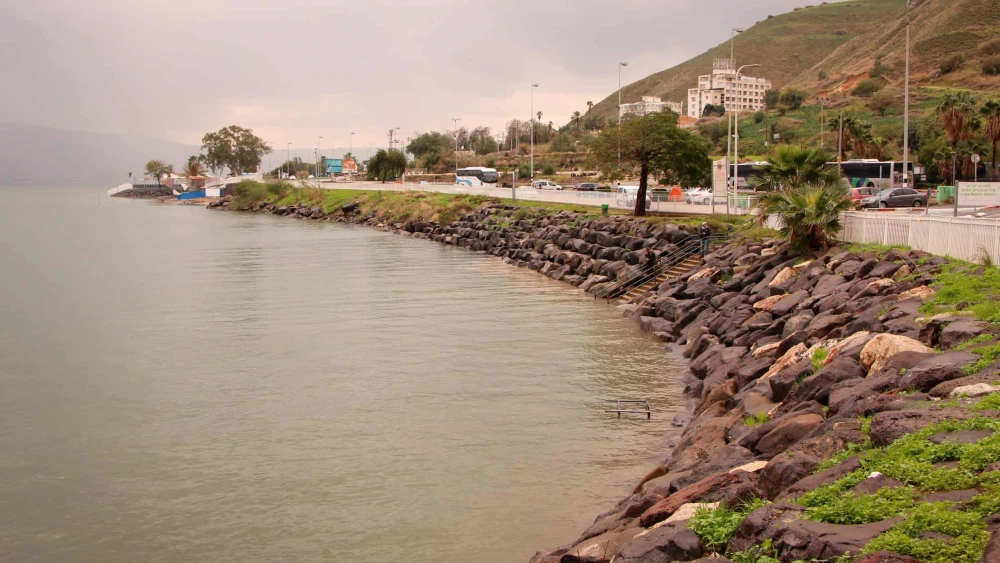
The water level of the Sea of Galilee, or Lake Kinneret, in Israel’s north, has risen by 2 centimeters this winter, and flow levels in the Jordan River are among the lowest recorded since 1960, a spokesperson for the authority said.
This means that the current winter is on par with that of 2009, which was the driest in a century.
The previous winter of 2023-2024 was unusually rainy, with a 121% increase in rainfall over the multiannual average.
Israel consumes about 2.5 billion cubic meters annually. In recent years, its massive desalination project has lessened its dependency on rainfall. Israel now desalinates 650 million cubic meters of water each year, accounting for 80% of its drinking water, according to an essay on the subject published last year by the Weizmann Institute of Science in Rehovot.
In 2022, Israel began replenishing the Sea of Galilee with desalinated water from the Mediterranean Sea, becoming the first country to use seawater to refill a natural lake.
Israel also purifies and recycles for irrigation about 90% of the 600 million cubic meters that become waste and sewage water, significantly more than any other country, according to the Weizmann Institute.
“The Water Authority’s proper preparation, which includes strategic planning and intelligent management of water sources, allows us to continue to supply water to all the needs of the economy in a stable manner and ensures that the economy will not be affected by the dry winter in the immediate term,” Yehezkel Lifshitz, head of the Water Authority, told Channel 12.
“Options are being examined to increase water production and production capacity,” he said.


