Newsletter
Newsletter Support JNS

Oct. 7 is a turning point in American antisemitism

“Top Story with Jonathan Tobin” and guest Alvin Rosenfeld, Ep. 129

The Hamas atrocities in southern Israel on Oct. 7 and the way they have helped spark an unprecedented wave of antisemitism in the United States has created a turning point for American Jewry. According to JNS editor-in-chief Jonathan Tobin, those who claim that the open hatred and support for Jewish genocide being seen on college campuses and the streets of major cities isn’t antisemitic are only helping to make a safe place for Jew-hatred in American society.

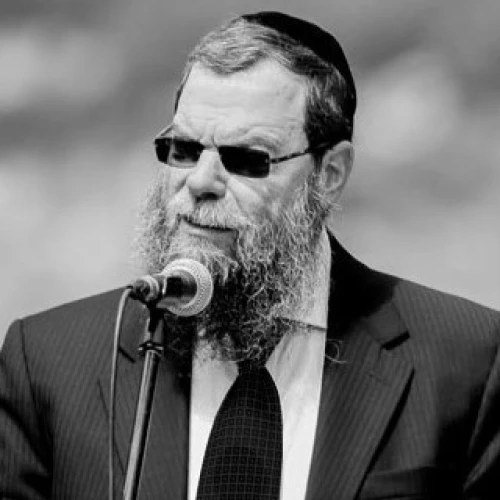
Tobin is joined by Alvin Rosenfeld of Indiana University Bloomington, director of the Institute for the Study of Contemporary Antisemitism and one of the nation’s most eminent scholars of the study of antisemitism and the Holocaust. The two discuss the war against Israel that was launched by Hamas and the support that it’s getting from so-called “progressives.” Rosenfeld says that post-Oct. 7 events have shown the way that woke ideology, critical race theory, intersectionality and the diversity, equity and inclusion mantra have enabled hatred against Jews. As a result of these issues and more, antisemitism has become “deeply embedded in our culture.”

The scholar observed that most of those voicing opinions about the conflict “don’t understand Hamas” and its genocidal goals. “A lot of people who go against Israel either simply don’t know the facts or don’t care about the facts,” he says. “Their aim is to help liquidate the only Jewish state there is.”

He also thinks that left-wingers associated with the Jewish Voice for Peace group that spreads antisemitic libels are particularly culpable.

While deprecating the casual Holocaust analogies that pervade American political discourse, Rosenfeld says that “what occurred on Oct. 7 resembles the worst that we’ve been through. We’ve lived for a long time with Holocaust distortion, Holocaust denial, Holocaust diminishment. We’re now seeing Oct. 7 denial, diminishment, distortion and the like. In that respect, the analogy is clear.”

Listen/Subscribe to weekly episodes on Spotify, Apple Podcasts, Google Podcasts, iHeart Radio or wherever you listen to your podcasts.

Watch new episodes every week by subscribing to the JNS YouTube Channel.

Jonathan S. Tobin is editor-in-chief of the Jewish News Syndicate, a senior contributor for The Federalist, a columnist for Newsweek and a contributor to many other publications. He covers the American political scene, foreign policy, the U.S.-Israel relationship, Middle East diplomacy, the Jewish world and the arts. He hosts the JNS “Think Twice” podcast, both the weekly video program and the “Jonathan Tobin Daily” program, which are available on all major audio platforms and YouTube. Previously, he was executive editor, then senior online editor and chief political blogger, for Commentary magazine. Before that, he was editor-in-chief of The Jewish Exponent in Philadelphia and editor of the Connecticut Jewish Ledger. He has won more than 60 awards for commentary, art criticism and other writing. He appears regularly on television, commenting on politics and foreign policy. Born in New York City, he studied history at Columbia University.
Four Republicans voted with nearly every Democrat to discharge the war powers resolution calling for U.S. President Donald Trump to withdraw American forces from hostilities with Iran.
“I would like to see something that says, ‘And here’s what’s going to be there instead,’” Rep. Adam Smith, ranking member of the House Armed Services Committee, told JNS.
In a report delivered to the U.N. Security Council, the board says the terrorist organization’s refusal to give up its weapons remains “the principal obstacle to full implementation” of the Gaza ceasefire.
“Over time, the members of the Congress, both houses, both parties, are going to understand that this is a cost that is not only affordable but absolutely a necessary investment,” Eric Fingerhut, president and CEO of the Jewish Federations of North America, told JNS.
The U.S. secretary of state cited “overwhelming support” for a U.S.-Bahrain resolution demanding Tehran halt attacks and remove sea mines from the strategic waterway.
“At their core, sanctions are not acts of aggression,” Scott Bessent said at an annual terrorism funding conference. “They are instruments of peace.”