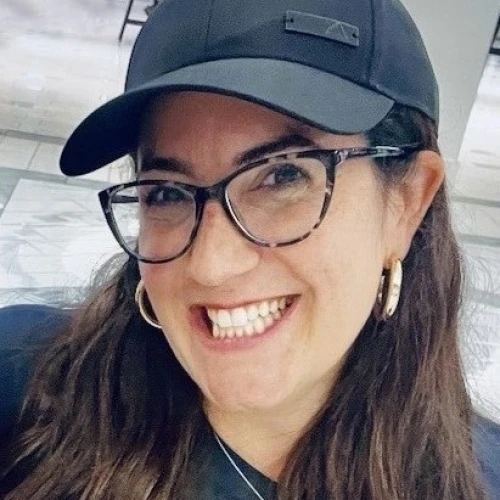
For the first time in 61 years, I am having a pajama party on my birthday.
Only this time, it isn’t 10 pre-pubescent girls giggling in a tent pitched in a backyard in Whitehall, Ohio, but 20 sleepy neighbors gathered at dawn in our basement bomb shelter in Pardes Hanna, a town in the Haifa District of Israel.
The only thing these birthdays have in common is the pajamas.
But in a real physical sense, these neighbors I’m sharing this morning with are the humans closest to me as I turn 73.
It’s also not the first time in the last couple of weeks that we’ve met down here in this tight windowless space. In fact, it’s the third go-round in the last 10 days—though admittedly, it’s the first time the siren actually woke us up—and we’ve developed a sort of camaraderie and routine around these meet-ups in close quarters.
For one thing, glued as we are to our cell phones, checking the map of sirens sounded, we call out what we see in Hebrew, Russian, Amharic (an Ethiopian language), and yes, in English as well while the 6-year-old from Apt. No. 8 clings groggily to his mom, who’s stroking his hair and whispering words in his ear that seem to be soothing him.
Scanning the room, despite the fact that many of us could not understand each other, seemingly replaying the Tower of Babel denouement, we were able to communicate both the basic questions and whatever preliminary speculations our phones could provide. Where was the missile—or was it a drone—shot from? Was it Lebanon this time? Where was it heading? Was it intercepted? At this moment, there are no answers in any language.
As for what other towns have gotten the siren call to enter their mamad, or safe room, it’s not just us, the map reveals, congested as it is with little red teardrops in the northern region Pardes Hanna shares with Caesarea, Binyamina, Zichron Yaakov and Hadera.

And though we may not understand each other’s words, scanning the room, it’s easy to see that some of my neighbors are agitated, while others display a sort of grim boredom. Still, since the deadly drone strike on the army base in Binyamina two days ago, just 10 minutes from here, leaving four 19-year-old trainees dead and dozens more injured, there’s noticeably less impatient eye-rolling now.
If there’s one thing Israelis are famous for it’s refusing to wallow in worry, insisting instead on choosing life. So, as soon as we emerge from the shelter, as airplanes and helicopters crisscross the brilliant blue sky above our heads, the young guy in Apt. No. 1 jumps to help the old guy upstairs in 5 hammer together the poles of his sukkah—weathered strips of wood that must date back to the early years after he’d escaped Ethiopia. Kibbitzing in Amharic, any air of concern they’d inhaled in the bomb shelter evaporates in the soft gold of Israel’s morning sun.
Today, as we prepare to trade the thick concrete bomb shelter walls for the flimsy thin ones of our sukkahs popping up all over this land like those teardrop icons on the map, we’re reminded that despite our differences in language, religious practices and political beliefs, our fate is inextricably linked with that of every other Jew here.
And that through thick and thin, no matter what the enemy shoots in our direction, there is only the One who can keep us safe and sound.