
On Nov. 14, 2023, barely five weeks after the horrors of Oct. 7, nearly 300,000 American Jews gathered for the March for Israel on the National Mall in Washington, D.C.
They came to stand with Israel, to demand the release of the hostages and to declare that the Jewish people would not face this terrible moment alone.
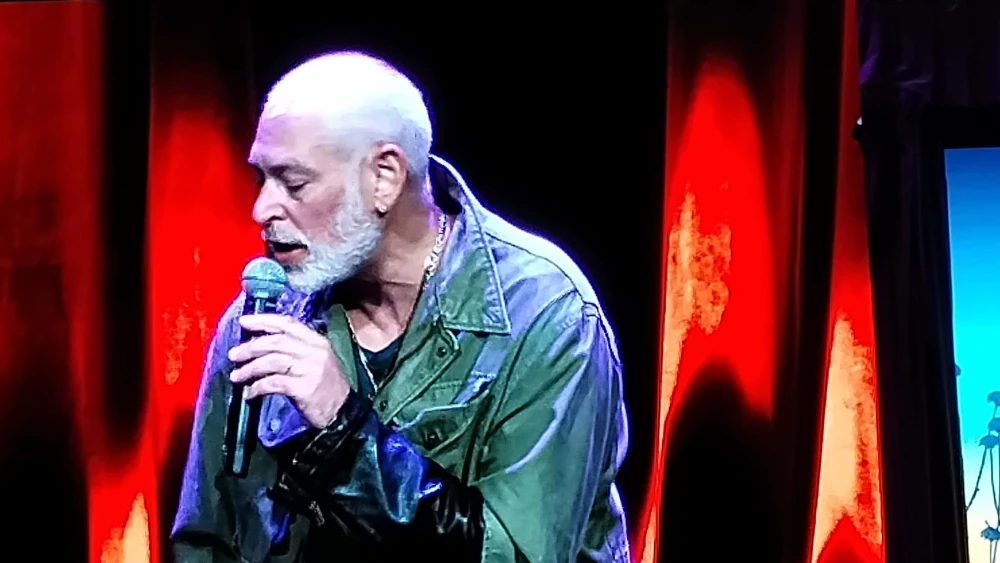
Near the end of the rally, the popular Jewish musician and singer Matisyahu joined the Maccabeats in singing “One Day,” his moving song about hatred giving way to peace. As the song drew to a close, he recited the first six words of the Shema prayer: Shema Yisrael, Hashem Elokeinu, Hashem Echad, meaning, “Hear, O Israel, the Lord is our God, the Lord is One.”
The crowd joined him, and for one extraordinary moment, American Jews of every background, denomination and degree of observance raised their voices in unison in words that Jews have recited for thousands of years.
“What a beautiful thing to see you all here, everybody together,” Matisyahu said. “The world has no idea how the Jews come together.”
It was more than a remarkable display of Jewish unity in a time of crisis. The spontaneous recitation of the Shema was an expression of Am Yisrael, love for the Jewish people.
Since Oct. 7, American Jews have been awakened not only by hate, but also by the power of love for one another. This has been evident in the thousands of rallies and prayer vigils held around the world for the hostages, and in the extraordinary outpouring of support for the people and defenders of Israel. Jews who had rarely entered a synagogue suddenly felt an intense connection to the Jewish people, to Israel and to their ancient heritage.
For many, that renewed connection has endured. A 2025 Jewish Federations study found that 31% of American Jews were more engaged in Jewish life than they had been before that Black Shabbat.
Our sense of shared destiny has also been reinforced by the frightening rise of antisemitism. But Jewish unity must not be defined by those who hate us.
In July, a visibly Jewish man wearing a kippah was stabbed after leaving synagogue on Tisha B’Av on Manhattan’s Upper West Side. At times, violent protesters have gathered outside New York synagogues chanting support for the terror group Hamas. Jewish college students have been harassed, excluded or made fearful of expressing their Jewish identity openly on campuses.
Antisemitism does not ask whether a Jew is Orthodox, Conservative, Reform or unaffiliated. It sees us as one people. We are one people joined by faith, memory, responsibility and love.
The challenge is to transform the unity awakened since Oct. 7 into an enduring, positive and joyous connection to Jewish life. The Shema may offer an answer.
The Shema is the great declaration of the oneness of God. Yet immediately after declaring that God is One, the Torah does not merely tell us to believe. It commands us to love: “You shall love the Lord, your God, with all your heart, with all your soul and with all your might.”
Our sense of shared destiny has been reinforced by the frightening rise of antisemitism.
Why is love so vital?
Perhaps because love enables us to perceive what would otherwise remain unseen. The opera aficionado hears every nuance of the singer’s voice. Men and women who love one another see qualities others may fail to recognize. Love causes us to look more carefully. It opens feelings and appreciations indifference keeps closed.
So, too, love of the Almighty may enable us to recognize the Divine in everyday life—in the miracle of creation, in the sacredness of another human being, in the blessings we all too often take for granted, and in the privilege of belonging to the Jewish people.
Oct. 7 reminded many Jews that being Jewish is not merely an identity, a heritage or a history passed down through the generations. It is an attachment of the heart.
But love must be expressed. A relationship becomes lasting through acts that are repeated, not merely through feelings experienced once.
There is a beautiful passage in the Kedushah prayer recited during the Shabbat Musaf service: Pa’amayim b’ahava Shema om’rim, meaning that the Shema is recited twice each day, with love.
That phrase has inspired a major new undertaking. NJOP, together with the Simchat Torah Challenge, has launched “The Shema Initiative: Twice a Day with Love,” a nationwide campaign that we hope will grow into a worldwide effort calling on Jews to recite the Shema every morning and evening.
Some readers may already recite all three paragraphs in Hebrew; we invite them to register and be counted among those joining the initiative. Others may begin with only the first line, in Hebrew or English. For those who wish to learn to read the full Shema in Hebrew, NJOP offers its acclaimed free Hebrew Reading Crash Course, along with the Reishith Binah Hebrew primer.
But the essential first step is simply to begin. The Shema declares that God (Hashem) is One. It reminds us that the Jewish people are one. And V’ahavta—“And you shall love”—teaches us what binds us together.
Love of God. Love of the Jewish nation. Love and responsibility for one another.
Reciting the Shema twice a day with love reminds us that no matter what threats Jews face around the world, we remain one people, bound to one another by faith, responsibility and love.