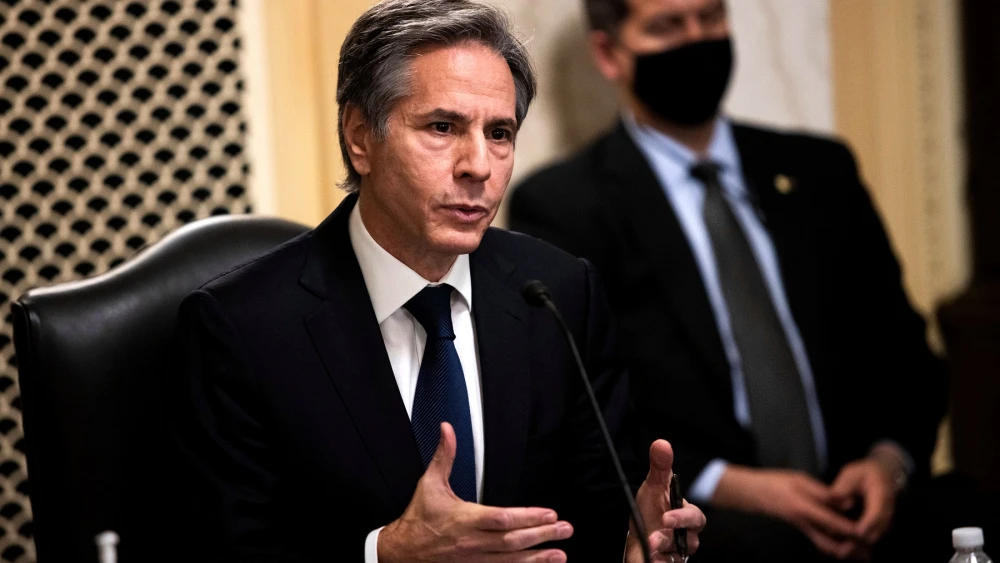
Israel has no objection to an U.S. return to UNESCO, the United Nations Educational, Scientific and Cultural Organization, U.S. Secretary of State Antony Blinken told Congress on Wednesday.
The United States officially withdrew from UNESCO on Dec. 31, 2018 under the Trump administration. The move reflected “U.S. concerns with mounting arrears at UNESCO, the need for fundamental reform in the organization, and continuing anti-Israel bias at UNESCO,” the State Department said in a statement at the time. Trump’s predecessor, then-President Barack Obama, stopped paying UNESCO dues in 2011 in protest at the agency’s decision to grant Palestine full membership.
However, addressing the Senate Appropriations Committee on Wednesday, Blinken said that America’s absence from the organization was “to our detriment.”
“Because, among other things, UNESCO is in the business of setting standards, norms, around the world, for education. For the new way in which new emerging technologies like artificial intelligence are used,” he said.
If the United States isn’t there, someone else would be, “and that someone is probably China,” he added.
Blinken described concerns about the organization’s anti-Israel bias as understandable, but added, “I can say with authority that our partners in Israel feel the same way. They support our rejoining of UNESCO.” The United States should “shape the discussion, not someone else,” he said.
The secretary of state also reiterated the administration’s commitment to reopening the U.S. consulate in Jerusalem, a campaign pledge made by President Joe Biden.
“It’s something we are working on with the Israeli government,” he said. “I was in Ramallah just a few weeks ago and saw [Palestinian Authority] President [Mahmoud] Abbas, we talked about that among other things,” he added.
“As you know, we re-established support for the Palestinians a year ago January, including significant humanitarian and economic assistance that had been previously held back, we have reengaged them across the board, and the consulate is a piece of that,” he said.
“It does require, of course, coordination with and support from Israel, including, for example, providing privileges and immunities for the staff of the consulate-to-be, so it’s a work in progress.”
Israel has been strongly opposed to the consulate, with Israeli Prime Minister Naftali Bennett and Foreign Minister Yair Lapid saying in November of last year that there was “no place” for a consulate to the Palestinians in the nation’s capital.
Israel had expressed its position to the Americans “consistently, quietly, without drama,” said Bennett. “And I hope it will be understood.”
Jerusalem, said the prime minister, “is the capital of the State of Israel, only.”