


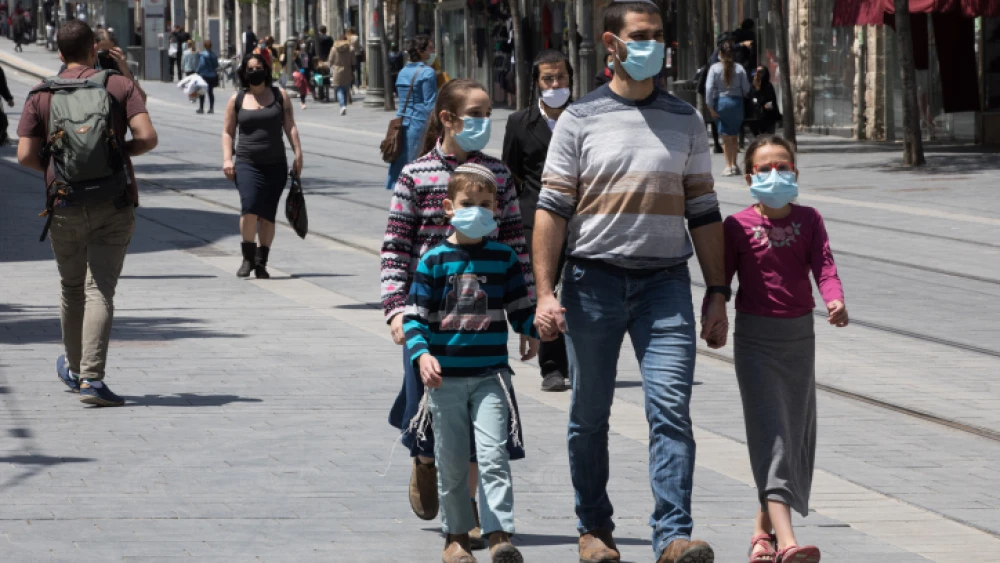
While many businesses were allowed to open in Israel on Sunday morning as coronavirus restrictions in the country are gradually relaxed, COVID-19 hot-spot neighborhoods in the towns of Netivot and Beit Shemesh were placed under strict lockdown, which is expected to last until Friday morning.
Most shops, beauty salons and retail outlets throughout the country were given the go-ahead on Sunday to receive customers, as long as they adhere to Health Ministry guidelines. Restaurants were also authorized to sell takeaway food, not just the home deliveries they have been restricted to for the last several weeks.
The reopenings came after widespread public anger and confusion over the reopening last Wednesday of three IKEA branches in Israel, drawing large crowds and long lines, while small business owners were forced to keep their doors closed.
Police were met with angry protesters at Jerusalem’s Machane Yehuda open air marketplace on Sunday, with stall owners expressing outrage that they were not yet permitted to conduct business.
Last Sunday, Channel 12 reported that Israel’s unemployment rate stood at 26.25 percent.
On Friday, the government approved a NIS 8 billion ($2.27 billion) relief plan for self-employed Israelis hard hit by coronavirus restrictions, though small-business owners expressed concern that the money would not be enough.
Some 200 chain stores, including leading clothing, homeware, camping, sports and optics stores, as well as some chain cafes and restaurants left their doors closed in protest on Sunday, arguing that they should be eligible for the same bailout packages as small businesses.
Moreover, many of these stores are located in shopping malls, which are still not allowed to open.
Additional businesses owners and employees are expected to be able to return to work as preschools and elementary schools begin to partially reopen starting in early May.



