Newsletter
Newsletter Support JNS

Iran rejects extension of nuclear-monitoring deal with IAEA

According to the temporary agreement, which expired on June 24, Tehran allowed the IAEA to collect data on its nuclear activities • Blinken: The regime’s failure to cooperate is “a serious concern.”

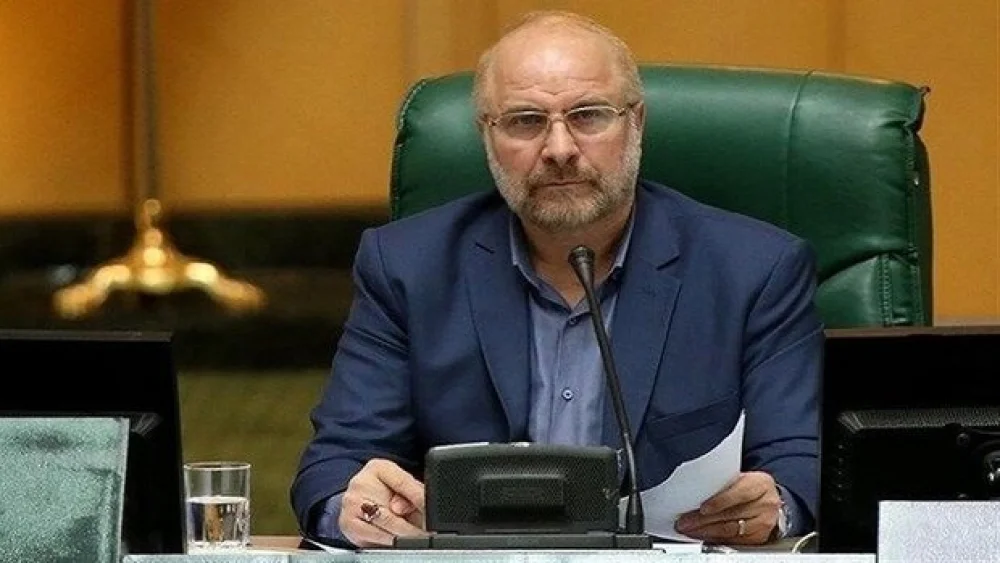
Iranian Parliament Speaker Mohammad Bagher Ghalibaf, June 2021. Credit: Tehran Times.

Iran will not extend the agreement it signed with the International Atomic Energy Agency (IAEA) in February to monitor its nuclear program, Iranian Parliament Speaker Mohammad Bagher Qalibaf told legislators on Sunday, the Tasnim News Agency reported.

According to the report, the statement follows the IAEA’s demand on Friday for an answer regarding whether Tehran intended to extend the monitoring agreement, which was set to expire on May 24 but was extended until June 24.

The agreement enabled the IAEA to collect data on Iran’s nuclear activities, softening an Iranian decision to halt certain inspection measures connected to the Joint Comprehensive Plan of Action (JCPOA), the 2015 nuclear deal from which former U.S. President Donald Trump withdrew in 2018.

During a press conference on Friday in Paris reported on by Reuters, U.S. Secretary of State Antony Blinken said that Iran’s failure to cooperate with the IAEA “remains a serious concern.”

“If Iran continues to spin ever more sophisticated centrifuges at higher degrees, if it pursues other aspects of its program that were prohibited by the JCPOA, there will come a point ... where it will be very hard to return back to the standards set by the JCPOA,” said Blinken, adding that a seventh round of negotiations with Iran on a return to the nuclear deal would begin in the “coming days.”

The sixth round of talks wrapped up on June 21.

“Speakers—alleged or confirmed—of antisemitic remarks is not a protected class under Title VII,” the judge wrote in her findings.
“This attack might be a message to the Egyptians that we can reach the Suez Canal and we can really close the Suez Canal,” Ahmad Sharawi, a senior research analyst at FDD, told JNS.
“Neo-Nazi propaganda and the organizations that spread it should have no place in our Orange County,” Joey Good of the Jewish Federation of Orange County told JNS.
“They do nothing,” a state lawmaker said, of the committee, which has had a problem with antisemitic statements from members. “That doesn’t mean they can’t use the bully pulpit and try to shame people.”
The survey found declining support for the conflict and widespread skepticism that President Donald Trump’s negotiators can bring it to an end.
“The ruling rightly validates the state’s authority to direct resources toward protecting the Jewish community without it being considered discriminatory against other groups,” Carly Gammill of StandWithUs told JNS.