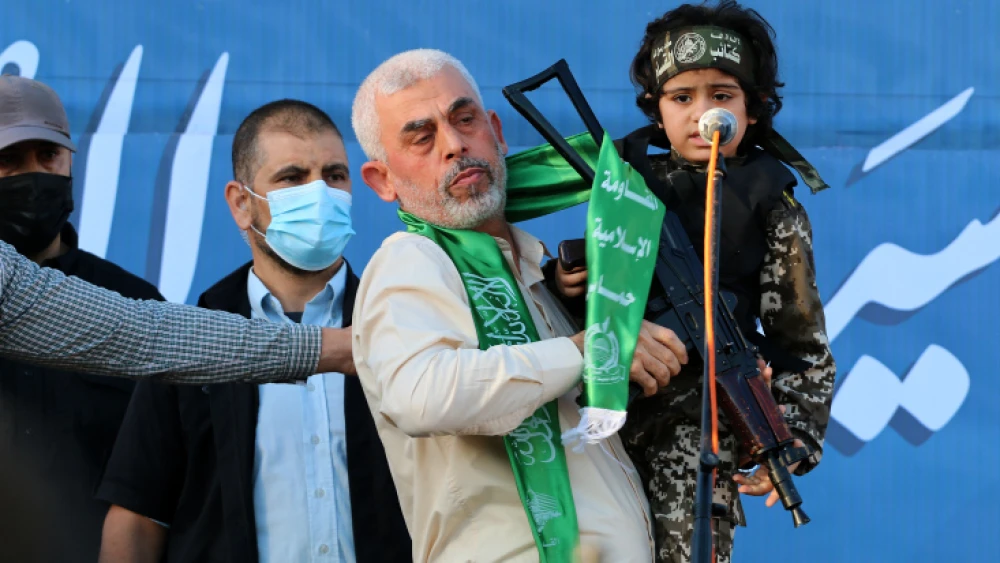
Twenty-one percent of American voters say they support Hamas over Israel in Jerusalem’s ongoing war against the U.S.-designated terrorist organization, according to a Harvard CAPS/Harris poll published over the weekend.
Harvard/Harris surveyed a representative sample of 2,650 registered voters on Jan. 15-16. (The reported margin of error for the total sample is plus or minus 1.9 percentage points at a confidence level of 95%.)
Asked “Do you support more Israel or more Hamas?” in the war, 75% of Democrats backed the Jewish state, while 25% expressed more approval for the Palestinian terrorist group. Among Republican voters, 81% said they supported Jerusalem more, compared to 19% for Hamas.
Support for Hamas polled the highest among the 25 to 34 age group, where almost one-third said they favored the terrorists over Israel.
The Harvard/Harris survey also found that a majority of the American public believes that the negotiations led by the incoming administration of President-elect Donald Trump led to the Israel-Hamas ceasefire.
Fifty-seven percent of respondents said that Hamas “agreed to the deal because of negotiations” led by Trump’s team, compared to 43% who thought that outgoing U.S. President Joe Biden made it happen.
Eighty-four percent of Republicans said Trump was responsible, compared to 75% of Democrats who thought that Biden’s negotiations led Hamas to accept the truce. Among independent voters, 60% credited Trump and 40% Biden.
The vast majority of respondents, 82%, said they backed “the ceasefire deal reached between Israel and Hamas which aims to end the war in Gaza and release hostages.”
Support for the deal was higher among Democrats, 87% of whom said they backed the deal, with 81% of Republicans expressing approval.
Trump on Sunday evening hailed the ceasefire agreement as a “first step toward lasting peace in the Middle East.”
Speaking at a rally hours before being inaugurated as the 47th president of the United States, Trump called the agreement that freed hostages Romi Gonen, Doron Steinbrecher and Emily Damari “epic.”
“This week, we achieved an epic ceasefire agreement as a first step toward lasting peace in the Middle East. And this agreement could only have happened as a result of our historic victory in November,” he told attendees at the Capitol One Arena in Washington, D.C. “I’m glad to report that the first hostages have just been released,” he added.
“Our incoming administration has achieved all of this in the Middle East in less than three months without being president. We’ve achieved more without being president than they’ve achieved in four years with being president,” Trump said, thanking incoming Middle East envoy Steve Witkoff.
“He’s an amazing guy. I said: I got to get myself a negotiator. We have to get a good negotiator. A lot of guys are knowledgeable, but they can’t negotiate. They don’t have the personality or whatever,” said Trump. “And Steve does, and Steve’s a great negotiator, very successful guy, but he’s our new special envoy to the Middle East for helping reach this great breakthrough, and really couldn’t have been done without Steve.”
Israel reportedly signaled its support for the deal—which calls for the release of thousands of terrorists and an Israel Defense Forces withdrawal from strategic areas in the Gaza Strip—after being pressured by Witkoff.