


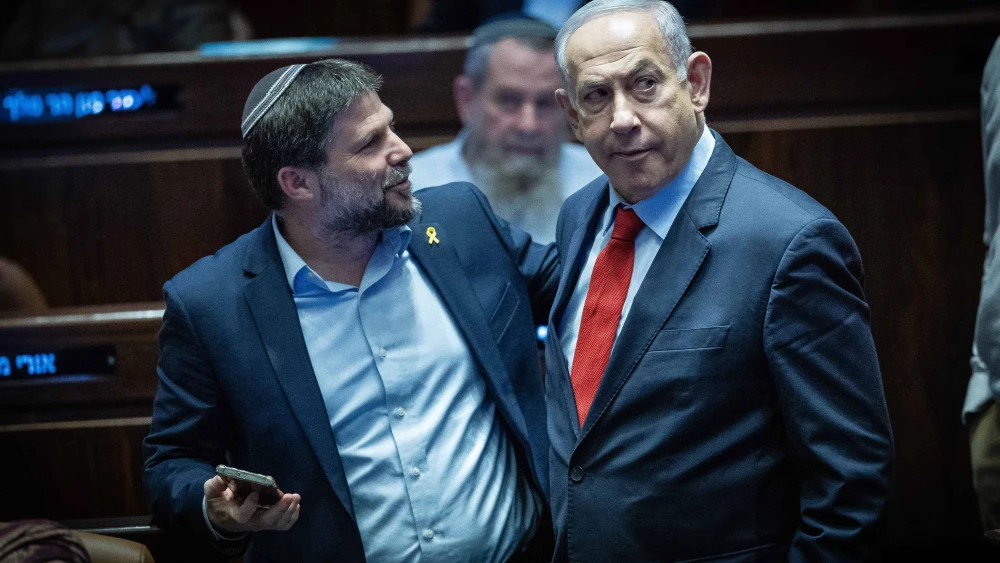
Israeli lawmakers approved the country’s amended war budget for 2024 on Wednesday afternoon after weeks of delay due to disagreements within the unity government. The budget bill was approved with 62 Knesset members in favor and 55 against.
The revised text, which passed through the Knesset Finance Committee last week, raises the expenditure limit to 584.1 billion shekels ($160 billion)—an addition of 70 billion shekels ($19 billion) to the original budget approved before the Oct. 7 Hamas invasion.
Measures to offset spending include a 0.15% rise in the health tax and an increase in National Insurance Institute premiums. Spending reductions include a 5% across-the-board cut to ministry budgets as well as to some government programs that seek to support the LGBT community, Ethiopian immigrants and Arab society.
The Knesset vote was delayed by more than three weeks due to coalition infighting. Even on Wednesday, concerns remained that the budget would not garner the support of a majority of 61 lawmakers.
MKs Avi Dichter and David Bitan, both members of Prime Minister Benjamin Netanyahu’s ruling Likud Party, initially considered opposing the budget over a cut in funding for agricultural research.
Fellow Likud lawmaker Amit Halevi reportedly conditioned his support on a pledge to pass a bill to increase oversight of Arab schools in eastern Jerusalem. At the same time, Likud MK Yuli Edelstein was absent due to the shivah, or Jewish week of mourning, for his late mother. Another coalition lawmaker arrived in the plenum chamber too late to participate in the vote.
Ahead of the debate, Finance Minister Bezalel Smotrich called on Netanyahu to declare that his government would not “surrender to political extortion and would bring the budget to a vote as is.
“We will soon present a good war budget to the plenum. I have no intention of surrendering to all kinds of special interest extortionists, and the budget will not be opened [for changes] at the last moment. This is my budgetary responsibility,” Smotrich said.


