Despite the terrorist attack in Tel Aviv last week and the alerts suggesting other terrorist plots are underway, Israel continues to pursue a differential and complex policy vis-à-vis Palestinians. On the one hand, waging an unrelenting war on terror, while on the other trying not to cripple the Palestinian economy, allowing over 100,000 Palestinians to enter Israel for work, and keeping Ramadan mitigations in place.
Even before Thursday’s attack, top defense and political officials were calling for this policy to change. These voices grew louder over the weekend, and yet—on the recommendation of the defense establishment—the Cabinet is unlikely to decide on a significant policy change.
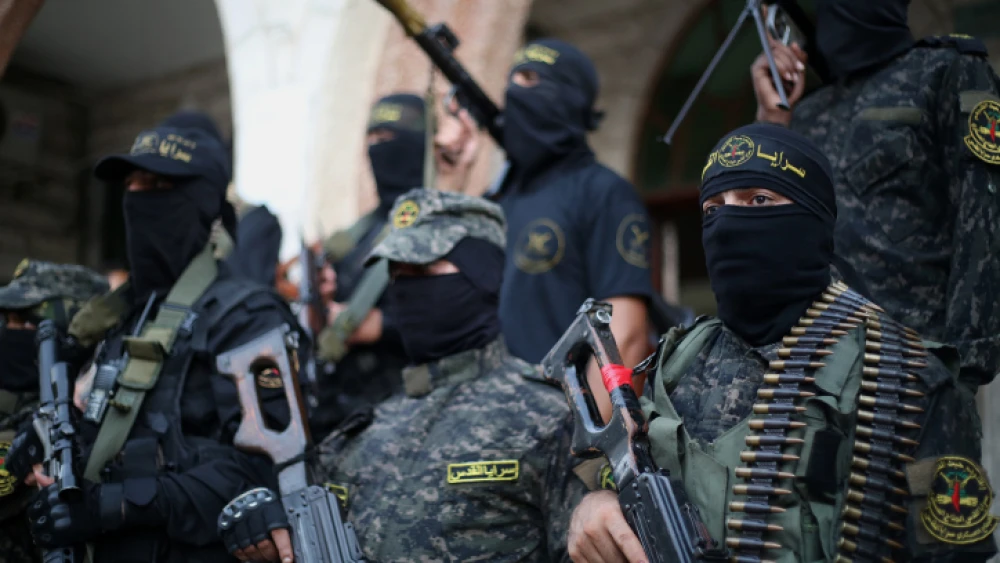
This predictable outcome is likely to earn scathing criticism if, heaven forbid, another attack comes out of Judea and Samaria, and to reduce this risk, the Israel Defense Forces will intensify its activities in the so-called “seam zone” between Israel and Palestinian areas in Judea and Samaria, which has again been exposed as vulnerable. Military forces thus entered Jenin over the weekend, stepping into a known terrorist hub where the Gaze Strip-based Palestinian Islamic Jihad has a massive presence. The official objective of the raid was to map out the terrorist’s home prior to demolition, but this mission also sought to send a clear message, namely that Israeli forces will not hesitate to enter the largest terrorist hornets’ nest in the West Bank, in broad daylight. It also sought to convey a warning to the PIJ that if it continues to target Israel it might face a much wider military operation.
Such an operation—a smaller version of 2002’s “Operation Defensive Shield,” which all but annihilated Palestinian terrorist infrastructure in the West Bank—has been on the defense establishment’s agenda for a while, ever since Jenin’s terrorist current burst onto the surface.
Israel has so far avoided mounting such a campaign, hoping that Palestinian security forces would be able to tighten their grip on the city and wishing to minimize friction ahead of the always volatile month of Ramadan. But over the weekend it became clear that many defense officials support draining this quagmire of terror, via arrests and the seizure of illegal weapons.
The main issue, of course, is the concern that such an operation could ignite the rest of Judea and Samaria, spill over to eastern Jerusalem and perhaps even agitate the Gaza Strip, all of which have so far remained relatively calm.
This is a standing dilemma that should not intimidate Israel. Much as with “Operation Defensive Shield” 20 years ago, the question defense officials should ask themselves is not what could happen if the IDF embarks on a wide-scale operation in Jenin, but what will happen if it doesn’t.
As of Saturday, Israel seemed insistent on walking the same fine line. This is a highly complex challenge given the growing terrorist alerts—a number that always increases after a successful attack—which is why the military is vested in shoring up defenses across all sectors.
Passover will see Israel impose a closure on the territories, as happens every year, but this year it is doubtful that will be enough. Israel is rife with undocumented Palestinians and it is struggling to prevent border breaches. Making the seam zone into an effective barrier again will require a considerable investment.
Yoav Limor is a veteran Israeli journalist and columnist for Israel Hayom.
This article first appeared in Israel Hayom.