For several years, United States policy toward Iran has been focused on using diplomacy to persuade Iran to give up its ambition of achieving nuclear weapons. Starting with the Bush administration, American diplomats and those of its western allies have tried various strategies, including outsourcing the problem to be handled by France and Germany, direct “engagement” with Tehran, and now the multilateral negotiations known as the P5+1 talks. All have utterly failed.
Iran’s intransigence is deeply troubling to the foreign policy realists who deprecate talk of the need to at least threaten the use of force to influence the outcome of the negotiations.
Part of the explanation lies in the feckless manner with which the West, and in particular the Obama administration, has pursued the issue. Tehran does not believe the president is in earnest when he says he will prevent them from going nuclear, and it is difficult to fault them for that conclusion. The “crippling sanctions” imposed on them have not been fully enforced, leaving them with enough economic muscle to muddle through. The Iranians believe, not without reason, that the administration’s only real interest right now is to prolong the negotiations until after the November elections and thereby prevent Israel from attacking on its own.
But there is another more fundamental fact that has foiled diplomacy and that will continue to ensure that nothing short of force will convince the Iranians to desist. The real problem is not so much President Obama’s policies — foolish though they might be — but the essential nature of the Iranian regime.
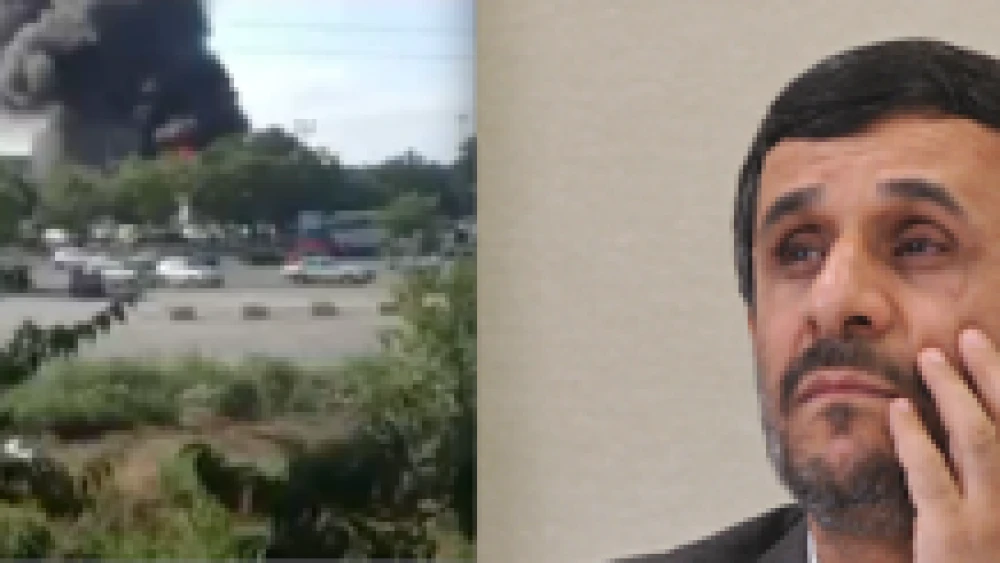
The world got a good look at the true face of Iran not in the P5+1 negotiations but on the bloodstained pavement of Burgas, Bulgaria, where a terrorist attack took the lives of five Israeli tourists and a local bus driver. The atrocity, which both Israel and the United States agree is the work of Hezbollah, Iran’s loyal terrorist auxiliary, was dismissed by some, including senior U.S. officials speaking off the record, as a “tit for tat” retaliation for the assassination of Iranian nuclear scientists. But the vicious targeting of Jewish victims is not so much a tactic as an avocation for the Iranians. Foreign policy “realists” continue to insist that if a “compromise” can be crafted that will enable them to keep their nuclear program, the Iranians can be trusted to keep their word and behave as a rational international actor if they do get a bomb. But the truth is, Iran’s fundamentalist leaders are deeply immersed in an anti-Semitic worldview in which hatred of Jews is integral to their ongoing war on the West.
Iran’s state-sponsored terrorism did not begin in the wake of alleged Western and Israeli assassinations of scientists or cyber attacks on their infrastructure. It dates back to the very beginnings of the Islamist regime. Iranian and Hezbollah terrorists have struck at Jews around the world, including the bombing of a Jewish community building in Buenos Aires, Argentina 18 years ago last week.
The regime’s bizarre obsession with Jewish power extends to all sorts of topics. Iranian President Mahmoud Ahmadinejad’s Holocaust denial is well known. But the country’s vice president opened a United Nations conference on drug trafficking last month by claiming that Jews ran the international trade in opiates and even asserted that they were instructed to do so by the Talmud.
These are not stray facts that are sidelights to the main debate about Iran’s quest for power but are essential to understanding the nature of the regime. Once you understand that their leaders are besotted with conspiracy theories about Jews and believe that killing them is a duty, the “realist” arguments about Iran’s rationality are quickly exposed as not only absurd but irrelevant to the decisions that must be made about halting their nuclear nightmare.
The bloodshed in Burgas, about which Ahmadinejad openly bragged, cries out for more than mere vengeance upon the perpetrators and their sponsors. It should compel us to think more clearly about the murderers and draw the proper conclusions about the futility of sending our diplomats on a fool’s errand of more nuclear talks.
JNS Columnist Jonathan S. Tobin is senior online editor of COMMENTARY magazine and chief political blogger at www.commentarymagazine.com. He can be reached via e-mail at: jtobin@commentarymagazine.com. Follow him on Twitter at https://twitter.com/#!/TobinCommentary.