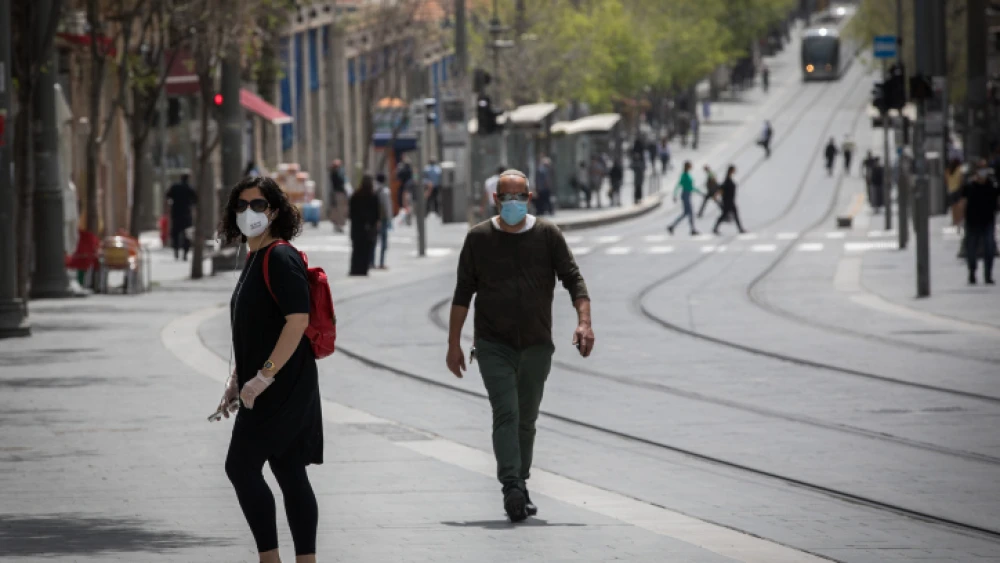
Israel on Sunday began easing some of the restrictions imposed to stop the spread of the coronavirus pandemic, making allowances for prayer quorums and allowing many businesses to reopen.
The new measures were a source of hot debate between Israel’s health and finance ministries over the past several days, with the Health Ministry insisting prohibitions remain in place to prevent a flare-up in coronavirus infections while the Finance Ministry warned of dire consequences for the economy unless the lockdown were relaxed.
Ultimately, following a late-night meeting on Saturday, the Cabinet released new guidelines, which include allowances for outdoor prayer quorums of up to 19 people each, with worshippers required to wear masks and maintain a distance of two meters from each other; permission to move up to 500 meters from the home for sports or prayer and 500 meters from work for prayer (up from 100 meters); the renewal of special education programs for children in groups of up to three; and permission for a single caregiver to take care of up to three children at a time. Under the new directives, up to 10 people at a time will be allowed to attend weddings and circumcisions held in open areas.
In addition, a new “purple badge” standard was instituted for workplaces, allowing them to operate if they utilize face masks, sterilize surfaces and conduct daily fever checks on workers. As per the new regulations, workplaces will now be allowed to bring up to 30 percent of their employees onto the premises, up from 15 percent, while electrical, household goods and optics stores were allowed to reopen, with limitations on the number of customers allowed in at a time.
Public transportation will also be increased and additional staff will be provided to government offices which provide assistance to the private sector.
Beauty salons and clothing, shoe and toy stores will remain closed for the time being, as will sit-down restaurants, malls and markets, while citizens age 67 and older and those at high risk of infection are being encouraged to remain home.
Israeli Prime Minister Benjamin Netanyahu initially announced the changes after on Saturday evening, though they were not actually approved until early Sunday morning, following a heated telephone meeting between Netanyahu and government ministers.
According to Israeli media reports, the Health Ministry published then retracted the guidelines on social media platforms after Netanyahu prematurely announced them and before the Cabinet was able to discuss them, and the subsequent debate over the measures was rancorous.
Sticking points included the number of men allowed in a prayer quorum and how police would differentiate between those engaged in sporting activities 500 meters from their homes and those engaging in unauthorized endeavors, according to the reports.
During his Saturday night address, Netanyahu warned that while Israel’s COVID-19 mortality rates were currently among the lowest in the OECD, restrictions would be rolled right back if infections began to rise.
He added that additional restrictions would be removed if it was deemed possible after an assessment in two weeks, but asked the country’s Muslims to avoid the large social and family gatherings typically associated with the upcoming Islamic holiday of Ramadan.
In the meantime, anyone over the age of six caught in public without a face mask will receive a warning, with a second offense resulting in a fine of NIS 200 ($56).