Israeli Foreign Policy

“It’s far past time to transfer to Israel the capabilities it needs to win,” senators Tom Cotton and Mitch McConnell wrote to President Joe Biden.

The suggestion by the actress to show solidarity for a U.S. ally has drawn both smiles and frowns, and certainly, curiosity.

In his first address to the conference as prime minister, Keir Starmer called for an immediate ceasefire in Gaza and the return of the hostages, and reiterated the party’s support for a two-state solution.

The Argentine president called out the world body for systematically voting against the Jewish state, “the only democracy in the Middle East, which protects liberal democracy.”

The Iranian proxy group has upped its anti-Israel rhetoric, claiming its ongoing attacks are “in defense of Lebanon,” not just in support of Hamas.
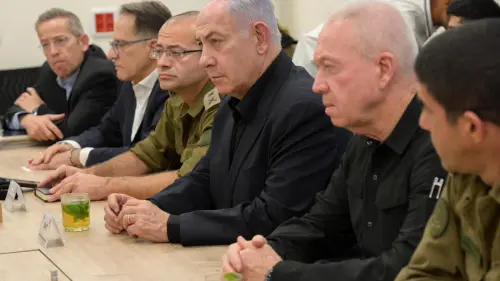
Still, “whoever has a missile in the living room and a rocket in the garage will no longer have a home,” the Israeli premier warned.
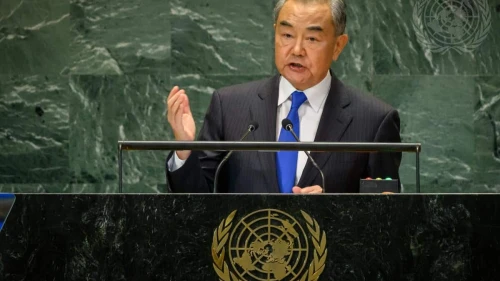
Beijing will continue to stand on the “side of justice and on the side of Arab brothers, including Lebanon,” said Foreign Minister Wang Yi.

“My heart is with all the innocent citizens of Kiryat Bialik,” Mayim Bialik said on her Instagram, following Hezbollah’s attack on the city that shares her family’s illustrious name.

Sheffi Paz received 45 days in prison for a graffiti that read: “German money kills Jews.”

The French president accused his Israeli counterpart of pushing the region to a wider conflict.

Since the war on multiple fronts began in October, American volunteers of all ages have traveled to Israel to offer a little elbow grease while soldiers and reservists are at the front.
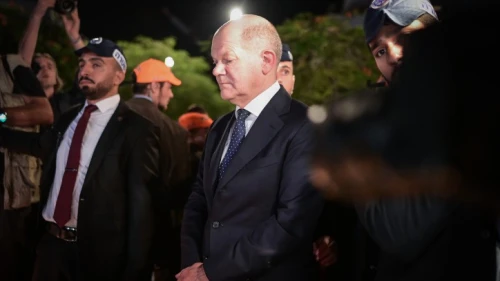
The ICJ case challenging Berlin’s support for the Jewish state could take years to move through the court.