
“Look at me.”
This was one of the many demands summarily ignored by the United Nations’ supposed leading advocates for sex assault survivors.
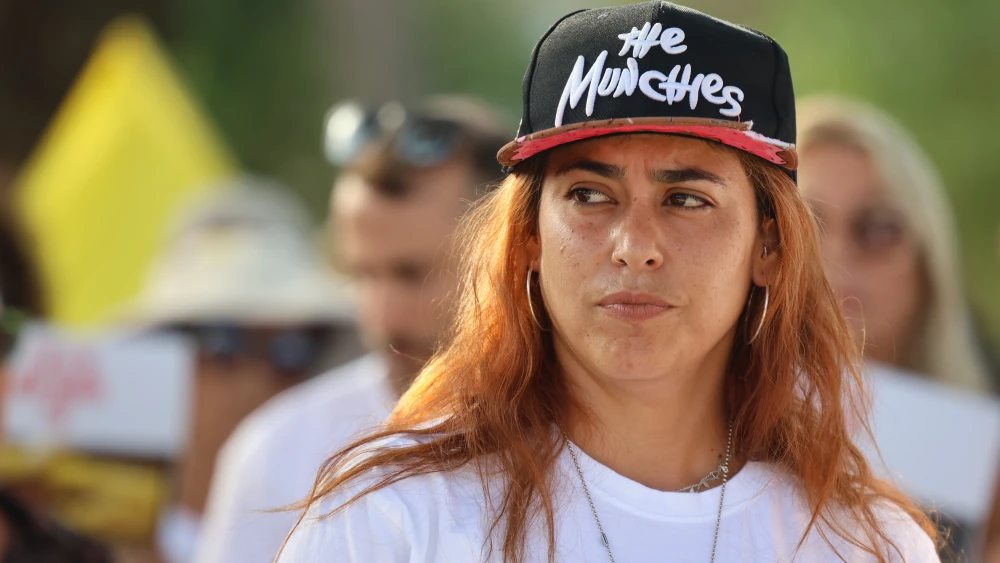
On June 23, Ilana Gritzewsky, a survivor of the Hamas-led terrorist attacks in southern Israel on Oct. 7, 2023, who was raped by Hamas fighters, shared her testimony before the United Nations in France.
“On Oct. 7 and in captivity, Jewish women were raped, abused and humiliated. And you, special rapporteur, you choose silence and denial,” said Ilana, addressing the U.N. Rapporteur on Violence Against Women, Reem Alsalem, who avoided eye contact with her.
Alsalem had said on X in November 2025, “No independent investigation found that rape took place on the 7th of October.”
At the end of Ilana’s remarks, she remained silent.
The influence of the United Nations’ weaponization and politicization of sexual trauma through hypocrisy and double standards has trickled down to the point where campus discourse has become toxic. This is evidenced by how the world body is constantly referenced in conversations inside classrooms and on the quad as the preeminent source of credible information when justifying evil opinions about Israeli women.
But when talking to the same people about non-Israeli women in other situations, the difference is jarring.
Three days after Ilana shared her story, Fawzia Amin Sido, a Yazidi woman, also shared her story of horrific abuse. In 2014, she was abducted by ISIS, taken away from her family in Iraq and trafficked into Gaza, where she was abused for years.
She spoke at the U.N. Human Rights Council, which was set up by the NGO UN Watch, with several supporters of women’s rights attending, including Dr. Cochav Elkayam-Levy, the founder of the Civil Commission on October 7 Crimes Against Women and Children.
Fawzia’s testimony was received in a supportive and caring way, with the chief strategy officer and panel chair of UN Watch, Daniel Radomski, thanking her for her courage. Fawzia’s experience should be the standard that applies to every survivor of abuse.
However, the difference in the reception of these two women’s stories is jarring. Fawzia was made to feel seen while Ilana did not receive so much as a reply.
When organizations committed to fighting sexual violence make recognition of that violence contingent on the victim’s nationality or the political consequences of acknowledging it, they undermine their own mission and permit others to do the same.
These organizations’ political commitments clearly interfere with their stated mission of defending women.
In March 2024, the United Nations released a report laying out the findings of sexual violence against Israeli civilians on Oct. 7 and the hostages. The report was the result of a mission to Israel led by the U.N. Special Representative of the Secretary-General on Sexual Violence in Conflict, Ms. Pramila Patten.
It took nearly two years after Oct. 7 for the U.N. General Assembly to condemn the atrocities. Officials who stood against disbelief of sexual abuse include Volker Türk, the U.N. High Commissioner for Human Rights, and Nicolas de Rivière, the French representative to the Security Council.
However, female officials like Francesca Albanese, the U.N. Special Rapporteur on the Occupied Palestinian Territory, said that rape stories were fabrications and that there was no evidence for rape. Yet in early 2026, in an interview with 972 Magazine, she said: “I have never denied that sexual abuse occurred; this has been heavily documented.”
Official findings of other bodies like the U.S. Department of State that affirmed the likelihood of sex trafficking in Gaza, and the Dinah project, which presented the many ways Hamas used rape and sexual violence as a tool of terror against women and children, were dismissed by too many who claimed to defend women.
Even after horrific evidence came out of Israel within a week of Oct. 7, feminist organizations were sympathetic towards the Palestinians while sometimes failing to mention any sexual assault against Israeli women.
They fell silent, or quiet at best, when the victim of rape was politically incorrect or inconvenient.
They fell silent, or quiet at best, when the victim of rape was politically incorrect or inconvenient. Feminists who claimed to fight for women and encouraged others to “believe all women” betrayed their own creed of fighting for a woman’s right to safety and self-determination.
Instead, they clung to their political narrative at the cost of siding with terrorists, and turned their faces away from the truth.
After all this time, with all this evidence, these groups remain reluctant to call evil, evil. “Ms. Alsalem, you said there was no evidence of sexual violence on Oct. 7,” said Ilana. How are we supposed to credit these institutions when they are the ones leading the charge in discrediting and questioning the victims’ trauma? They are betraying their mandate.
The perpetuation of false narratives that Israelis are an “oppressor” has left many hesitant to legitimize the rape Israeli women endured because they reasoned that Israel was using these stories to garner sympathy despite their “genocide campaign” in Gaza, or thought that validating their stories would excuse “Israeli crimes in Gaza.”
Recognizing a crime against an Israeli woman does not require endorsing any Israeli government policy. Treating those questions as inseparable makes the survivor’s credibility dependent on a political position.
The rationalization and denial of the Oct. 7 rapes have not only been seen in the United Nations but across college campuses.
Students at Columbia University made shocking justifications for the violence committed against Israeli women, which included the perpetuation of beliefs that because Israelis are the “oppressor,” the death and abuse they experienced were justified.
The University of California, Berkeley had to remove an event description that denied the rapes—an event put together by the gender and women’s studies department.
The justification seen at Columbia University shows that students were willing to stand for the idea that Jewish victims deserved what happened to them, while the denial at UC Berkeley reveals brazen antisemitism that is willing to deny the horrors of abuse that have been substantially verified.
As the president of the International Justice Mission chapter here on my campus at Oral Roberts University, I’ve interacted firsthand with people who have been trafficked and dedicated their lives to fighting sexual violence.
My experiences have shown me the great importance of students around the country understanding that rape is rape. It is not something to be rationalized or explained to satisfy, justify or defend a political narrative.
Students around the world who fail to defend rape victims, believing those victims need to pass a political test to receive support, are failing to judge good and evil rightly.
I think the stakes are even higher than that. Once people accept a justification for raping women from one group, they establish a precedent for excusing sexual violence against others.
If the United Nations and feminist leadership will not stand up, adhere to their creed and accept accountability, they are doomed to empower a leadership that will actively betray its mandate again and set an example to other institutions and individuals that such betrayal is acceptable.
Accountability in this case could include publicly addressing statements that contradict documented findings; requiring officials responsible for women’s rights to explain their treatment of Israeli survivors; and establishing clear expectations for responding to sexual violence consistently.
U.N. officials and the public should call for the termination of biased members who refuse to uphold human rights and dignity across the board from their positions.
The public should stop looking up to the United Nations until it proves it is worthy of respect. Because the United Nations is considered an authority, people should be cautious about what they say and believe if they find themselves denying mass rapes because of the victims’ assumed identities.
Ilana explained, “I came back with a broken hip, a broken jaw and a shattered soul. … Trauma doesn’t vanish once you are released. Now, every air-raid siren, and every rocket from Iran, throws me back into that hell.”
Continued dismissal of someone living with this kind of trauma transforms the actors she believes will fight for her into people no better than her abuser. Failing to validate her testimony not only pours salt on her wounds, but numbs our societies to injustice.
If standing with the abused becomes dependent on the sanity or lack thereof of groupthink, then civilization will deteriorate.
The United Nations and other organizations committed to the protection of women’s rights cannot be considered credible so long as their officials betray their mandate.