The Iranian regime will fall. It is not a question of if, but when.
For 47 years, the Islamic Republic has been the world’s chief sponsor of terrorism. Its record of violence grows longer by the day. On Oct. 23, 1983, its Hezbollah proxy killed 241 American servicemen in Beirut.
In 1992, 29 people were murdered in the bombing of the Israeli Embassy in Argentina. Two years later, 85 were killed at the AMIA Jewish community center in Buenos Aires. In 1996, 19 American servicemen died in the Khobar Towers bombing in Saudi Arabia. In 2012, six Israelis were murdered in a Hezbollah attack on a bus in Bulgaria.
More recently, the regime has reportedly attempted to assassinate U.S. President Donald Trump. On Jan. 13, 2026, it slaughtered tens of thousands of its own citizens in a brutal crackdown. Regime change is not optional. It is mandatory.
To understand how this may unfold, it is worth recalling how Iran’s modern history began. Mohammad Reza Pahlavi was placed on the throne in 1941 through Anglo-Soviet action to prevent a Nazi takeover of Iran.
He later consolidated power in 1953 through a CIA-backed coup known as Operation Ajax. History suggests that what comes next must again come from within. Durable regime change in Iran can only occur through internal uprising.
Trump’s June 22, 2025, operation—widely known as Operation Midnight Hammer—which destroyed Iran’s three most dangerous nuclear facilities, weakened the ayatollahs at a critical moment. Since then, accelerating economic collapse and severe water shortages have pushed the regime closer to its final chapter.
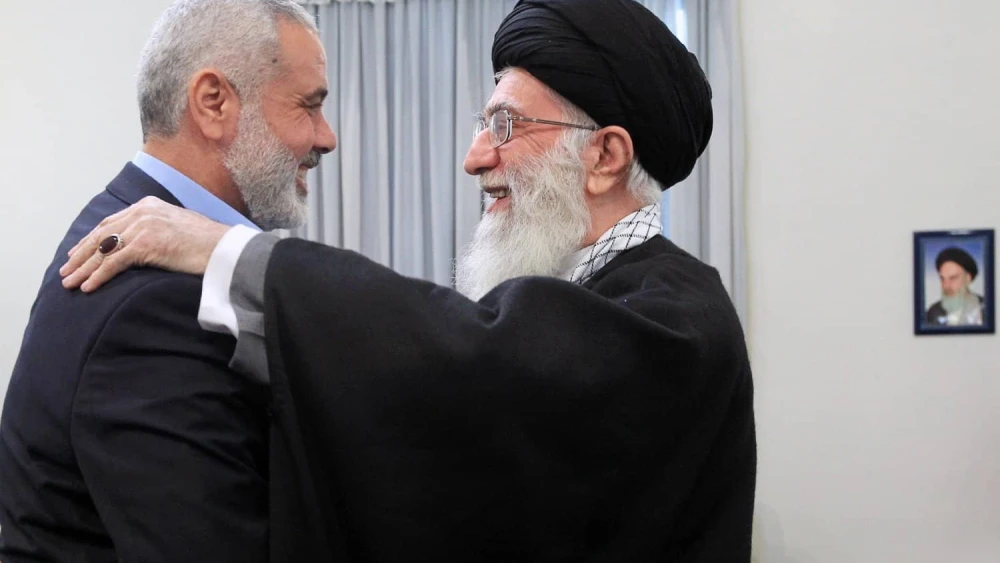
There is now virtually no daylight between Israeli and American intelligence services, and that coordination is decisive. One need only recall July 31, 2024, when Israel penetrated the highest levels of the Iranian Revolutionary Guards Corps to assassinate Hamas leader Ismail Haniyeh in Tehran, inside an IRGC guest house.
An operation of that magnitude does not occur without a deep compromise of the regime’s security apparatus. In its aftermath, two dozen senior intelligence and military officials were reportedly arrested.
Further strikes on nuclear sites, the dismantling of Iran’s missile production capabilities, and the targeted removal of political and military leadership could open the door for defections within the IRGC itself. Such defections would make an internal coup not only possible, but likely—provided actions remain carefully coordinated between Israeli and American intelligence agencies.
Iran is at a tipping point. With Trump’s leadership and proven track record, this outcome may come sooner than many expect. The head of the snake that has brought so much destruction to the world can, and must, be severed.
Only decisive leadership can make that happen.