Demographic surveys show that more American Jews consider humor key to their identity. The long history of famous Jewish jokesters and a style of comedy that is associated with the community is viewed as more important than religious law or even Israel by more Jews than you might think.
But in this “woke” era in which audiences seem ready to run for their “safe places” at even a hint of something offensive being said, the lines are starting to be blurred between humor and politics. Even as Jews celebrate Purim, their annual carnival holiday in which they commemorate being saved from mass slaughter with a festival of clowning, costumes and revelry, it’s far from clear that a lot of us still know the difference between a joke and a slur.
This is brought to mind the account published in The Washington Post last week of an effort to bridge the gap between blacks and Jews in Congress.
In the aftermath of the crackup of the Democratic Party in the House of Representatives over anti-Semitic remarks by Rep. Ilhan Omar (D-Minn.), a group of Jewish Democrats met with some Muslim and African-American members. Relations between these fellow Democratic members of Congress were so fraught that it was necessary to bring in an outsider to moderate the private gathering.
The moderator came from Bend the Arc, a leftist Jewish group with ties to both factions. But apparently, being a hard-core progressive is no guarantee of being truly “woke,” which in today’s parlance means sufficiently sensitive to injustice or others sensibilities. Seeking to ease the tensions that had deepened after Omar had targeted “Jewish colleagues” as being guilty of dual loyalty and Islamophobia, the Bend the Arc guy decided to break the ice by telling a joke about Jews and money.
Apparently, his fellow Jews in the room thought nothing of it. But the African-Americans and Muslims present were not amused. Rep. Jahana Hayes (D-Conn.), a friend of Omar and Rep. Rashida Tlaib (D-Mich.), who has also been guilty of spewing anti-Semitism since the trio took office in January, demanded to know why a Jew could tell such a joke but that she couldn’t.
Hayes later said she thought such jokes were off-limits.” Since she and other non-Jews present seemed to have no idea about what was or wasn’t anti-Semitic, she found it confusing that Jews would think anything along those lines could conceivably be funny.
Given that African-American comedians frequently tell jokes about their own people that non-black entertainers wouldn’t (and shouldn’t) dare to perform, including routinely using hateful racial slurs, her incomprehension is puzzling.
Call it a double standard if you like, but both African-Americans and Jews have the standing to joke about their own people that outsiders don’t possess. When you poke fun at your own family and tribe, the intent is generally far different than when it comes out of the mouth of an outsider.
For example, a show that satirized the foibles of American Jewry in the 1950s as thoroughly as Amazon’s “The Amazing Mrs. Maisel” wouldn’t be considered quite so funny if it’s perspective were not so thoroughly Jewish.
Which is to say that when someone like Ilhan Omar says support for Israel is “all about the Benjamins,” or talks about the Jews hypnotizing the world or demands that Americans “pledge allegiance to a foreign country,” her purpose is different than, say, a Jew who tells the old joke about a rabbi being bribed to officiate at the funeral of a congregant’s dog with a hefty contribution to the synagogue (punch line: “I never knew my dog was such a great supporter of Israel”).
Some of those who defended Omar not only were prepared to accept her insincere claim of ignorance of anti-Semitism, but also seemed to also be saying that Jews were being overly sensitive and hypocritical in taking offense at her remarks. Many who sympathized with Omar also think of Jews as a privileged white group whose sensibilities don’t deserve respect and Israel’s defenders as the moral equivalent of Jim Crow racists.
Mocking our sensitivities is entirely legitimate, even a necessary prerequisite to maintaining our sanity in a crazy world. The trend of seeking to punish and silence people, especially those in the entertainment industry, for saying awful things or telling offensive jokes is deeply troubling. That’s especially true when you think of the comedians of the past who are lionized today (such as Lenny Bruce, who is a character on “Mrs. Maisel”), though who faced jail for roasting our sacred cows.
In this respect, the Jewish community is as guilty as anyone else when it comes to thinking anything goes with respect to people we don’t like, but view barbs aimed closer to home as beyond the pale.
Yet there is a clear difference between a political leader with an agenda that seeks to delegitimize Jews and Israel, such as a supporter of BDS like Omar, and those who merely poke fun at an eminently mock-able American Jewish culture or other institutions.
While a sense of humor is subjective and personal, there is a fine line between holding people accountable for prejudice and seeking to stifle debate. Those who claim that Jews overreacted to Omar need to remember that the day of the Jewish calendar most devoted to humor commemorates the successful effort to foil an anti-Semitic plot that sought to exterminate the Jews of the ancient world. If we mock Haman by blotting his name in a riot of Jewish children making noise, we can only do so because he failed. Omar is not Haman, but neither was she innocent of ill intent. Nor are the efforts of the BDS movement she supports to target and silence American Jews a joke.
Jews must retain our sense of humor and reject the impulse to shut up those who bother us. But neither should we be lulled into a sense of foolish complacency that confuses satirists with those who clearly mean the Jewish people no good.
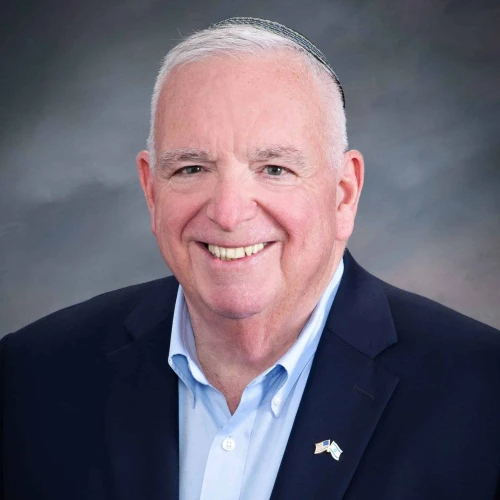
Jonathan S. Tobin is editor in chief of JNS—Jewish News Syndicate. Follow him on Twitter at: @jonathans_tobin.