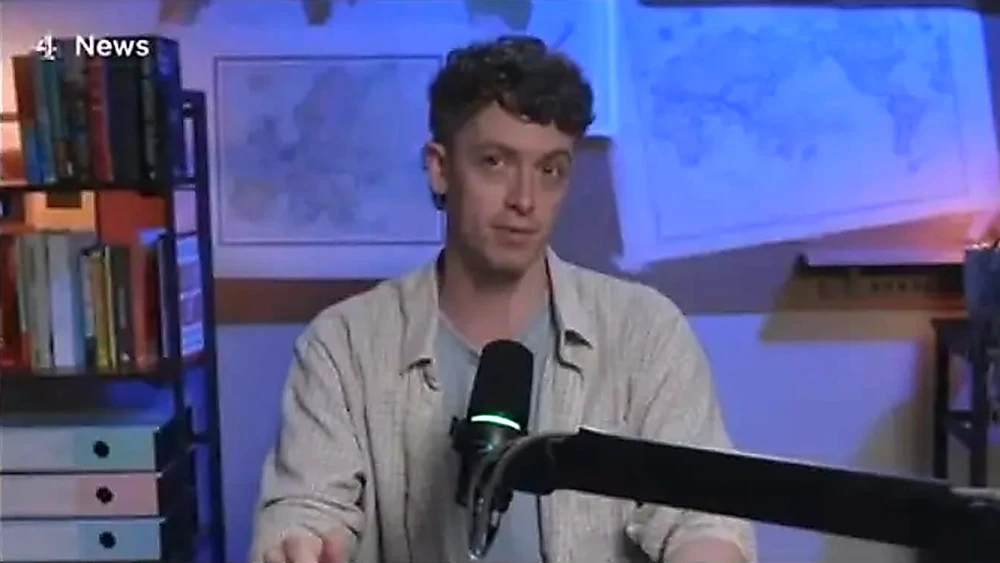
On Nov. 13, 2026, Britain’s Channel 4 News broadcast a segment titled “Revealed: The Secret Files on the UK Arms Exports to Israel,” in which data scientist Brian O’Flynn claimed that the broadcaster used Freedom of Information (FOI) requests to obtain exclusive files on U.K. export licenses to Israel. However, the report weaponizes unverified casualty data, misrepresents the International Court of Justice’s (ICJ) 2024 provisional measures and uncritically platforms a legal expert whose partisan sourcing undermines claims of impartiality.
Disputed casualty figures
In the first 25 seconds, O’Flynn uncritically deploys the oft-cited figure of “75,000 Palestinians killed” without attribution. Channel 4 News fails to specify on whose authority this figure rests. Properly attributing the data to the Hamas-run Gaza Health Ministry would have required a caveat the segment omits: The ministry’s tally does not distinguish between civilians and combatants.
O’Flynn subsequently relies on the ministry’s early 2024 figure of 26,000 Palestinian deaths, again without attribution or caveat, while minimizing the Hamas massacre of Oct. 7, 2023. The atrocities, by contrast, receive barely seven seconds of airtime before the segment pivots to assert that the Israeli government “began its biggest ever bombardment of Gaza.”
In the same clip, O’Flynn minimizes Hamas’s international status by describing it merely as a “proscribed terrorist group by the UK,” implying that the designation is uniquely British. In reality, at least 38 nations, including the U.S., Israel and the member states of the European Union, formally designate Hamas as a terrorist organization.
Misrepresenting the ICJ ruling
As CAMERA UK originally identified on X, Channel 4 further mischaracterizes the ICJ’s January 2024 order on provisional measures as a “landmark ruling on Israel’s conduct.” To reinforce this narrative, the broadcast displays an open letter from U.K. judges and lawyers dated April 2024, highlighting a passage claiming that “the Court concluded that there was a plausible risk of genocide in Gaza.”
The segment also omits crucial context that emerged after the letter’s publication. In an interview with BBC HARDtalk, Judge Joan Donoghue, the former ICJ president who presided over and authored that order, corrected the record. She explicitly stated that the court did not decide that the claim of genocide was plausible, but rather whether the Palestinians had a plausible right to be protected from genocide.
CAMERA UK contacted Channel 4 News directly to request a correction regarding this false characterization, but the broadcaster declined. How can a self-proclaimed fact-checking unit demand state compliance with an international treaty while fundamentally misreading its foundational case law?
A disputed legal interpretation
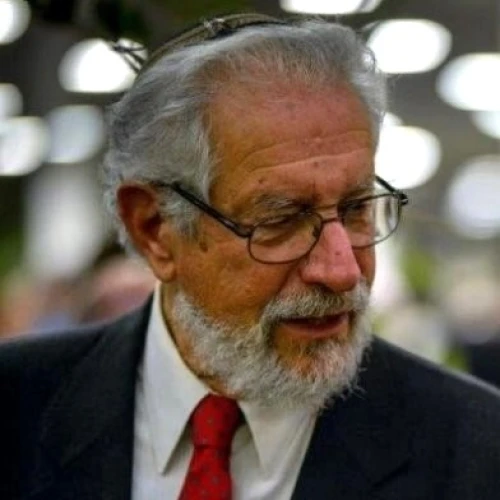
To buttress this legal narrative, Channel 4 introduces Professor Janina Dill, an international humanitarian law (IHL) scholar, who asserts that the U.K. should have halted arms exports to Israel in early 2024:
“I would not venture to be entirely confident that the ICJ will eventually find that this is a genocide. But that is immaterial to the question of the obligation of the UK government because the duty to prevent a genocide is triggered when there is a serious risk of genocide, a danger of genocide, and when a state should have become aware of that danger and that was absolutely the case in the beginning of 2024.”
However, Dill’s argument rests on the same flawed premise advanced by Channel 4 News: that the ICJ’s provisional measures automatically satisfied the “serious risk” threshold required to trigger a state’s duty to prevent genocide. If Dill’s claim is that the duty was triggered in early 2024 because a “serious risk” was apparent, the evidence then available simply did not support that threshold.
The ICJ’s provisional measures order in January 2024 was widely misread as a finding that Israel was plausibly guilty of genocide, or that there was a plausible risk of genocide. It was neither. The court did not rule on the merits of the genocide charge; it asked only whether the acts South Africa alleged were capable of falling within the Genocide Convention, and whether the rights South Africa sought to advance on behalf of the Palestinians, namely protection from genocide, were plausibly the rights the convention protects. That is a standard lower than, and different from, a serious risk of genocide.
The court narrowly ruled that “there was a risk of irreparable harm to the Palestinian right to be protected from genocide,” a finding that bears on the urgency of interim protection, not on whether a serious risk of genocide existed in the sense required to trigger the duty to prevent it. The order therefore cannot establish the premise on which Dill’s argument depends.
Dill’s insistence that an eventual ICJ finding is “immaterial” therefore overstates her case. The 2007 Bosnia v. Serbia judgment, the main authority for the “serious risk” trigger, also held that a state can be held responsible for breaching the duty to prevent only if genocide was in fact committed. Whether the U.K. government breached anything therefore depends on the very outcome she hedges on.
The limits of British influence
Bosnia is also a poor factual analogy. The ICJ held that Serbia could hardly have been unaware of the serious risk once Bosnian Serb forces decided to occupy Srebrenica: a specific, imminent threat posed by a military proxy over which it exercised overwhelming political and financial influence. By contrast, even if a “serious risk” had been apparent to the U.K., the international duty to prevent extends only as far as a state’s capacity to exert effective influence.
For example, the U.K. government has maintained that its factual capacity to unilaterally influence Israel’s military decisions is minimal, given its geographic distance, small share of the arms market (with British military exports accounting for less than 1% of Israel’s defense imports) and distinct legal position as a third-party regulator governing commercial arms exports to an independent sovereign state.
Since the U.K. lacks the overwhelming leverage that Serbia held over its military proxy across the three variables outlined in Paragraph 430 of the 2007 Bosnian Genocide Judgment, a position implicitly upheld in the 2025 ruling in R (Al-Haq) v. Secretary of State for Business and Trade, its structural leverage over a sovereign, independent ally such as Israel is incomparably more limited.
While general diplomatic leverage may be limited, a state exercises absolute control over its own material exports. Consequently, the Bosnia capacity-to-influence analysis applies to arms supplies only in part, leading to two crucial qualifications that Channel 4 News rightly identifies.
First, the duty to prevent genocide is not the sole legal constraint on exports. The U.K.’s Strategic Export Licensing Criteria and the Arms Trade Treaty mandate separate tests, such as assessing a “clear risk” of serious international humanitarian law violations.
The government explicitly acted on this framework when it suspended approximately 30 licenses in September 2024.
Second, a lack of external leverage is a structurally weaker defense for material exports than for diplomacy, given that export licensing remains entirely within domestic jurisdiction. Accordingly, the government’s defense of the F-35 carve-out did not rely on a purported lack of leverage but rested instead on the operational integrity of an interdependent multinational program.
However, the suggestion that the F-35 carve-out breached the Genocide Convention is entirely unsupported by domestic legal proceedings. While the government maintained that the exemption was fully consistent with its international obligations, the High Court held that arms export policies are nonjusticiable matters for the executive, a position cemented when the Court of Appeal refused permission to appeal.
Although this does not represent a definitive ruling on the merits, neither does it constitute a finding against the government. Because the “serious risk” test is objective and independent of a judicial finding, applying it to a fast-moving conflict requires weighing contested evidence, specifically regarding genocidal intent. Based on the evidence available at the time, the U.K. government assessed that Israel lacked such intent, meaning the legal threshold required to trigger the preventive duty was never met.
Contradictions in ‘Channel 4' reporting
Later, Dill states: “It is hardly contestable and it was hardly contestable that Israel is committing grave breaches and war crimes.”
That claim is contradicted by Channel 4’s earlier reporting. CAMERA UK’s analysis of Channel 4’s own “Dispatches” documentary, broadcast in September 2026, notes that the program asked whether the U.K. knowingly exports arms to a country it believes is committing war crimes.
Yet, by the program’s own account, the U.K. government’s International Humanitarian Law Compliance Assessment Cell (IHLCAP), the internal unit responsible for assessing potential breaches of IHL, repeatedly concluded between 2023 and 2024 that Israel was not in breach of IHL or that there was insufficient evidence to make a specific finding of a breach.
Did Channel 4 overlook the findings of its own documentary, or did those findings merely conflict with a predetermined editorial narrative?
Its FactCheck appears caught between two positions it cannot sustain. Either it advances a characterization of events as genocide or violations of IHL that it cannot establish, or it frames the U.K. government as complicit in arming Israel without showing that the U.K. knowingly facilitated war crimes, which depends on the same unproven premise.
A question of impartiality
Given these logical contradictions, it is telling that Channel 4 News chose Dill as its sole legal authority, offering no countervailing legal perspectives.
CAMERA UK’s research reveals a problematic pattern regarding the sources Dill relies upon and the platforms she frequents. In a January 2024 article on Israel’s alleged destruction of cemeteries in Gaza, Dill relied exclusively on reports from Euro-Med Human Rights Monitor, an organization whose leadership has demonstrable ties to Hamas.
This narrow choice of sourcing mirrors Dill’s broader media footprint. Her commentary has prominently featured in dedicated appearances with outlets such as the Hamas-linked Al Jazeera; Middle East Eye, whose owner is a former Al Jazeera executive with ties to Hamas-affiliated Al-Quds TV; and the Qatar Tribune, a Qatari-aligned newspaper controlled by senior members of the Al-Thani family, who maintain close relations with Hamas.
Our research also found that Dill has appeared on BBC Verify, where she has similarly been featured as an unchallenged legal authority on the Israel Defense Forces’ military conduct.
During a television appearance on Sky News, Dill characterized the IDF presence in Southern Lebanon as a “belligerent occupation,” reflecting a broader systemic trend in which the BBC and British broadcasters routinely over-rely on a single commentator to frame highly contested legal interpretations as definitive facts.
Was Dill chosen simply to buttress a narrative Channel 4 was already determined to advance?
A flawed legal foundation
Ultimately, Channel 4’s analysis collapses under the weight of its own legal distortions and internal reporting contradictions.
By relying on Dill as its unchallenged legal authority, Channel 4 advances an interpretation of the “serious risk” trigger that is incompatible with the ICJ’s own Bosnia v. Serbia precedent, which requires an actual commission of genocide for a state to be held in breach.
By also mischaracterizing the January 2024 provisional measures as a finding on the plausibility of genocide rather than the plausibility of rights—and subsequently refusing to rectify the error—Channel 4’s analysis relies on a flawed legal foundation.
This legal premise is further undermined by internal contradictions within Channel 4’s own journalism. FactCheck’s data segment stands directly at odds with its previous “Dispatches” reporting, which revealed that the U.K.’s internal compliance cell repeatedly concluded that Israel was either not in breach of IHL or, for separate events, that there was insufficient evidence to make a definitive finding.
To bridge this logical chasm, Channel 4 News resorts to unverified, Hamas-affiliated casualty figures and relies on a single expert whose previous legal commentary on Israeli actions in Gaza originated with Hamas-linked organizations, and whose media footprint is heavily concentrated within Qatari state-aligned networks.
Originally published by CAMERA on its website.