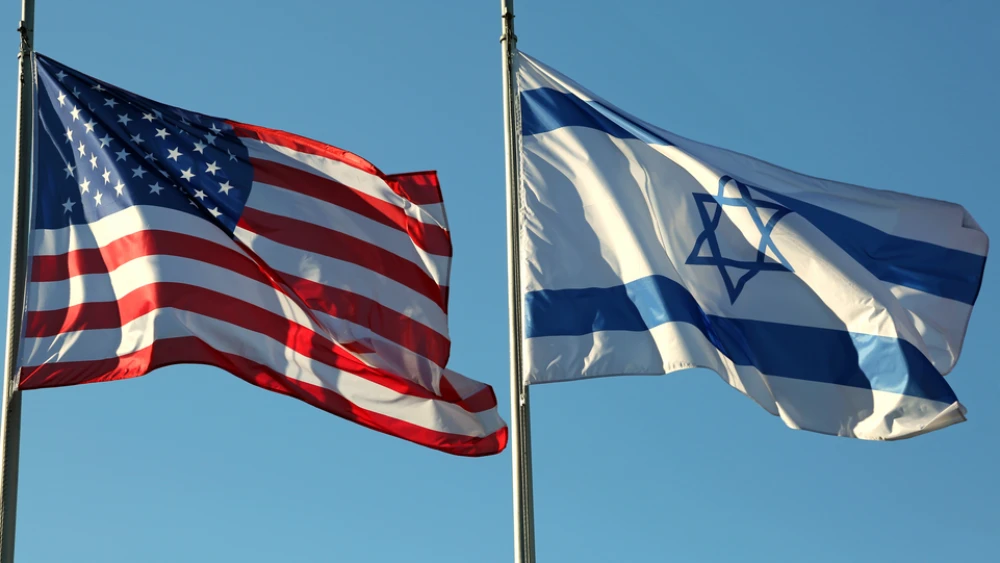

In recent weeks, the two democracies that matter most to my work and in my life went to the polls.
On Oct. 27, Israelis voted in large numbers, with Arab citizens turning out at record levels. Neither bloc won a governing majority, with Arab-party representation reaching an all-time high.
Some in the governing camp insisted the election had been stolen. Israel’s institutions answered by certifying the results, and Israeli President Isaac Herzog, after consulting every party in the new Knesset, tasked Gadi Eisenkot with trying to form a government.
Days later, Americans cast their own midterm ballots. The two campaigns were different in nearly every way, yet beneath both ran the same question: What do we owe Israel, and what does Israel owe the ideals on which it was founded?
It is a question asked in a climate where the word “Zionist” has too often become an accusation, assumed rather than argued. Young Jews now hesitate to speak not because the case against them has grown more sophisticated, but because it has grown more ambient.
Whoever governs in Jerusalem or Washington, Zionism must not become the property of one party. It is not an ideology of conquest or exclusion. It is the national liberation movement of the Jewish people: the belief that Jews, like other peoples, have the right to self-determination in their ancestral homeland.
At its best, it is aspirational as well, seeking not merely a Jewish state but one that embodies Jewish values: justice, ethics, responsibility for one another, care for the stranger.
That is why the best answer to the caricature is the reality. Israel’s election—close, bitterly argued and still certified by its own institutions—is what a people’s long hope for self-determination was meant to produce: a country free enough to fight about its own future.
Away from the cameras, the real work goes on: medical centers serving every resident, Jew and Arab alike; quality jobs so families can stay in the communities they love; investment in culture and education. This is Zionism in practice—not a campaign talking point but a commitment renewed every day.
Reclaiming the word also means holding it to its highest aspirations. It does not require defending every decision of every Israeli government, nor indifference to Palestinian suffering. Loving Israel and insisting on its existence is compatible with wanting it to become more just. That desire is itself profoundly Zionist.
The late Rabbi Lord Jonathan Sacks distinguished between optimism and hope. Optimism expects things to turn out well. Hope is more demanding: the willingness to act today for a future we may not live to see because we believe it is worth creating.
Zionism is Jewish hope made concrete—what happens when a people expelled repeatedly from places they called home refuses to accept homelessness as permanent.
In 1948, an exhausted people looked at the ruins of history and chose to build anyway, envisioning a country “based on freedom, justice and peace as envisaged by the prophets of Israel.”
Seventy-eight years later, voters in Jerusalem and across America have shown that the question of whether Jewish self-determination requires an apology hasn’t gone away. It has moved into the open, and so has our answer.
We do not apologize for hope, survival, believing the Jewish people deserve a home or insisting that the home we build reflects who we are called to be. Zionism is our inheritance. It belongs to us to carry, to question, to strengthen and to hand to the next generation with pride.
We did not come this far by abandoning the words that sustained us. We do not start now.